Watch Frank Zappa - Freak Jazz, Movie Madness & Another Mothers (2014) Online Free
After disbanding the original Mothers of Invention in '69, Frank Zappa unleashed a second incarnation of the band by '70. This film focuses on the sophomore Mothers and this often-overlooked period in Zappa's career. Featuring rare footage, exclusive interviews, and contributions from many who worked with him, which all at once provide for the first film to tackle this phase in the Zappa legend
Cast
George Duke, Aynsley Dunbar, Don Preston, Jeff Simmons, Mark Volman, Ian Underwood, Sal Marquez, Tony Palmer, Ben Watson, Tom Arnold
More Like This
The Making of Michel Petite
The film begins as a documentary about an author known for autofiction. By incorporating multiple making-of layers, it blends the process of making the documentary with the author’s narrative technique.
2025
A Small Passage of Time
An experiment with three dimensions in a moment of clarity: the focus of the camera's lens towards the present, the speed of the train and the material world distorted by the movements of the train.
2025
Hunting Confessions
"This project consists a visual fluidity of construction, harmony and thoughts taking colors and length from this body of autonomy. Different images between figuration and abstraction are created by meaning and phenomenon letting the decoupage revealing a piece of a strange underworld. I built it like a window opened to the fresh air of improvisation by familiar landscapes, those exact moments articulating a connection between light and movement."
2025
Running Fields III
Twenty images of a camera running next to a chemical platform and capturing abstract light throught improvised gestures and asymmetrical motion
2024
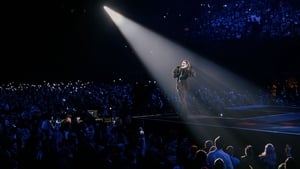
Rite Here Rite Now
Whether you’re a devoted disciple looking to relive treasured memories of the GHOST live spectacle or among the curious uninitiated, RITE HERE RITE NOW will put you right there: putting your phones down and living in the moment—as a shadow of uncertainty looms—completely spellbound and in the thrall of this bombastic yet intimate cinematic portrait of GHOST.
2024
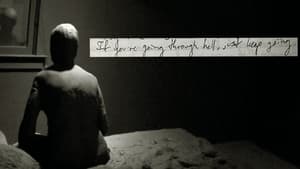
The Afterlife
A young adult's first-hand account of "accidentally becoming human again" after, and with, trauma induced depression. Lo-fi, vulnerable, and uniquely youthful, "The Afterlife" is a melancholic affirmation of life after death.
2023
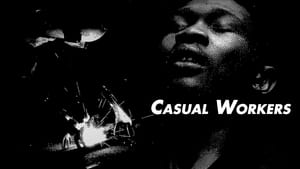
Casual Workers
An abstract perspective into two young South African workers in the heart of Johannesburg's industrial sector during Covid-19
2020
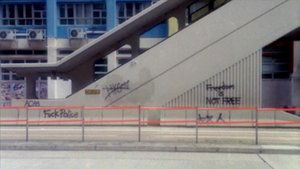
Tugging Diary
Tugging Diary documents a footbridge over a year between August 2019 to January 2021. Due to social unrest and the uncertainty of various immediate happenings, both the internet and physical spaces act as critical communication platforms of its own during this period. As such, information can be circulated in the community more widely and rapidly outside of the existing mainstream media. As time goes by, these materials are continuously altered, some were renewed, while the others were removed, covered with paint, or overlaid by other information.
2020
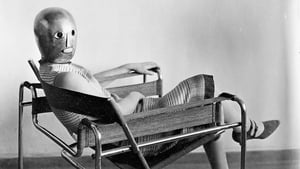
Bauhaus 100
In 1919 an art school opened in Germany that would change the world forever. It was called the Bauhaus. A century later, its radical thinking still shapes our lives today. Bauhaus 100 is the story of Walter Gropius, architect and founder of the Bauhaus, and the teachers and students he gathered to form this influential school. Traumatised by his experiences during the Great War, and determined that technology should never again be used for destruction, Gropius decided to reinvent the way art and design were taught. At the Bauhaus, all the disciplines would come together to create the buildings of the future, and define a new way of living in the modern world.
2019
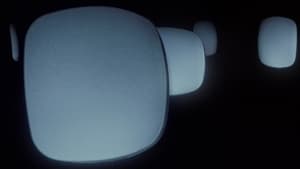
PROTOTYPE
As a major storm strikes Texas in 1900, a mysterious televisual device is built and tested. Blake Williams’ experimental 3D sci-fi film immerses us in the aftermath of the Galveston disaster to fashion a haunting treatise on technology, cinema, and the medium’s future.
2017
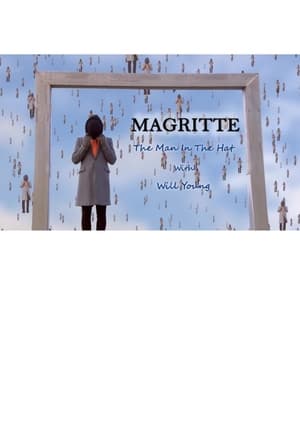
Rene Magritte: Man in the Hat
In this film, Will Young travels to Magritte's native Belgium to find out more about the man whose trademark was a bowler hat and whose apparently conventional exterior concealed the mind of a subversive rebel. Will uncovers a childhood marked by tragedy, a marriage that lasted from Magritte's adolescence until his death in 1967, and a stunning artistic legacy which endures to this day.
2014
The Red Bank. James Joyce: His Greek Notebooks
This documentary aims to register this unknown side of James Joyce: His Greek Notebooks. Trieste. Bloomsday, 2013. Dance in slow motion, accompanied by text. By deconstructing the body, we turn it into a memory: of the body, of life, of texts. The biographical references to Joyce and Mando Aravantinou, combined with the diagonal slicing of the image, cancel the realism of the landscape, including that of the Narrator’s space/study. As a culmination, Joyce’s letter “A request for a loan in Greek” functions as a timely denunciation. Various routes through cities, such as Trieste, London, New York, and Athens; languages such as Greek and English. In addition to the primal myth of Ulysses, there is another issue: Greek is “the language of the subject of Ulysses”
2013
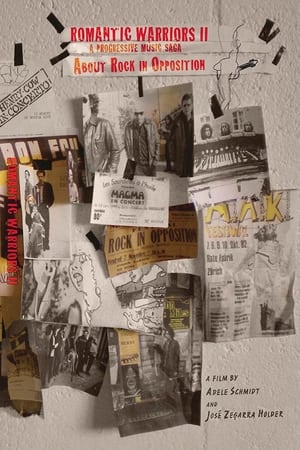
Romantic Warriors II: A Progressive Music Saga About Rock in Opposition
Romantic Warriors II explores the origins of the Rock in Opposition movement in the late 70s, and how it continues to influence contemporary bands throughout the world. Featured bands include Henry Cow, Art Zoyd, Magma, Univers Zero, Magma, Thinking Plague, Etron Fou Leloublan and Samla Mammas Manna.
2012
München, Raphaela
A film about a young woman's future plans in Munich, Germany. MUNCHEN, RAPHAELA (also known as RAPHAELA RING MUNCHEN) is part of Mike Plante's Lunchfilm series of commissioned shorts (made for the cost of a lunch between Plante and filmmaker Kevin Jerome Everson).
2006
Man Ray: Prophet of the Avant-Garde
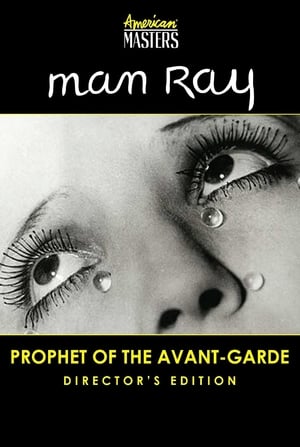
Man Ray, the master of experimental and fashion photography was also a painter, a filmmaker, a poet, an essayist, a philosopher, and a leader of American modernism. Known for documenting the cultural elite living in France, Man Ray spent much of his time fighting the formal constraints of the visual arts. Ray’s life and art were always provocative, engaging, and challenging.
1997
New York Portrait, Chapter III
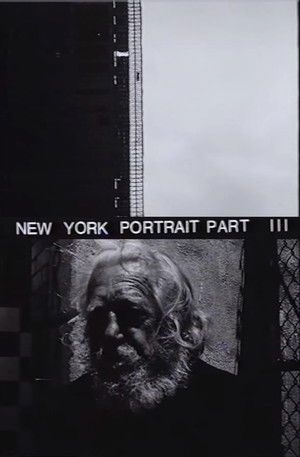
"[Hutton’s] latest urban film, New York Portrait, Chapter III, takes on a unique tone in relation to Hutton’s ongoing exploration of rural landscape. The very fact that Hutton is dealing with older footage, with archives of memory more than immediacy, gives it a different texture than his earlier New York films. Hutton always found the presence of nature in the city, not only in his many shots of sky and vegetation, but also in the geometry and texture of the city itself, which seemed to project an independence from the human." (Tom Gunning)
1990
New York Portrait, Chapter II
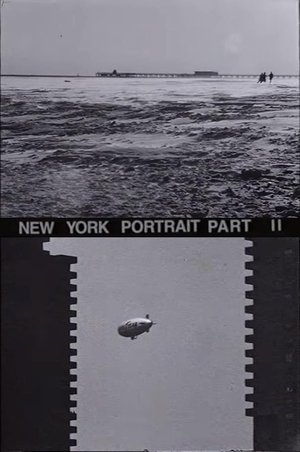
Chapter Two represents a continuation of daily observations from the environment of Manhattan compiled over a period from 1980-1981. This is the second part of an extended life's portrait of New York.
1981
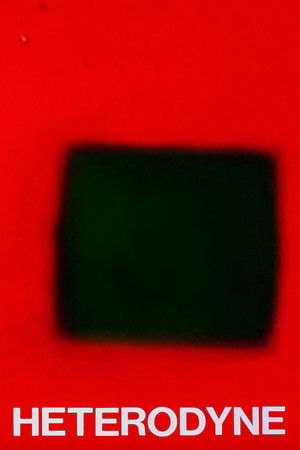
Heterodyne
“Geometric animation made entirely by sculptural methods: cutting, punching, welding colored leader. HETERODYNE is related to some of my other work as RNA to a protein or polypeptide. It was made in abject (if blissful) ignorance of Paul Sharits’ early work.” –Hollis Frampton
1967
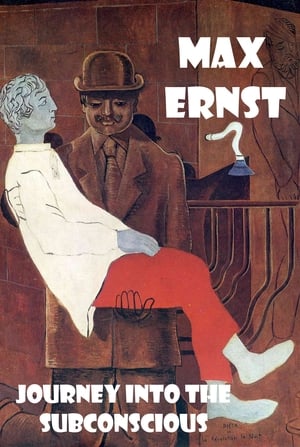
Max Ernst: Journey into the Subconscious
The inner world of the great painter Max Ernst is the subject of this film. One of the principal founders of Surrealism, Max Ernst explores the nature of materials and the emotional significance of shapes to combine with his collages and netherworld canvases. The director and Ernst together use the film creatively as a medium to explain the artist's own development.
1964
Berlin: Symphony of a Great City
A day in the city of Berlin, which experienced an industrial boom in the 1920s, and still provides an insight into the living and working conditions at that time. Germany had just recovered a little from the worst consequences of the First World War, the great economic crisis was still a few years away and Hitler was not yet an issue at the time.
1927