Watch Fourteen Days in May (1987) Online Free
A camera crew follows Edward Earl Johnson, a man falsely convicted of rape and murder, during his last 14 days on death row. Everyone involved is interviewed, Johnson himself, his family, the warden, prison guards and other inmates. We also witness the futile attempts by his attorney to save his life.
Cast
Clive Stafford Smith
More Like This
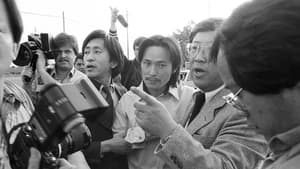
Free Chol Soo Lee
On June 3, 1973, a man was murdered in a busy intersection of San Francisco’s Chinatown as part of an ongoing gang war. Chol Soo Lee, a 20-year-old Korean immigrant who had previous run-ins with the law, was arrested and convicted based on flimsy evidence and the eyewitness accounts of white tourists who couldn’t distinguish between Asian features. Sentenced to life in prison, Chol Soo Lee would spend years fighting to survive behind bars before journalist K.W. Lee took an interest in his case. The intrepid reporter’s investigation would galvanize a first-of-its-kind pan-Asian American grassroots movement to fight for Chol Soo Lee’s freedom, ultimately inspiring a new generation of social justice activists.
2022
The Baudis affair, the murderous rumor
In 2002, serial killer Patrice Alègre was sentenced to life imprisonment for five murders. Gendarme Roussel, the main investigator of this case, believes that he will make him confess to other unsolved crimes in Toulouse. Two ex-prostitutes give a series of names of presumed accomplices of the killer, among them Dominique Baudis, then president of the CSA. He decides to face the case alone. Around him, it is silence: not an official support of his political family. Almost twenty years later, we return to the Baudis affair to try to understand it, with the testimonies of Pierre and Benjamin Baudis, his sons, François Hollande, Camille Pascal and the main protagonists.
2021

Robert Badinter, la vie avant tout
In September 2021, France will celebrate the 40th anniversary of the abolition of the death penalty. A decision so strong that it will symbolize, in itself, the first seven years of François Mitterrand. For Robert Badinter, it was the fight of a lifetime, rooted in a personal history marked by the rejection of injustice, which began after the arrest of his father by the Gestapo in 1943. A story told through archives and by his family and closest friends.
2021
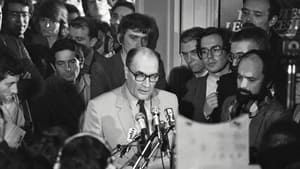
10 mai 1981 : Changer la vie ?
Fourty years ago, in May 1981, with François Mitterrand's election, some people were letting themselves dream about a better life while others were predicting the coming of soviet tanks upon the Champs-Élysées. If we gladly remember the turning point of austerity in 83, there were also the wage rises, the fifth week of paid leave, the abolition of death penalty, the decriminalisation of homosexuality, or the advent of independent radio stations. Rare archives and accounts by those who were at the heart of this story give an overview of it and shed light on lesser-known aspects.
2021

Dokumentar: Mistænkt for livet
On Fanø, Denmark, three young families have their lives brutally turned upside down when the municipality suspects them of having abused their children. The suspicion is unfounded, but the damage is done, and the families are now dragged through a process involving child interviews, police interrogations, and more. Is the law on protecting children from abuse too far-reaching, or is it simply the price some must pay to prevent serious cases of mistreatment and neglect?
2020
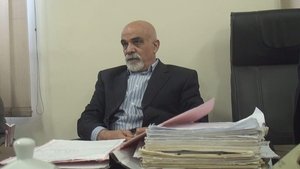
Death and the Judge
The documentary, " Death and the Judge", revolves around Iran's most famous criminal judge, Azizmohammadi. He served as a criminal judge for 45 years and issued about 4500 death sentences; a record in not only Iran, but also the world. This documentary looks into his personal and professional life as he is followed within his home with his family, in the court of law, and in his retirement days. The ultimate purpose of the documentary is to deduce the role of death in the judge's life as he either takes life away from criminals or death comes to his loved ones. During his retirement, he is once again given the choice between the life and death of a person, despite no longer being a judge.
2018
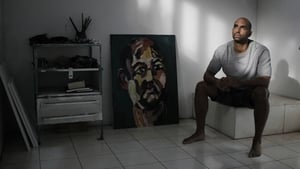
Guilty
A film about convicted drug smuggler Myuran Sukumaran, who became an accomplished artist before he was executed by firing squad in Indonesia in April 2015.
2017

New Deep South: House of JXN
Contrary to the stereotype of Mississippi as a state of social conservatism and stagnation, the support, protection and love Rainbow families provide queer youth offers up an alternative view of the New Deep South.
2017
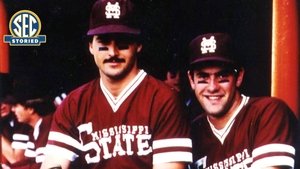
Thunder and Lightning
The best team never to win the College World Series? It might have been the 1985 Mississippi State Bulldogs, who produced four Major League Baseball All-Stars. Two of them, Bobby Thigpen and Jeff Brantley, became Relievers of the Year, while the other two, Will Clark and Rafael Palmeiro, formed the imposing one-two hitting punch known as "Thunder and Lightning." The brash and bold Clark was born in New Orleans, the son of a pool hustler, while the soft-spoken and shy Palmeiro was a son of Cuban immigrants who did his talking at the plate. As teammates at Mississippi State, they nearly propelled the Bulldogs to a College World Series title. Thirty years later, director Rory Karpf revisits those fabled Bulldogs, tracks the complicated relationship between Clark and Palmeiro, and brings closure to men who should be remembered for what they did, and not for what they didn't do.
2015
The Devil and the Death Penalty
This documentary recounts the dysfunctional state of the death penalty in the state of California by revisiting the crimes, arrest, trials and appeals of Lawrence Bittaker, a convicted serial killer who has been on death row at San Quentin since 1981.
2012
¿Quién puede matar a un hombre?
2009
After Innocence
A moving account of the experiences of men exonerated after years, and sometimes decades, in prison following newly found DNA evidence.
2005
2 or 3 Things I Know About Him
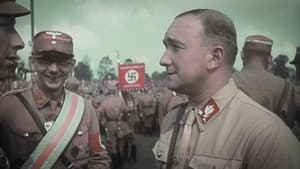
What would your family reminiscences about dad sound like if he had been an early supporter of Hitler’s, a leader of the notorious SA and the Third Reich’s minister in charge of Slovakia, including its Final Solution? Executed as a war criminal in 1947, Hanns Ludin left behind a grieving widow and six young children, the youngest of whom became a filmmaker. It's a fascinating, maddening, sometimes even humorous look at what the director calls "a typical German story." (Film Forum)
2005

Aileen: Life and Death of a Serial Killer
British documentarian Nick Broomfield creates a follow-up piece to his 1992 documentary of the serial killer Aileen Wuornos, a highway prostitute who was convicted of killing six men in Florida between 1989 and 1990. Interviewing an increasingly mentally unstable Wuornos, Broomfield captures the distorted mind of a murderer whom the state of Florida deems of sound mind -- and therefore fit to execute. Throughout the film, Broomfield includes footage of his testimony at Wuornos' trial.
2003

The Main Stream
Humorist Roy Blount Jr. takes viewers on a journey down the Mississippi River, showcasing everything from areas with spectacularly beautiful scenery to ugly and dangerously polluted stretches bordered by industrial development.
2002

Freedom Downtime
A feature-length documentary about the Free Kevin movement and the hacker world.
2001

Mr. Death: The Rise and Fall of Fred A. Leuchter, Jr.
Documentary filmmaker Errol Morris investigates the case of a man who became an authority on capital punishment, but was discredited when he got involved on the wrong side of a court case. Leuchter, a meek man whose appearance belies his grim expertise, develops what he says is a more effective electric chair. Before long he's in demand from officials who want his opinions on other kinds of execution. But when called to aid the case of an accused Holocaust denier, Leuchter's problems begin.
1999
The Execution Machine: Texas Death Row
Explores the realities of death-row inmates inside Huntsville (Texas) Unit, a prison with the highest number of executions in 1997. Features interviews with prisoners, guards, officials, lawyers and victims' family members.
1997
Deep Blues
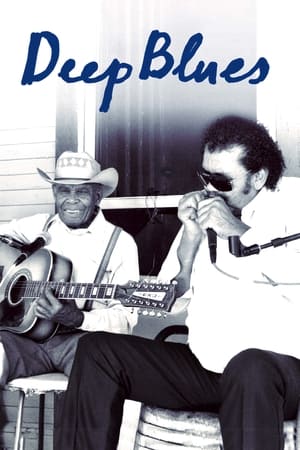
This warm 90 minutes documentary shows us unknown blues musicians from Mississippi. They play everywhere : on the streets, in dirty little bars, in a barber shop, in big clubs. The film really captures the true faces of blues and shows us that this music had nothing to do with nostalgia or record company hypes. Documentary on the Delta blues.
1992

The Thin Blue Line
An unorthodox investigation into the wrongful conviction of Randall Dale Adams for the 1976 murder of Dallas police officer Robert Wood. Using stylized reenactments and interviews with key figures, conflicting testimonies and evidence are presented to argue that Adams was framed by a corrupt justice system, ultimately leading to his exoneration.
1988