Watch Fotoshooting DDR - Bilder zwischen Propaganda und Alltag (2024) Online Free
Loading Cinehub...
Life in the GDR was not only documented on behalf of the state, but also by photographic artists and journalists. The documentary goes on a journey through time with some of them and shows little-known aspects of the GDR from its foundation to the fall of the Wall. Photographers in the GDR had a surprising amount of freedom; there was no explicit censorship of images. This allowed them to make visible what the state wanted to hide. This documentary presents two photographers who observed life in the GDR and whose work has been rediscovered in recent years.
Cast
Eberhard Klöppel, Dietmar Riemann, Barbara Wolff, Christiane Eisler
More Like This

Les 24 heures du Mans - L’histoire d’une course mythique
Since its establishment in 1923, the 24 Hours of Le Mans has dominated the world of motor racing, presenting a daunting challenge for competitors who have to push themselves to their physical limits. Let's revisit the history of this legendary 13.6-kilometer circuit with drivers Kévin Estre, Antonio Fuoco, Timo Bernhard, and Mick Schumacher, son of the seven-time world champion with fascinating behind-the-scenes moments.
2026

Pride & Attitude
The viewpoints of women from a country that no longer exists preserved on low-band U-matic tape. GDR-FRG. Courageous, self-confident and emancipated: female industry workers talk about gaining autonomy.
2025

Vita Brevis Ars Longa
In the midst of a pandemic, government arbitrariness and the precariousness of Brazilian artists, the documentary shows how these four rappers resisted the difficulties of this period using only one weapon... music. Using plurality, creativity and cleverness, how did they produce music? What role did music play in this period? What did they have to do to stay alive as rappers?
2024

Carlos
2024

The iron man.
The Iron Man takes us on an introspective journey into the life of Toni, a man who finds in art and nature the essential pillars of his existence. The creation of iron and stone sculptures, together with work in the countryside as a gardener, help him to find beauty in the simplicity of life. His vision of life, as if he were a ‘rural philosopher’, will teach us to break down stigmas about mental health and to look at life from a hopeful perspective.
2024
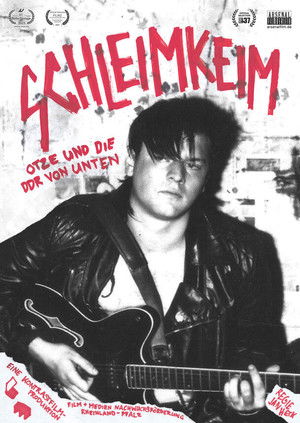
Schleimkeim - Otze und die DDR von unten
A punk documentary about the life and death of the GDR punk Dieter "Otze" Ehrlich and his band Schleimkeim aus dem Schweinestall. With the fall of the Wall, Otze loses not only his enemy images, but also his life at the price of freedom.
2024
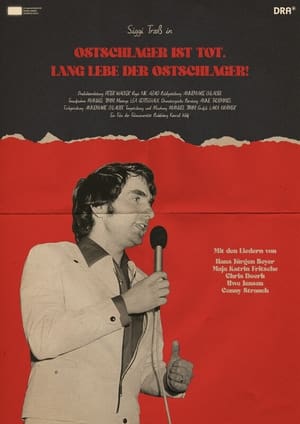
East German Schlager is dead. Long live the East German Schlager!
Siegfried "Siggi" Trzoß, a radio moderator from East Berlin, is working tirelessly leading up to his anniversary and 900th show. The music his heart burns for is East German Schlager, a genre politically ignored at first and widely forgotten now. But Siggi keeps the dream alive to this day, making the hearts of seniors jump higher in nostalgia all over east Germany.
2023

Drei Frauen
2022
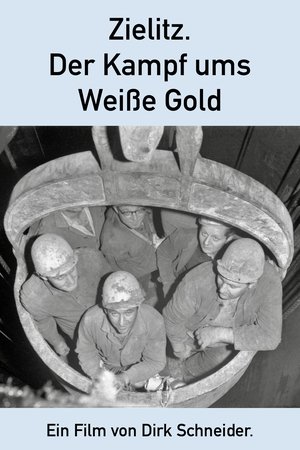
Zielitz - Der Kampf ums Weiße Gold
2020

Becoming Black
In the 1960s, a white couple living in East Germany tells their dark-skinned child that her skin color is merely a coincidence. As a teenager, she accidentally discovers the truth. Years before, a group of African men came to study in a village nearby. Sigrid, an East German woman, fell in love with Lucien from Togo and became pregnant. But she was already married to Armin. The child is Togolese-East German filmmaker Ines Johnson-Spain. In interviews with Armin and others from her childhood years, she tracks the astonishing strategies of denial her parents, striving for normality, developed following her birth. What sounds like fieldwork about social dislocation becomes an autobiographical essay film and a reflection on themes such as identity, social norms and family ties, viewed from a very personal perspective.
2019
Die sieben Geheimnisse der NVA
2018

Amo-te quando a neblina te transporta
2018

Gutierres
2015

Party auf dem Todesstreifen - Soundtrack der Wende
2014
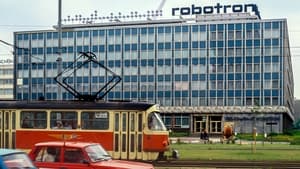
Robotron - High Tech made in GDR
In a world divided by the Iron Curtain, East Germany sought to carve its niche in the technological race. Enter "Robotron" - a name that seamlessly blended "robot" and "electronics." This wasn't just a brand; it was an ambitious answer to the West's technological advancements, a testament to the GDR’s drive to match, if not surpass, Western innovation. Drawing inspiration from the corporate giants of the West, the GDR‘s government merged various businesses to form this tech behemoth. With 16 major hubs in Central Germany alone, it was clear: "Robotron" was to be the DDR's technological crown jewel. But what was the Socialist Unity Party (SED), the GDR's ruling party, envisioning with this grand venture? How did "Robotron" navigate the challenges of operating within a socialist planned economy, while striving for global excellence? And as it grew to dominate East Germany's tech landscape, why did it always seem to be one step behind the leading global tech powers?
2013
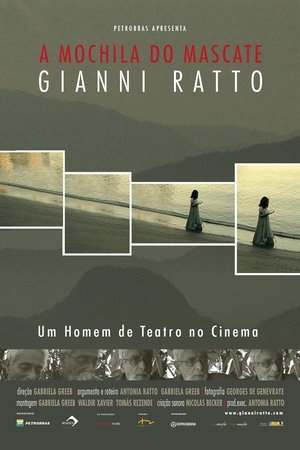
The Peddler's Backpack
From Italian set designer to Brazilian stage director, Gianni Ratto, born in Italy in 1916 and based in Brazil since 1954, retraces the geographical path of his life, accompanied by his daughter, passing through Genoa, Milan, Florence, São Paulo, and Rio de Janeiro, visiting places and people who marked his journey. At each encounter, Gianni speaks of his work and reveals the ideas of someone who not only executes but also thinks about theater from a humanist perspective.
2005
Sieg im Osten
The army of the GDR, called NVA had not survived the reunification of Germany, it was completely absorbed by the Bundeswehr and scrapped subsequently. But what apparently went on so smoothly as a peaceful unification of hostile brothers quietly left deep scars in the East German landscape.
1993
Die Randgemeinschaft
What We Remember
Nine very private encounters with different people of the post-war generation and their memories of childhood and youth. Among others, the guitarist and singer Peter "Caesar" Gläser and the actress Christine Harbort. Roland Steiner asked his contemporaries about - "What we remember ...". All interviewees are as old as the state they live in. Nine CVs from the GDR are described. They have different professions, from skilled worker and scientist, nurse and saleswoman, actress or rock musician, even a minstrel is included. They remember what shaped them: Family, school, birthdays and hot summers, the happy moments and their own failures.
1984
Die Mamais
This color documentary tells the story of the "Mamais." In 1960, a group of workers at the Bitterfeld chemical plant set themselves the task of becoming the first "socialist brigade" in the German Democratic Republic (GDR) to act in accordance with the slogan "Work, learn, and live socialist."
1974