Watch For Twenty Cents A Day (1979) Online Free
A film documenting work shortages during the Depression of the 1930s and the attempts to deal with the unemployed, in particular young men. The film discusses the establishment of relief camps and projects, where men were paid twenty cents per day; the founding of organizations such as the Co-operative Commonwealth Federation (CCF), Workers' Unity League, and Relief Camp Workers' Union; general unionization and protest of the unemployed, including the On To Ottawa Trek, Regina Riot, sit-in strike from May to June 1938 at the Vancouver Main Post Office, Vancouver Art Gallery and Hotel Georgia, and the resulting Bloody Sunday of June 19.
Cast
Dorothy Livesay
More Like This
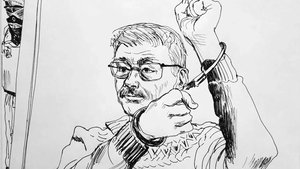
Politzek, the voices that challenge the Kremlin
In Russia, criticizing the war in Ukraine or Vladimir Putin’s regime has become a crime. Thousands of ordinary citizens are being arrested, tried, and imprisoned. They are called “Politzek”: political prisoners. Filmed clandestinely over the course of more than a year, Politzek gives a platform to those who, despite the fear, continue to speak out against Putin’s repressive Russia. Through the intersecting stories of a teenager sentenced to five years in prison for criticizing the government on social media, a young artist jailed for placing anti-war stickers, a human rights activist, and two theater directors facing Kafkaesque trials, the film unveils the machinery of state repression in Russia. With rare footage, broken yet unyielding voices, this is a story of silenced resistance.
2026
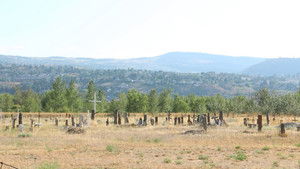
Gentleman Bandit
Documentary on the Canadian career of train robber Billy Miner, who became a folk hero in British Columbia. Locations near Kamloops and Mission are explored in present day.
2024
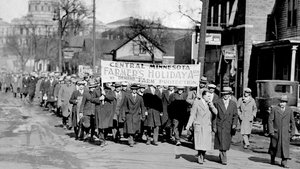
The Farmer-Labor Movement: A Minnesota Story
Documentary about the history of the progressive Farmer-Labor movement in Minnesota from 1915 to 1944, when the party merged with the Democrats to form the DFL, the Democratic-Farmer-Labor Party.
2022

CORONA.FILM - Prologue
As the first part of our investigation, the CORONA.FILM prologue will delve into the science behind the pandemic. Starting at the very beginning, we shine a light on the responses. The aim is not to point the finger; our aim is to tell the whole story in all its complexity, as we believe that justice cannot prevail if only one side of the story is told.
2021
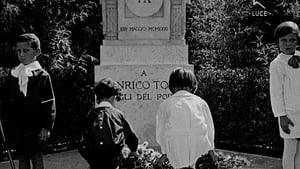
The Imperial Lullaby
The armies of Fascist Italy conquered Addis Ababa, capital of Abyssinia, in May 1936, thus culminating the African colonial adventure of the ruthless dictator Benito Mussolini, by then lord of Libya, Eritrea and Somalia; a bloody and tragic story told through the naive drawings of Pietro Dall'Igna, an Italian schoolboy born in 1925.
2020
Chronicles of revolution that didn't happen
The documentary follows Oleg, Andrey, and other long-distance truck drivers from all over Russia, who turned their outrage against the 2015 bill that required truckers to pay taxes when driving on federal roads into a 9 month long protest.
2016
Déception durable
2014

Amelia
A look at the life of legendary American pilot Amelia Earhart, who disappeared while flying over the Pacific Ocean in 1937 in an attempt to make a flight around the world.
2009

John Rabe
A true-story account of a German businessman who saved more than 200,000 Chinese during the Nanjing massacre in 1937-38.
2009

The Red Elvis
A documentary on the late American entertainer Dean Reed, who became a huge star in East Germany after settling there in 1973.
2007

Dixie Chicks: Shut Up and Sing
Shut Up and Sing is a documentary about the country band from Texas called the Dixie Chicks and how one tiny comment against President Bush dropped their number one hit off the charts and caused fans to hate them, destroy their CD’s, and protest at their concerts. A film about freedom of speech gone out of control and the three girls lives that were forever changed by a small anti-Bush comment
2006
The Story of the Coast Salish Knitters
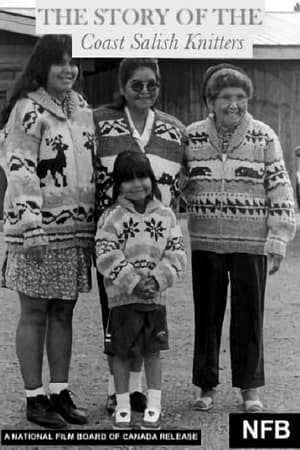
For almost a century, the Coast Salish knitters of southern Vancouver Island have produced Cowichan sweaters from handspun wool. These distinctive sweaters are known and loved around the world, but the Indigenous women who make them remain largely invisible.
2000
Hitler's Forgotten Victims
The story of black and mixed race people in Nazi Germany who were sterilised, experimented upon, tortured and exterminated in the Nazi concentration camps. It also explores the history of German racism and examines the treatment of Black prisoners-of-war. The film uses interviews with survivors and their families as well as archival material to document the Black German Holocaust experience.
1997

The Flickering Flame
Documentary following dockers of Liverpool sacked in a labour dispute and their supporters’ group, Women of the Waterfront, as they receive support from around the world and seek solidarity at the TUC conference.
1996
The Untouchables
Elliot Ness, an ambitious prohibition agent, is determined to take down Al Capone. In order to achieve this goal, he forms a group given the nickname “The Untouchables”.
1987
Man of Iron
In Warsaw in 1980, the Communist Party sends disgruntled radio reporter Winkel to Gdańsk to dig up dirt on the shipyard strikers - particularly on Maciek Tomczyk, an independent labour union leader whose father was killed in the December 1970 protests. Posing as sympathetic, Winkel interviews the people surrounding Tomczyk, including his detained wife, Agnieszka.
1981

Railway Station
Warsaw's Central Railway Station. 'Someone has fallen asleep, someone's waiting for somebody else. Maybe they'll come, maybe they won't. The film is about people looking for something.
1980
Pride & Snide
A contrast between two kinds of attitudes to gay liberation in Adelaide.
1976

Haida Carver
On Canada's Pacific coast this film finds a young Haida artist, Robert Davidson, shaping miniature totems from argillite, a jet-like stone. The film follows the artist to the island where he finds the stone, and then shows how he carves it in the manner of his grandfather, who taught him the craft.
1964
Land Without Bread
An exploration —manipulated and staged— of life in Las Hurdes, in the province of Cáceres, in Extremadura, Spain, as it was in 1932. Insalubrity, misery and lack of opportunities provoke the emigration of young people and the solitude of those who remain in the desolation of one of the poorest and least developed Spanish regions at that time.
1933