Watch Florence, Arizona (2015) Online Free
Welcome to Florence, Arizona: a cowboy town with a prison problem. Just 8,500 residents call the tiny community home—but over 17,000 inmates live there, housed in nine jails spread out over a sprawling industrial prison complex. The economic fate of the town’s inhabitants is inextricably linked with the prisons—and the townspeople are not necessarily happy about it. Director Andrea B. Scott follows four colorful characters whose lives are tied up with the prisons, including the town’s aspiring mayor, a retired correctional officer and speed shooter, a barber who longs for the town’s free-spirited cowboy days, and troubled teen Marcus, whose parents met through their prison careers. “Florence, Arizona” is a richly drawn, humorous look at a singular small town whose Wild West roots are still very much alive in its outlaw identity today. -TCFF database
More Like This
Georgie
An ex mobster reflects on love and loss after spending 32 years in prison.
2024
From Victoria Street to Ang Mo Kio
This work documents a segment of Singapore’s education history –– the survival of the nation’s first Catholic missionary Chinese girls’ school through adversities during her formative years. It is a tribute to the arduous efforts and contributions of a generation of admirable educators who persevered in delivering the education of love with resilience and steadfastness.
2019
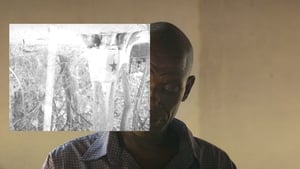
Spell Reel
The first image is in black and white, upside down and projected into a black box that then becomes the frame. It now hovers like a time capsule near a man’s face. He looks down, listening in on a female guerrilla fighter and translating her words from Fulani. Within the capsule, money is counted and paid out as a new currency, the numbers of the years run backwards in the black box. A 16-mm film glides through the man's hands and is transferred to a laptop screen frame by frame.
2017
A Feeling Greater Than Love
A car with a loudspeaker on its roof is driving through southern Lebanon. The old man at the wheel is calling for people to join a demonstration to support their brothers and sisters who’ve occupied a tobacco company and are now being besieged by the army. His words come from the past, as he’s referring to events from 1973 – events that few remember today. Neither the protests made by the tobacco farmers from the south against the large landholders’ monopoly nor the strike for better working conditions by workers at a Beirut chocolate factory are anchored in the country’s collective memory. All recollection of this social movement was erased by the civil war and society has since been marked by deep sectarian divisions.
2017
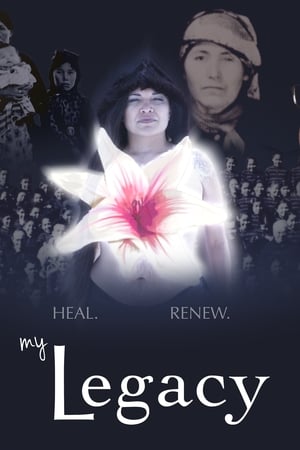
My Legacy
My Legacy follows Helen as she explores the often tenuous relationship between a mother and daughter made more complex by the legacy of residential school.
2014
From Both Sides Of The Aegean: Expulsion And Exchange Of Populations, Turkey-Greece 1922-1924
Maria Iliou documents the ethnic cleansing and violent expulsion of Greeks from the Ottoman Empire. In the first compulsory "exchange of populations" in the modern world, 1.2 million Greek Orthodox and 400,000 Muslims were forcibly relocated from Turkey to Greece and Greece to Turkey respectively.
2013
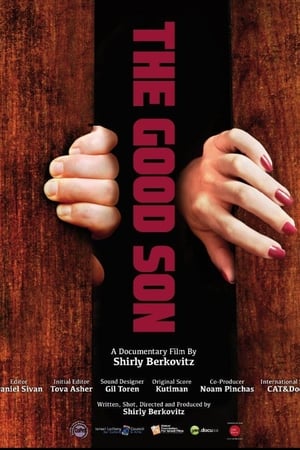
The Good Son
The unbelievable story of 22 year old Or, who secretly finances his sex change operation in Thailand by lying to his conservative parents and then returns home as a woman to face her new life, her family and the cost of living her dream
2012
Prenatal & Postnatal Yoga
Both during and after pregnancy, yoga is a perfect way to firm your body, build strength, and gain flexibility. These two yoga practices, filmed in a serene garden overlooking the Pacific Ocean, are also a wonderful way to maintain emotional balance and reduce stress during the exciting and often hectic times surrounding the birth of a child. In the prenatal sequence you'll practice safe and simple movements intended to strengthen and tone your body at any stage of pregnancy, while providing relaxation that will help create a luminous space in which your baby will thrive. The postnatal sequence is designed to redefine your body, restore your energy, and help you reconnect to yourself and your own wellness.
2009
Jesus Camp
A documentary on kids who attend a summer camp hoping to become the next Billy Graham.
2006
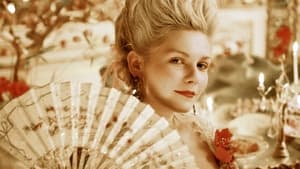
Marie Antoinette
A retelling of the story of France’s iconic but ill-fated queen, Marie Antoinette - from her betrothal and marriage to Louis XVI at fifteen to her reign as queen at nineteen and ultimately the fall of Versailles.
2006
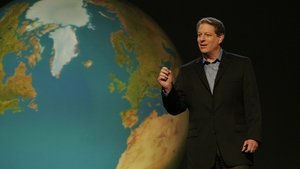
An Inconvenient Truth
A documentary on Al Gore's campaign to make the issue of global warming a recognized problem worldwide.
2006
Salvador (Puig Antich)
The story of Salvador Puig Antich, one of the last political prisoners to be executed under Franco's Fascist State in 1974.
2006
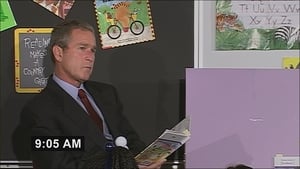
Fahrenheit 9/11
Michael Moore's view on how the Bush administration allegedly used the tragic events on 9/11 to push forward its agenda for unjust wars in Afghanistan and Iraq.
2004
Dig!
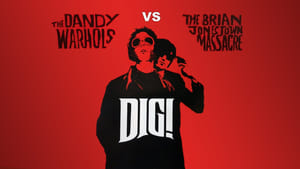
A documentary on the once promising American rock bands The Brian Jonestown Massacre and The Dandy Warhols. The friendship between respective founders, Anton Newcombe and Courtney Taylor, escalated into bitter rivalry as the Dandy Warhols garnered major international success while the Brian Jonestown Massacre imploded in a haze of drugs.
2004
In the Realms of the Unreal
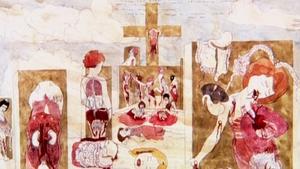
In the Realms of the Unreal is a documentary about the reclusive Chicago-based artist Henry Darger. Henry Darger was so reclusive that when he died his neighbors were surprised to find a 15,145-page manuscript along with hundreds of paintings depicting The Story of the Vivian Girls, in What is Known as the Realms of the Unreal, of the Glodeco-Angelinnian War Storm, Cased by the Child Slave Rebellion.
2004
The Big One
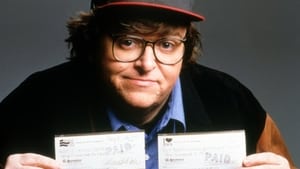
The Big One is an investigative documentary from director Michael Moore who goes around the country asking why big American corporations produce their product abroad where labor is cheaper while so many Americans are unemployed, losing their jobs, and would happily be hired by such companies as Nike.
1997
Malcolm X
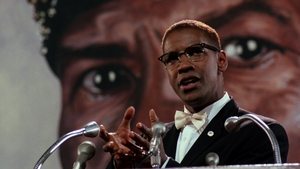
A tribute to the controversial black activist and leader of the struggle for black liberation. He hit bottom during his imprisonment in the '50s, he became a Black Muslim and then a leader in the Nation of Islam. His assassination in 1965 left a legacy of self-determination and racial pride.
1992
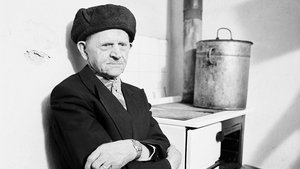
Jakub
Jakub presents an extensive ethnographical-sociological study of the life of the Ruthenians, filmed in the Maramuresh mountains in the north of Romania and in the former Sudetenland in Western Bohemia. The film was made over a period of five years during the time of both totalitarian regimes and was completed in 1992 after the revolution.
1992
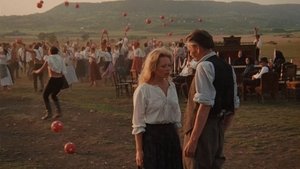
Allegro Barbaro
Zsadányi flees from the authorities with his goddaughter, Bankós Mari, and they escape into the forest. The film then skips ahead thirty-fold years: Zsadány and Mari are now lovers, with the sound of war in the background halting their romance. The old friends of Zsadányi have joined with the Nazis, and the landowner living with his peasants in a socialist community grows distant from them. Zsadányi is held responsible for political problems in the country, and will pay with his life.
1979
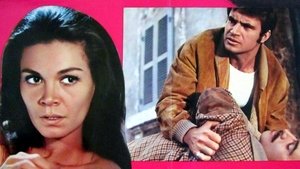
Black Lemons
Rosario Inzulìa, a young man involved with the Mafia, was sentenced to labor camp, forced to pay also for crimes he didn't commit. After eight long years of imprisonment he's finally released. Rosario goes back to Sicily, where he learns that his wife died in an accident. He tries to rebuild his life, but when he finds out that his wife was murdered, he decides that it's time to take action: alone against the Mafia!
1970