Watch Finding Babylon's Hanging Garden (2015) Online Free
Loading Cinehub...
There are many myths surrounding the Hanging Gardens of Babylon. Previous excavations have not led to an answer to the question of exactly where they were located. Thanks to the extraordinary findings of scientist Stephanie Dalley, it is now possible for the first time to determine exactly where the legendary gardens were located, what they looked like and how they were built. The Hanging Gardens of Babylon are the only one of the seven wonders of the ancient world for which no archaeological evidence has yet been found. For the documentary, Stephanie Dalley from Oxford University traveled to a dangerous, terror-stricken region in northern Iraq to gather evidence for her new theory about the true location of the gardens. Stephanie Dalley assumes that the gardens were built a hundred years earlier - 700 years before Christ - and by the Assyrian king Sanherib instead of Nebuchadnezzar II.
Cast
Paul McGann
More Like This

The Divinity of a City
David Bono is a hitman hired to target Orshanabi Nazzar, a high-ranking priest-bureaucrat in a temple corporation in the fictional city of Babylonia (Brussels-based). The corporation has invented a way to avoid death by recording people's lives. While gathering information and preparing for the job, David meets Ellie, with whom they slept together. However, Ellie is a member of a cult called Children of Ishtar, and David's job would interrupt their life-recording ceremony. Facing an obsessive dilemma, David tries to find a way to do his mission without killing Ellie. First, he tries to convince Ellie not to attend the ceremony, and then he hires a local crook to kidnap her while he does the job. After the successful job, Ellie frees herself from the kidnapper, discovers the truth, and leaves for Akkadia. Meanwhile, David calls to receive the rest of his payment but gets ambushed by the contractor.
2024

The Time Factory
Who invented time, who invented the clock? Why 1 hour, why 60 minutes, why 60 seconds? Since prehistoric times, man has sought to measure time, to organize social and religious life, to plan food supply... Today we can surf the Internet, geolocate, pay by credit card… All our daily lives depend on time and the synchronization of clocks. The history of the invention of time and of the ways and instruments to measure it is a long story…
2021
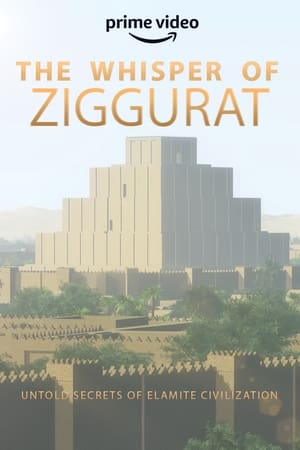
The Whisper of Ziggurat: Untold Secrets of Elamite Civilization
5000 years ago the ancient Elamites established a glorious civilization that lasted about three millennia. They created marvelous works in architecture and craftsmanship. These works of art depict the lifestyle, thoughts, and beliefs of the Elamites.
2020
Leopard Vision Vol.1
A journey into the very depths of the belly of the most influential and insidious organization in existence. See, as never before, how the Papacy plays a vital role in current events, and the final fulfillment of Bible prophecy.
2015
Marching to Zion
Documentary tracing the history of the Jewish people from the destruction of the temple in AD 70 to the modern-day nation of Israel. Through scriptural and historical evidence, DNA, mathematics, and testimony from rabbis and pastors, it attempts to answer the question, "Who are God's chosen people?".
2015
Revelation - The Bride, The Beast & Babylon
Going to the very heart of the Bible's most challenging Book, this one hour documentary decodes the visions of Revelation 12 and 17 for everyone to understand. Journeying from the birth of Christ through the Christian era, this amazing video pulls aside the veil of hidden history to reveal the rise of Babylon, the persecution of the bride of Christ, and the real-world identity of the beast. Educational and inspiring, Revelation delivers the keys to understanding the epic conflict between Christ and Satan and what it means for your life today.
2013
Verdi: Nabucco
‘Nabucco’, or ‘Nebuchadnezzar’ (Italian: Nabucco), is an opera by Giuseppe Verdi with a libretto by T. Solera, based on events described in the Bible. (Nabucco is a shortened Italian rendering of the name of King Nebuchadnezzar II). It was this opera, the third in Verdi’s oeuvre, that brought him true fame. It tells of the tribulations of the Jews, their captivity by the Babylonians, and their subsequent release to their homeland by Nebuchadnezzar, King of Babylon. Giuseppe Verdi’s opera ‘Nabucco’, is a monumental work that tells the story of the enslavement of the Hebrew people by the Babylonian king Nebuchadnezzar (Nabucco) and their journey towards redemption. The premiere took place on 9 March 1842 at La Scala in Milan. The first performance of the final version was held at the Teatro San Giacomo in Corfu in September 1844. From the box set of 27 Verdi operas, ‘Tutto Verdi’. Recorded live at the Teatro Regio in Parma, 12–14 October 2009.
2009

Hollywood: Lights, Camera, Blasphemy!
"No film may throw ridicule on any religious faith..." So began Article VIII of the Hollywood Production Code, a series of ethical guidelines that for forty years helped the motion picture industry produce many of the greatest and most family-friendly films in history. That was then, however, this is now. A revered "historical" movie quietly takes every opporturnity to lie and twist the facts in order to make Christians appear as backward, foolish hypocrites. An actress jumps at the chance to play a Christ-hating role, saying, "I'm an atheist, so it was a joy." One of Hollywood's most respected directors films a passion play written by a disciple of Friedrich Nietzsche, the father of the "God is dead" movement. Not surprisingly, the movie's Jesus helps crucify people and later confesses that satan is inside him. A media mogul states that "Christianity is a religion for losers."
1995
Seven Wonders of the Ancient World: The Wonders of the East
Explore with host John Romer, the influence of ancient eastern civilizations. The Hanging Gardens of Babylon, in what is now Iraq, were rumoured to be part of the palace of Nebuchadnezzar. Today, scientists believe that the exotic gardens were actually more fable than fact. The Temple of Artemis at Ephesusm in modernday Turkey, was built to honour the mother goddess. She was a powerful force for many different people - the Romans knew her as Diana, the Anatolians as Kybele - and her temple was one of the holiest shrines in Alexander the Great's world
1994

Semiramide
In ancient Babylon, SEMIRAMIDE (Anderson) encourages her lover Assur (Ramey) to murder her husband, King Ninus. Her son, Ninius, disappears, believed dead, and Semiramide rules in her own right. 15 years later, as the opera opens, she is about to announce the name of her successor. Idreno (Olsen) and Assur are the leading candidates for the throne and the hand of Princess Azema (Shin), but Semiramide has taken a fancy to young Arsace (Horne), her victorious military leader who has been summoned back to Babylon. Only the high priest Oroe (Cheek) knows that Arsace is actually Ninius, spirited away to safety after the coup. As the queen announces Arsace as her successor, the ghost of her husband appears from his tomb, demanding that Arsace punish the late king’s murderers... Filmed at New York's Metropolitan Opera, John Copley's production of Rossini's last, longest and most elaborate dramatic opera brings together what many consider the definitive contemporary cast.
1990
Hercules and the Tyrants of Babylon
Hercules goes to Babylon to rescue the Queen of the Hellenes and free the people of Babylon from slavery.
1964
Goliath and the Sins of Babylon
Goliath battles for the freedom of the Babylonian people.
1963
Hero of Babylon
The rightful heir to the throne of Babylon leads a slave revolt against an evil ruler.
1963
I Am Semiramis
Semiramis, a powerful and beautiful Assyrian queen, oversees the construction of the luxurious city of Babylon. She falls in love with Kir, a fallen prince turned into a slave who corresponds to her love. But a palace conspiracy will make the two lovers separate and confront each other.
1963
War Gods of Babylon
Noble, wise King Sardanapolo and his more soft and naive younger brother Prince Sammash get into a bitter feud over the affections of sweet and alluring innocent peasant girl Mirra. Meanwhile, the treacherous and ruthlessly ambitious General Arbace plots against both siblings.
1962
The Queen of Babylon
In this Biblical epic, a brave Chaldean rebel takes on his evil nemesis, a cruel Assyrian king. En route to his fateful meeting, the rebel hides in the humble hut of a luscious peasant girl.
1954
Slaves of Babylon
The Jews are taken from Jerusalem and made slaves by King Nebuchadnezzar. In the meantime Cyrus, king of the Persians, who has been living as a shepherd, is proclaimed king and defeats Nebuchadnezzar.
1953
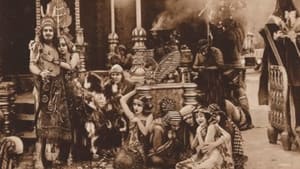
The Fall of Babylon
After the relatively low box office takings of 'Intolerance', D. W. Griffith would revisit his epic film three years later by releasing two of the film's interlocking stories as standalone features, with some new additional footage. The first of the two was 'The Fall of Babylon', which depicts the conflict between Prince Belshazzar of Babylon and Cyrus the Great of Persia.
1919

Intolerance: Love's Struggle Throughout the Ages
The story of a poor young woman, separated by prejudice from her husband and baby, is interwoven with tales of intolerance from throughout history.
1916
The Virgin of Babylon
The mighty King of Babylon falls in love with a beautiful girl, ruthlessly tears her away from her lover, who is left wounded upon the ground, and carries her to his palace, where he seeks to will her affections, showering her with gifts of precious stones from his treasure chests. The heart-broken girl repulses all his overtures and dashes the jewels to the floor, and the infuriated monarch, incensed at her refusal to share his throne, orders her cast into the lions' den. An immense throng of his court followers are invited to witness the execution, but the expectant throng is dumbfounded when the ferocious beasts, instead of rending the victim to pieces, fawn upon her. A wave of superstitious awe sweeps through the gathering, who regard the incident as a miracle and believe that the girl is under the protection of the gods. The King's guards are overpowered and the girl released, and the monarch, by this time imbued with fear, pays homage to the maiden, who is restored to her lover.
1910