Watch Fighting Indians (2022) Online Free
On May 16th, 2019, the State of Maine made history by passing LD 944 An Act to Ban Native American Mascots in All Public Schools, the first legislation of its kind in the country. For Maine's tribal nations, the landmark legislation marked an end to a decades long struggle to educate the public of the harms of Native American mascotry. Fighting Indians chronicles the last and most contentious holdout in that struggle, the homogeneously white Skowhegan High School, known for decades as "The Home of the Indians". This is the story of a small New England community forced to reckon with its identity, its sordid history, and future relationship with its indigenous neighbors. It is a story of a small town divided against the backdrop of a nation divided where the "mascot debate" exposes centuries old abuses while asking if reconciliation is possible.
Cast
Maulian Dana, Barry Dana, James Eric Francis, Dwayne Tomah, John Bear Mitchell, Dawn Neptune Adams, Dena Rose Joseph, Mike Wise, Dave McKenna, Jesse Seinfeldt, Al Carroll, Jeffery Powers-Beck
More Like This
Ceremony
When the Nuxalk trace the vanished ooligan to a land claim filed the very day smallpox arrived, their radio station becomes courtroom, confessional and conjuring ground; an older law insists: the fish return when the people do.
2026
NUKED
The US detonated 67 nuclear weapons over the Bikini Atoll in the Marshall Islands during the Cold War, the consequences of which still reverberate down four generations to today. "NUKED," is a timely new feature documentary focussing on the human victims of the nuclear arms race, tracing the displaced Bikinian's ongoing struggle for justice and survival even as climate change poses a new existential threat. Using carefully restored archival footage to resurrect contemporaneous islanders’ voices and juxtaposing these with the full, awesome fury of the nuclear detonations, NUKED starkly contrasts the official record with the lived experience of the Bikinians themselves, serving as an important counterpoint to this summer’s Oppenheimer.
2023
Scenes from the Glittering World
At the farthest edge of the Navajo Nation, the purpose and future of the most remote high school in the continental United States is in question while three Indigenous youth grapple with ambitious dreams, family responsibilities, and the isolated nature of their community.
2021
Chasing Voices: The Story of John Peabody Harrington
For 50 years, controversial ethnographer John Peabody Harrington crisscrossed the United States, frantically searching and documenting dying Native American languages. Harrington amassed over a million pages of notes on over 150 different tribal languages. Some of these languages were considered dead until his notes were discovered. Today tribes are accessing the notes, reviving their once dormant languages, and bringing together a new generation of language learners in the hope of saving Native languages.
2021
Inhabitants
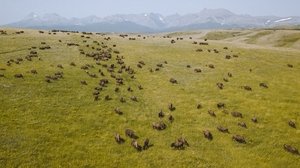
For millennia, Native Americans successfully stewarded and shaped their landscapes, but centuries of colonization have disrupted their ability to maintain their traditional land management practices. From deserts, coastlines, forests, mountains, and prairies, Native communities across the US are restoring their ancient relationships with the land. As the climate crisis escalates these time-tested practices of North America's original inhabitants are becoming increasingly essential in a rapidly changing world.
2021

Imagining the Indian: The Fight Against Native American Mascoting
Examining the movement that is ending the use of Native American names, logos, and mascots in the world of sports and beyond.
2021
Those Who Come, Will Hear
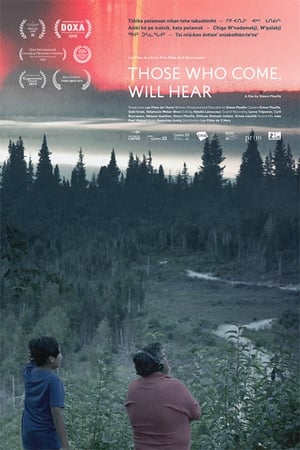
The documentary proposes a unique meeting with the speakers of several indigenous and inuit languages of Quebec – all threatened with extinction. The film starts with the discovery of these unsung tongues through listening to the daily life of those who still speak them today. Buttressed by an exploration and creation of archives, the film allows us to better understand the musicality of these languages and reveals the cultural and human importance of these venerable oral traditions by nourishing a collective reflection on the consequences of their disappearance.
2018

Anti-Objects, or Space Without Path or Boundary
The title of this video, taken from the texts of the architect Kengo Kuma, suggests a way of looking at everything as “interconnected and intertwined” - such as the historical and the present and the tool and the artifact. Images and representations of two structures in the Portland Metropolitan Area that have direct and complicated connections to the Chinookan people who inhabit(ed) the land are woven with audio tapes of one of the last speakers of chinuk wawa, the Chinookan creole. These localities of matter resist their reduction into objects, and call anew for space and time given to wandering as a deliberate act, and the empowerment of shared utility.
2017
First Daughter and the Black Snake
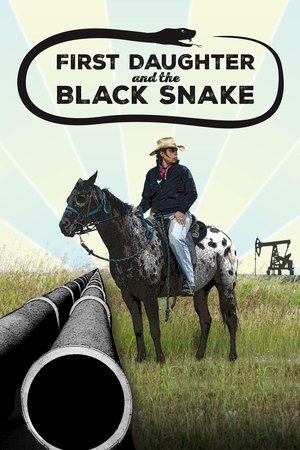
The “Prophecy of the 7th Fire” says a “black snake” will bring destruction to the earth. For Winona LaDuke, the “black snake” is oil trains and pipelines. When she learns that Canadian-owned Enbridge plans to route a new pipeline through her tribe’s 1855 Treaty land, she and her community spring into action to save the sacred wild rice lakes and preserve their traditional indigenous way of life. Launching an annual spiritual horse ride along the proposed pipeline route, speaking at community meetings and regulatory hearings. Winona testifies that the pipeline route follows one of historical and present-day trauma. The tribe participates in the pipeline permitting process, asserting their treaty rights to protect their natural resources. LaDuke joins with her tribe and others to demand that the pipelines’ impact on tribal people’s resources be considered in the permitting process.
2017
I Stand: The Guardians of the Water
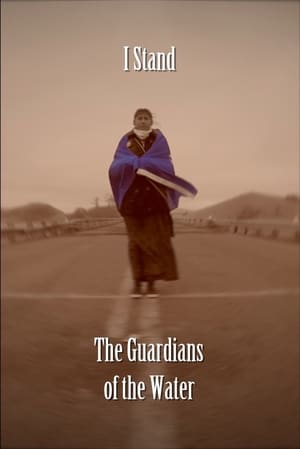
First hand interviews and on the ground footage give a stirring account of The Standing Rock Sioux Nation's and water protectors' opposition to the Dakota Access Pipeline
2017
Tribal Justice
Two formidable Native American women, both chief judges in their tribe's courts, strive to reduce incarceration rates and heal their people by restoring rather than punishing offenders, modeling restorative justice in action.
2017
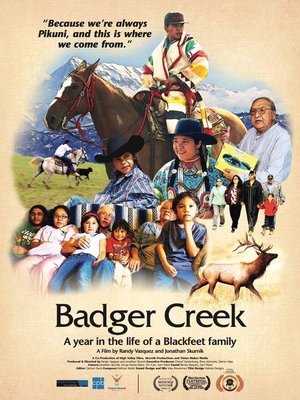
Badger Creek
Badger Creek is a portrait of Native resilience as seen through a year in the life of three generations of a Blackfeet family living on the rez in Montana. The Mombergs are a loving, sober family who run a successful ranch, live a traditional worldview and are re-learning their language.
2016
Mitakuye Oyasin
Lakota people from the Pine Ridge Indian Reservation and the Rosebud Indian Reservation in South Dakota describe the ongoing struggle of their people.
2015
LaDonna Harris: Indian 101
A documentary film about Comanche activist LaDonna Harris, who led an extensive life of Native political and social activism, and is now passing on her traditional cultural and leadership values to a new generation of emerging Indigenous leaders.
2014
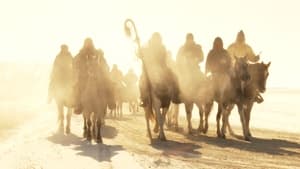
Dakota 38
In the spring of 2005, Jim Miller, a Native spiritual leader and Vietnam veteran, found himself in a dream riding on horseback across the great plains of South Dakota. Just before he awoke, he arrived at a riverbank in Minnesota and saw 38 of his Dakota ancestors hanged. At the time, Jim knew nothing of the largest mass execution in United States history, ordered by Abraham Lincoln on December 26, 1862. Now, four years later, embracing the message of the dream, Jim and a group of riders retrace the 330-mile route of his dream on horseback from Lower Brule, South Dakota to Mankato, Minnesota to arrive at the hanging site on the anniversary of the execution. This is the story of their journey - the blizzards they endure, the Native and Non-Native communities that house and feed them along the way, and the dark history they are beginning to wipe away.
2012
Trudell
A chronicle of legendary Native American poet/activist John Trudell's travels, spoken word performances, and politics.
2005

The Land is Ours
The Tlingit and Haida people of Alaska were confused by the idea of America “buying” the land they lived on from the Russians. They would be among the first native people to make a successful claim on their homeland and rights.
1997
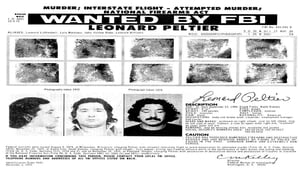
Incident at Oglala
On June 26, 1975, during a period of high tensions on the Pine Ridge reservation in South Dakota, two FBI agents were killed in a shootout with a group of Indians. Although several men were charged with killing the agents, only one, Leonard Peltier, was found guilty. This film describes the events surrounding the shootout and suggests that Peltier was unjustly convicted.
1992
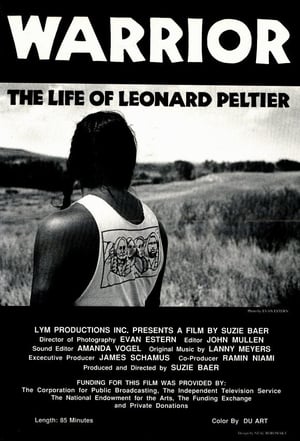
Warrior: The Life of Leonard Peltier
An intimate exploration of the circumstances surrounding the incarceration of Native American activist Leonard Peltier, convicted of murder in 1977, with commentary from those involved, including Peltier himself.
1991
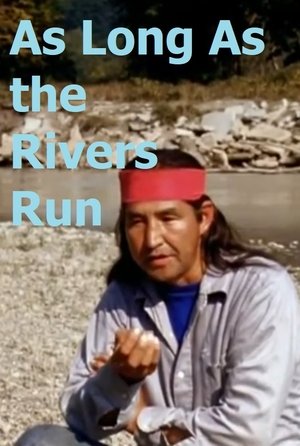
As Long as the Rivers Run
Examines the violence and civil disobedience leading up to the hallmark decision in U.S. v. Washington, with particular reference to the Nisqually Indians of Frank's Landing in Washington.
1971