Watch Feminino e Barulho (2023) Online Free
The cinema of Pernambuco is considered one of the most complex components of Brazilian cinema, particularly for its potency and creative style. The presence of women in filmmaking seldom holds the same historical notoriety as that of men, and the Pernambuco scene is no exception. In the context of "Amor, Plástico e Barulho" (Love, Plastic, and Noise), we find a film that serves as a testament to the marginalization of women in the creative industry, intertwining themes of consumption and the production of brega music. Hence, we use "Feminino e Barulho" (Feminine and Noise) as a means to share what we've learned. Renata Pinheiro has inspired us to craft a narrative that gives voice to those who need to be heard. We are here to showcase a glimpse of them and what they represent. "Feminino e Barulho" is a short film about love, femininity, sisterhood, and empowerment.
Cast
Maeve Jinkings, Piera Pilar, Leo Liberato, Luca Ururahy, Bernardo Guimarães, João Pedro Tavares
More Like This

Ellas en la ciudad
"Ellas en la ciudad" (Them in the City) focuses on the first settlers of the neighborhoods on the outskirts of Seville. Through their stories, we discover that they have been the backbone of a city that has turned its back on them.
2025

Mama Micra
The mother of animation director Rebecca Blöcher didn’t want to live an ordinary life. She wanted “something more,” she explains in this stop-motion film. The people around her didn’t understand—in a letter written in 1968, a girlfriend criticizes her for going out on her own and making men jealous, while advising her to dress in a more “feminine” way and to join a cooking course. Blöcher’s mother brushed aside the advice. Years later still, she divorced her husband and stepped into the big wide world.
2024
Skate Territory
After a long and successful career as a skater, Veronica has stepped away from competing, but continues her legacy by organizing skateboarding workshops to teach young girls from indigenous communities to skate, and to push them to fight back for the public spaces that have been occupied by men and to practice a sport that also belongs to women.
2024

Backlash: Misogyny in the Digital Age
This documentary by Léa Clermont-Dion and Guylaine Maroist plunges us into the vortex of online misogyny and documents hatred towards women. This bleak opus, reminiscent of a psychological thriller, follows four women across two continents: former President of the Italian parliament Laura Boldrini, former Democratic representative Kiah Morris, French actor and YouTuber Marion Séclin, and Donna Zuckerberg, a specialist in online violence against women and the sister of Facebook’s founder. This tour de force reveals the devastating effects such unapologetic hatred has on victims, and brings to light the singular objective of cyber-misogyny: to silence women who shine. Some targets of cyber-violence will crumble under the crystallizing force of the click. Others, proud warriors, will stand tall and refuse to be silenced.
2022
Mujer de Tierra
2021

Des femmes
As the peaceful and determined Hirak movement gathers momentum and hopes for profound political change sweep across Algeria, women are combining femininity and feminism in the past, present, and future.
2020
Frauen bildet Banden
The film tells the story of the Rote Zora, a militant women’s group in the FRG, which in the 1970s and 1980s carried out actions against various facets of patriarchal power relations. Narrations by various contemporary witnesses, interviews with a historian and former Zoras bring the history of the Rote Zora and the women’s movement of the time back to life. The film shows that many of the Rote Zora’s themes are highly topical and offers exciting material for discussion on how to deal with this history today.
2019
The Fearless and Vulnerable
In 2016, after the hate-fuelled murder of a woman in Gangnam, young feminists gathered to talk about their experiences, which led to the ‘tsunami’ of the feminist movement reawakening in Korean society. This tsunami included street protests against misogynistic hate crimes, political campaigning in the upcoming presidential elections, protests against sexism and sexual violence in everyday life, and the ‘black’ protests calling for the abolition of the anti-abortion law. The Fearless And Vulnerable focuses on the activities and members of the Feminist Party (known in Korean as “Femidangdang”), a feminist group that was part of this tsunami wave. The pleasure and sincerity with which they conduct their activities are compounded with their courage in the face of conflict, and the sense of fear that permeates the community. The film shows Femidangdang meetings as well as the daily lives and thoughts of members during their activities post-2016.
2019
The Executive Empress
The Executive Empress explores the entrepreneurial lives of several Florida women, who have turned their unique passions into successful businesses.
2019
Mexeu com uma, mexeu com todas
“Touch one, touch us all” is a slogan of the women who took over the streets in Brazil and organized themselves in social networks to face male chauvinist and conservatism. Through testimonies of women who have been subjected to violence, the documentary reveals that, despite legal achievements, the woman still remains vulnerable. Amongst other deponents are Maria da Penha, Joanna Maranhão, Luíza Brunet, and Clara Averbuck.
2017
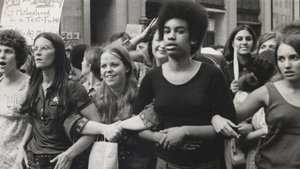
She's Beautiful When She's Angry
A documentary that resurrects the buried history of the outrageous, often brilliant women who founded the modern women's movement from 1966 to 1971.
2014
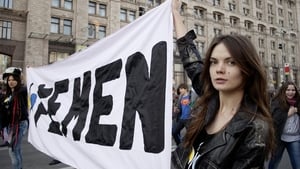
I Am FEMEN
Oxana is a woman, a fighter, an artist. As a teenager, her passion for iconography almost inspires her to join a convent, but in the end she decides to devote her talents to the Femen movement. With Anna, Inna and Sasha, she founds the famous feminist group which protests against the regime and which will see her leave her homeland, Ukraine, and travel all over Europe. Driven by a creative zeal and a desire to change the world, Oxana allows us a glimpse into her world and her personality, which is as unassuming, mesmerising and vibrant as her passionate artworks.
2014
Kelly
2013
My Mirror is the Door
The ten anthologies and eight long poems of the Sangam age are the oldest and most distinguished body of secular poetry extant in India, of which women poets were a very strong presence.
2012

Grandmother of Russian Feminism
Portrait of a typical European feminist - Olga Lipovskaya (1954-2021), journalist, translator, poet, founder of the women's non-profit organization St. Petersburg Center for Gender Issues (an educational and resource center for women and women's organizations), editor of the samizdat magazine Women's Reading.
2007

Extranjeras
2003
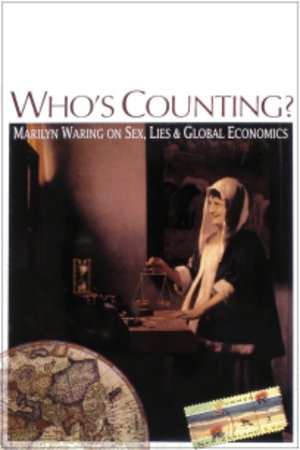
Who’s Counting? Marilyn Waring on Sex, Lies and Global Economics
This documentary profiles economist and writer Marilyn Waring. In extensive interviews, Waring details her feminist approach to finances and challenges commonly accepted truths about the global economy. The filmmakers detail Waring's early rise to political prominence and her successful protests against nuclear arms. Waring also speaks candidly about wartime economies, suggesting that government policies tend to marginalize the fiscal contributions of women.
1995
Eumelia, calle arriba, calle abajo
Film by Franca Donda, about Eumelia Hernández.
1988
María de la Cruz, una mujer venezolana
Film by Franca Donda and Josefina Jordán.
1975
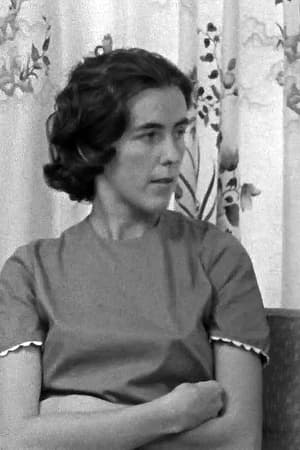
A Woman's Place
Two women discuss the roles and problems of women, education, and shopping on Fogo Island.
1967