Watch Förintelsens beska efterbörd - Röda Korset och svensk hjälpverksamhet 1945-1947 (2017) Online Free
The film starts just when WWII is over. A German ship, m / s Homberg, arrived at Malmö Nyhamn on May 11, 1945. On board there were over 1300 former concentration camp prisoners to be taken care of. We then follow one of the Red Cross Sergeant who was in Germany and received prisoners from concentration camps for further transport by boat to Sweden. 10000 prisoners would be decontaminated and made ready for departure. This happened in Lübeck. He was later moved to Poland to transport medical equipment to Otwock outside Warsaw where Sweden would build a hospital. Through his amateur photos we get an insight into the difficult circumstances that prevailed.
Cast
Hédi Fried
More Like This
Closure
After his teenage son goes missing, Daniel scours the depths of the Vistula River, torn between the dread of a fatal leap and the hope that his son may still be alive.
2026

Flensburg Sweetbitter
A multiscreen installation, a colorful beach bar, the statue of Saint Christopher - a postcolonial look at the edge of the harbor in Flensburg and the question of what is made visible and what is not.
2023
1970
Poland, 1970. When popular protests erupt in the streets due to rising prices, the communist government organizes a crisis team. Soon after, the police use their truncheons and then their firearms. The story of a rebellion from the point of view of the oppressors.
2021

Solidarność: How Solidarity Changed Europe
Gdańsk, Poland, September 1980. Lech Wałęsa and other Lenin shipyard workers found Solidarność (Solidarity), the first independent trade union behind the Iron Curtain. The long and hard battle to bring down communist dictatorship has begun.
2019
1944: Should We Bomb Auschwitz?
In 1944, two prisoners miraculously escaped from Auschwitz. They told the world of the horror of the Holocaust and raised one of the greatest moral questions of the 20th century.
2019
Poland 1939: When German Soldiers Became War Criminals
September 1st, 1939. Nazi Germany invades Poland. The campaign is fast, cruel and ruthless. In these circumstances, how is it that ordinary German soldiers suddenly became vicious killers, terrorizing the local population? Did everyone turn into something worse than wild animals? The true story of the first World War II offensive that marks in the history of infamy the beginning of a carnage and a historical tragedy.
2019
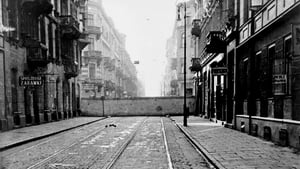
Warsaw: A City Divided
The history of the Warsaw Ghetto (1940-43) as seen from both sides of the wall, its legacy and its memory: new light on a tragic era of division, destruction and mass murder thanks to the testimony of survivors and the discovery of a ten-minute film shot by Polish amateur filmmaker Alfons Ziółkowski in 1941.
2019
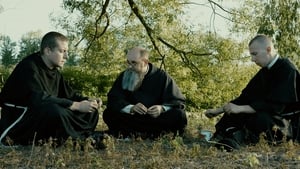
Two Crowns
Recreation of facts and stories of both experts and people who met Maximilian Kolbe and were shocked by his words and actions.
2017
Stanisław Lem: Autor Solaris
An account of the life and work of the Polish writer Stanisław Lem (1921-2006), a key figure in science fiction literature involved in mysteries and paradoxes that need to be enlightened.
2016
The Blizzard of '49
This one-hour documentary film tells the story of "Storm of the Century: The Blizzard of '49" - the worst series of storms in Wyoming's history. But for all the tragedy and loss, suffering and death, there was also hope and heroism, unselfish sacrifice and generosity. The blizzard brought out the best in people. Wyoming citizens from all walks of life cooperated together and demonstrated exceptional ingenuity in the face of dire circumstances. There were extraordinary acts of kindness, with people generously giving their time and resources. The public worked together to overcome seemingly insurmountable obstacles and ultimately won in the end.
2015
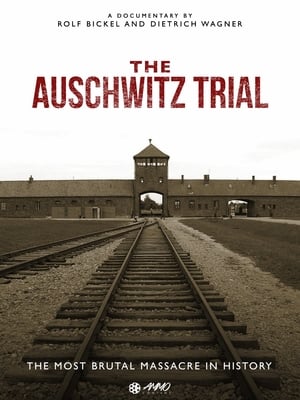
The Auschwitz Trial
The biggest trial of Nazi war crimes ever: 360 witnesses in 183 days of trial - a stunning and gripping portrayal of the most terrible massacre in history.
2013
My Good Fortune in Auschwitz
A film about friendship in difficult times, Auschwitz.
2012
Album(s) d'Auschwitz
Recently, two photo albums with photos from Auschwitz were found in 1944. One belongs to Officer Karl Höcker and the other prisoner Lili Jacob, who survived the concentration camp. The pictures taken during the same months show completely different worlds. A documentary that once again tells this important and awful part of Europe's history.
2012
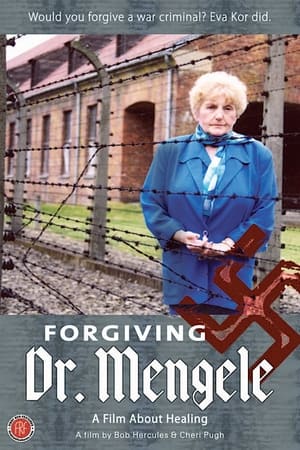
Forgiving Dr. Mengele
Eva Mozes Kor, who survived Josef Mengele's cruel twin experiments in the Auschwitz concentration camp, shocks other Holocaust survivors when she decides to forgive the perpetrators as a way of self-healing.
2006
The Girl from Auschwitz
A portrait of the legendary Swedish journalist and writer Cordelia Edvardson (1929-2012). She was only fourteen when she alone was brought to the concentration camp of Theresienstadt and later to the camp of Auschwitz.
2005
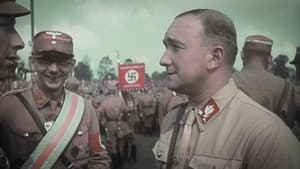
2 or 3 Things I Know About Him
What would your family reminiscences about dad sound like if he had been an early supporter of Hitler’s, a leader of the notorious SA and the Third Reich’s minister in charge of Slovakia, including its Final Solution? Executed as a war criminal in 1947, Hanns Ludin left behind a grieving widow and six young children, the youngest of whom became a filmmaker. It's a fascinating, maddening, sometimes even humorous look at what the director calls "a typical German story." (Film Forum)
2005
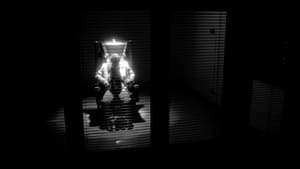
Mr. Death: The Rise and Fall of Fred A. Leuchter, Jr.
Documentary filmmaker Errol Morris investigates the case of a man who became an authority on capital punishment, but was discredited when he got involved on the wrong side of a court case. Leuchter, a meek man whose appearance belies his grim expertise, develops what he says is a more effective electric chair. Before long he's in demand from officials who want his opinions on other kinds of execution. But when called to aid the case of an accused Holocaust denier, Leuchter's problems begin.
1999
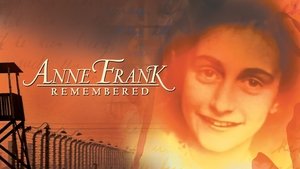
Anne Frank Remembered
Using previously unreleased archival material in addition to contemporary interviews, this Academy Award-winning documentary tells the story of the Frank family and presents the first fully-rounded portrait of their brash and free-spirited daughter Anne, perhaps the world's most famous victim of the Holocaust.
1995
The Liberation of Auschwitz
This chilling, vitally important documentary was produced to mark the 40th anniversary of the liberation of Auschwitz Concentration Camp. The film contains unedited, previously unavailable film footage of Auschwitz shot by the Soviet military forces between January 27 and February 28, 1945 and includes an interview with Alexander Voronsov, the cameraman who shot the footage. The horrifying images include: survivors; camp visit by Soviet investigation commission; criminal experiments; forced laborers; evacuation of ill and weak prisoners with the aid of Russian and Polish volunteers; aerial photos of the IG Farben Works in Monowitz; and pictures of local people cleaning up the camp under Soviet supervision. - Written by National Center for Jewish Film
1986
Lifesaving and Water Safety: Snorkeling Skills and Rescue Techniques
The film provides a comprehensive guide on snorkeling skills and rescue techniques, emphasizing the importance of proper equipment such as masks, snorkels, and fins. It discusses how to choose the right mask for comfort and fit, the proper use of snorkels, and techniques for clearing water from both masks and snorkels. The film also covers essential skills for entering the water safely, practicing buddy systems during snorkeling, and techniques for locating and rescuing submerged victims. It highlights the need for training and emphasizes that while these skills are crucial for rescue, they do not replace the need for a full certified course in skin diving.
1972