Watch EVE II (1976) Online Free
The Second Electronic Visualization Event took place at The University of Illinois Chicago Circle Campus in 1976. This documentation features Bob Snyder on EMU Synthesizer, Phil Morton on the Sandin Image Processor by Dan Sandin and Guenther Tetz on the GRASS (GRaphics Symbiosis System) by Tom DeFanti. In Morton's words these artists perform live realtime audio and video synthesis "using both analog and digital computers as 'visual instruments'..." Other artists credited with participation in the Electronic Visualization Events between 1975 and 1978 include Drew Browning, Larry Cuba, Barbara Latham, John Manning, Faramarz Rahbar, Ed Rankus, Michael Sterling, Barbara Sykes and Jane Veeder.
More Like This
Dead Frankenstein
Single channel HD video. Part of the "Distortion III" video album.
2013
Distortion III
Single channel HD video. Part of the "Distortion III" video album.
2013
Me, Myself, and My Third Eye: 4 Enlightened Stories For 1 Imperfect God
Features four distinct, bizarre, existential tales about people whose lives are in transition, who are each asking questions about themselves, their environments, and about God(s).
2010

Trash Talking
A showcase of Paper Rad's individual and group creations in the form of Trash Talking, a show for kids with bizarre characters trying to find their place in the world.
2006
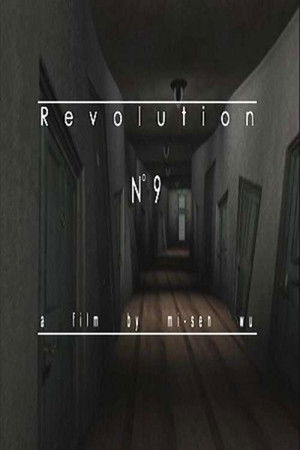
Revolution N. 9
An experimental short film from Mi-sen Wu.
2003
We Edit Life
This is the first in a series of films using documentary, industrial and educational film footage from the Prelinger Archive and The Internet Archive. The film explores the theme of technology, showing how the future can be edited and manipulated through advances in computer science. As the narrative in the film says "The art of computer graphics is only in its infancy yet it is already stimulating creative thought in far out areas where research is likely to get complex and unwieldy".
2002
Black Hole Radio
Black Hole Radio is an installation that consists of taped confessions of callers of the New York City Phone Confession Line and video images. The Phone Confession Line is based on anonymous callers ringing to confess on things they had done or thought like adultery, theft, murder or regrets. Thereafter anybody could call and listen to the confessions. Although making a confession was free, listening to a confession costs money. After Cohen got his hands on the confessions, he used them as an audio heartbeat to accompany video-images of every day life in New York City he had taken over the years. This installation is a portrait of the city with its dark secrets, hushed voices and nocturnal images. In this way Cohen tries to bring across an experience to the viewer that relies on absence, waiting and the effort to hear something in the dark.
1992
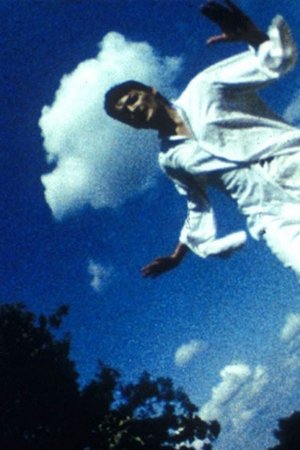
Falling. Desert. Syn
In "Falling. Desert. Syn" there is the body of repetition—not of tautology but of smooth resurrection; a body dying and being resurrected in a dance without suffering. A body of the desert, which is not deserted, but instead possessed by a force of attraction towards the sky, a force as strong as the one towards the earth. A body for the stars, the same one which plunges into the underworlds.
1985
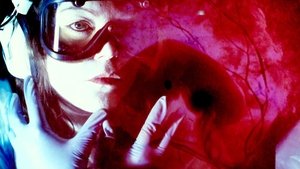
Selva. A Portrait of Parvaneh Navaï
Trance dances and out of body projection. In front of the camera, Parvaneh Navaï becomes a mediator who enters in contact with and immerses into the energies of Nature, while her own energy radiates and echos in the forest ("selva"). The camera amplifies and expands her presence, transforming the forest into an imaginary space. The camera becomes a painter's brush.
1982
Lapse Communication
Writes Kobayashi, "In 1972 I started a series of participatory performances where the first person performs an ambiguous action in front of a recording camera; the next person watches the recorded footage and imitates the action in front of a recording camera; the third person repeats the same procedure using the second person's video recording, and so on. Within the repetition of recording and action, the original gesture is transformed by the participants' misunderstanding, interpretation, and memory."
1980
Dawn
Szirtes's masterful experimental work is a dazzling composition of several years of filming within an industrial macro/microcosm, an abstract model of revolution and the beauty of daybreak.
1979
Ooi and Environs
A video installation using three monitors and mirrors, Ooi and Environs depicts the Tokyo cityscape with electronically modified footage of the city. Aiming to create an interactive environment, images reflected on the mirror shift as audience members move.
1977
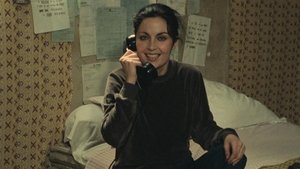
Gloria Mundi
An actress of political torture movies made by her husband has to finish his latest film and arrange a screening for distributors while the husband, who is also secretly an anarchist revolutionary, is away for some resistance operation.
1976
Camera, Monitor, Frame
Camera, Monitor, Frame is the first installment of Takahiko Iimura's "Video Semiotics Triptych" (the other two works are Observer/Observed, made in 1975, and Observer/Observed/Observer, made in 1976). The work analyzes the fundamental components of video: the camera, the monitor, and the frame, focusing on the role of each within a system of video as analogous to the functions of vision and speech.
1976
Under a Bridge
In this tape, Ko Nakajima and Video Earth Tokyo interview a homeless man. The subject is initially angry and frustrated, but gradually opens up and shares stories about his life. Under A Bridge was later broadcast on cable television.
1974
What a Woman Made
In Idemitsu's seminal women's liberationist video, the image of a tampon swirling in a toilet bowl slowly appears, as the artist speaks about the troubling roles, responsibilities and expectations of women in a clinical tone. Minimal in composition, What a Woman Made is a candid critique of the treatment of women in Japanese society.
1973
Oh! My Mother
Writes Ando, "Oh! My Mother was the first work I made using a newly bought 16mm camera I had purchased with the writer Shuji Terayama in Paris. This piece was selected for the Oberhausen International Film Festival. In 1969, there were, of course, no video cameras like ones we see now, and color TVs were only found at broadcast television studios. I had just been employed at the TBS (Tokyo Broadcasting System), and I often snuck into the studios after hours to experiment with the equipment. Oh! My Mother was made using the feedback effect, which is produced by infinitely expanding the image by looping the video."
1969
Image Modulator (Document of Installation)
Yamaguchi writes, "In April 1969, Image Modulator was shown at the Sony Building exhibition Electromagica '69, using three Trinitron color TV monitors behind a glass that created an optical effect. The glass acted as a literal filter, adding a mosaic effect to the video images."
1969
Biotaxia
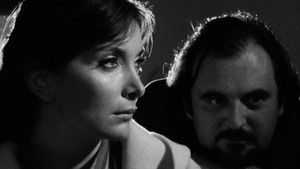
A 30-year-old actress named María struggles with deep-seated dissatisfaction and emotional emptiness within her marriage. Seeking a remedy for her existential restlessness, she attempts to reconnect with a former lover. Her journey of self-discovery unfolds across the modernist architecture of Barcelona.
1968
Un monsieur qui a mangé du taureau
In 1907, the Gaumont Films company in France made a slapstick comedy (silent, of course) with a title that would translate from the French as 'A gentleman who ate some bull'. Eugene Deslow got hold of that film and added an introduction plus a soundtrack, the latter consisting of commentary narrated by the single-named actor Bétove.
1935