Watch Evacuation (2021) Online Free
In 2014, the war begins. Immediately, a system of evacuation of the wounded and killed is being built, the outpost of which is the Dnieper - it is here that the first will be delivered, it is here that they are still received. Tatiana Guba has been coordinating the evacuation for 5 years. She is called "Mom Tanya". Thousands of people are grateful to her for her life. Serhiy Kryvorotchenko, director of the Dnipro Airport, has deployed a helicopter evacuation system since the beginning of the war. Eugene Titarenko, the film's director, in 2014-2015 was part of a volunteer medical battalion, communicates with the heroes of the film about the evacuation system. The viewer will see the whole way of saving lives, will be directly in the vortex of events and will understand how many people are involved in the process of saving one person.
Cast
Larysa Rusnak, Oleksandr Ihnatusha
More Like This
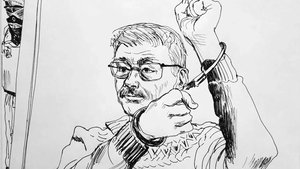
Politzek, the voices that challenge the Kremlin
In Russia, criticizing the war in Ukraine or Vladimir Putin’s regime has become a crime. Thousands of ordinary citizens are being arrested, tried, and imprisoned. They are called “Politzek”: political prisoners. Filmed clandestinely over the course of more than a year, Politzek gives a platform to those who, despite the fear, continue to speak out against Putin’s repressive Russia. Through the intersecting stories of a teenager sentenced to five years in prison for criticizing the government on social media, a young artist jailed for placing anti-war stickers, a human rights activist, and two theater directors facing Kafkaesque trials, the film unveils the machinery of state repression in Russia. With rare footage, broken yet unyielding voices, this is a story of silenced resistance.
2026

We Want To Live Here
A subtle glimpse in the every day life of kids in Borodyanka, Ukraine, one year after the Russian invasion. We follow 3 young boys, and get to know the intimate perspective of each. They are all very different but with a joint background of fear and pain. The public will get to see the strength of the Ukrainian spirit through the eyes of these kids. It will also reveal the real impact war had on children and most importantly the emotional consequences and damage it caused.
2024

Abo Jabal
It is May 8, 2024, and Israel is preparing to launch a destructive military operation in Rafah. Tahani, a Palestinian woman who has been internally displaced multiple times since the beginning of the attacks on Gaza, wonders where she and her children can find refuge once again. The film provides a glimpse into her family’s life before and after October 7, depicting the anguish of a mother who, marked by a painful loss, struggles to find peace.
2024
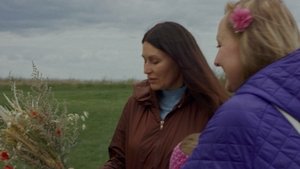
Where Motion Has Not Yet Ceased
Prague, 2022 - Having found refuge from the Russian-Ukrainian conflict, two women and their young daughters face the waiting and hope of an imminent return to Ukraine. Shelved in this city, these women tell the story of their past and give access to their daily life, their present, in which they try to learn how to live again. This documentary tries to give a voice to those who live war differently.
2023
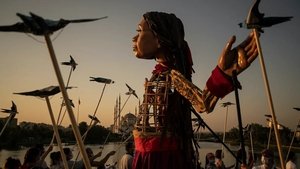
The Walk
Asil is a young Syrian refugee awaiting documents in Turkey while processing the trauma of losing her home and family. Her story gives voice to a charming gigantic puppet named Amal, who represents millions of migrant and displaced children in a walk from the Syrian border in Turkey all the way across Europe. Escorted and animated by a group of puppeteers who are themselves refugees, Amal’s epic journey is one of compassion and discovery.
2023

Explosions Near the Museum
Looted by Russian occupational forces between 24 and 26 October 2022, the Kherson Museum of Local Lore used to house Southern Ukraine's largest and oldest collections of antiquities. The museum featured more than 173000 objects, spanning seven thousand years, from Scythian gold to World War II weaponry. Two weeks before Kherson was liberated by the Ukrainians, Russian occupational forces enacted a strategic theft, stripping centuries of Ukrainian history from the museum/region. The sound of shellings and missile strikes was recorded during filming inside the museum on December 12, less than two kilometers away from russian-occupied territory.
2023
W milczeniu
Until now, they have stood on the sidelines. They have not appeared before the cameras. They have not taken part in public discussion. It is mainly to them that the documentary film by the well-known journalist Ewa Ewart was devoted. It shows the face of the Smolensk catastrophe through the eyes of the victims' families. April 10, 2010 went down in the memory of Poles as a day of national drama. But for the characters in the film, it was the day of their greatest personal drama. Along with the presidential couple, their loved ones passed away in shocking circumstances. For most, the time passing since the Smolensk catastrophe does not bring relief. Ewa Ewart and her film crew accompany the families at various stages of their struggle with difficult emotions. The film is in the process of being made and will include sequences and stills that have not been used anywhere before.
2011
Break Out
The love story of successful businessman Alexei and young doctor Dimitri unfolds against the backdrop of Russia’s escalating anti-LGBTQ laws and the invasion of Ukraine. Meeting in secret during COVID lockdowns, the couple faces criminalization, police raids, and the looming threat of being sent to the front line. Their fight for freedom takes them across three continents in a desperate bid to live authentically and without fear. First-person testimony is blended with striking animation and dramatic reenactments.
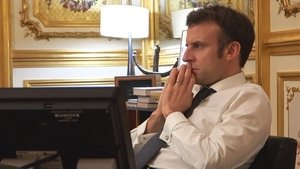
A President, Europe and War
They call each other Emmanuel and Vladimir - but despite the informal tone, a fateful negotiation is taking place. During France's presidency of the EU, President Macron takes on the task of negotiating with President Putin in an attempt to prevent an invasion of Ukraine. For the first time, we get to follow the diplomatic game behind the scenes and hear parts of their phone conversations.
2022
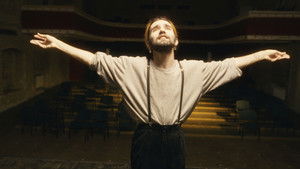
The Hamlet Syndrome
Five young Ukrainians discuss life following the Maidan Revolution of 2014. Not all fought in the Russian-Ukrainian war, but it, regardless, shattered their life plans. Representing 'Generation Maidan', they face the question of how to cope with experiences of violence, how to go on. A local theatre director produces Hamlet, wherein they can use Shakespeare’s tragic character as a mirror and face their traumas onstage. For them, 'to be or not to be' is not simply text but an existential dilemma with no clear answer.
2022
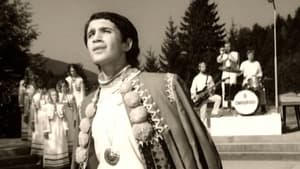
Mustache Funk
The early 70s is a golden epoch of our popular music. Hundreds of songs of exquisite beauty. Groundbreaking sound. Futuristic suits. How and whence could all of this emerge in a Soviet socialist republic? How did a brand new music scene, original in sound and philosophy in every way, and at the same time absolutely in sync with global music trends come forth? They weren't that fond of the Soviet label «VIA». And since neither of us is fond of this acronym, let us rechristen this music.
2021

Ballroom King
The film tells the stories of three protagonists, which are intertwined in one story about the Master: a rural school pupil who dreams of ballroom dancing – Makar, world champion in ballroom dancing – Alex Ivanets, and his first teacher – Petro Horhol, who lives in a small Ukrainian town of Poltava.
2021
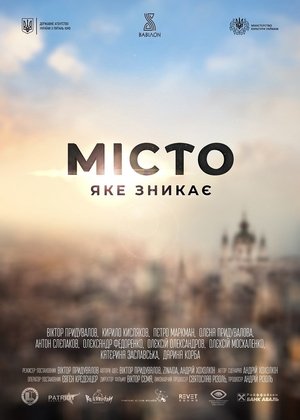
Fading City
A docu-art film about Kyiv and the contemporary problems of the capital. The film raises the issue of the dilapidated state of Kyiv's old buildings and the search for effective mechanisms to preserve the city's architectural heritage.
2020
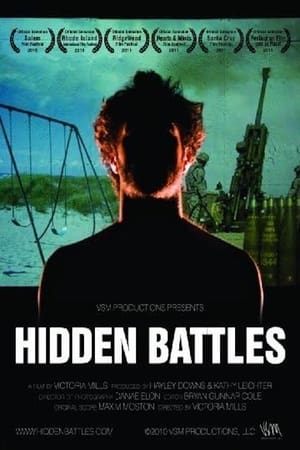
Hidden Battles
Dramatic and deeply personal film about the psychological impact of killing on the lives of five soldiers. Representing a cross section of nationalities, gender, class and race, these soldiers reveal intimate memories about the central act of war, the killing of another human being. How do these individuals make sense of what they have done? What happens when time challenges their carefully constructed stories? Consciously apolitical but deeply psychological, Hidden Battles examines the strength and struggles of men and women who kill and how they create a life for themselves afterward.
2010
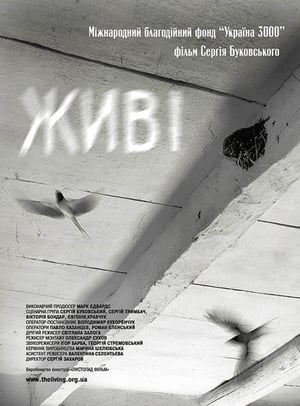
The Living
Tells the story of the tragic events in Ukraine in 1932-33, the genocidal Great Famine or the Holodomor, and one Welshman's attempts to tell the world what was happening.
2009
Isänmaan vangit
An interview documentary about Finnish military court sentencing procedures after the Continuation War.
1996
Suzana from the Cellar
A cellar-dwelling woman talks about her life to a camera during the devastating war in Bosnia.
1995
Tchad 3
1976

Tchad 2 : L'Ultimatum
1975
Message from Geneva
This expository film shows the mood of European society on the eve of the Second World War while promoting the values of international cooperation. Using the Swiss office of the BBC as an example, the film describes the functioning of radio and presents the possibilities opened by mass communications. After the advent of sound film, Cavalcanti promoted experimentation with sound, and in this connection he was interested in the communicational, organizational, and social aspects of radio.
1936