Watch Enterprise: A Documentary Film (1948) Online Free
Film sponsored by the Troy, New York–based manufacturer of Arrow shirts to explain its reasons for moving its business down south. The true story of how two World War II veterans invited the company to occupy an industrial plant that they had built in the hope of revitalizing Buchanan, Georgia. Five hundred residents signed a pledge stating that they were willing to work in the new factory. Cluett, Peabody & Co. eventually employed one-third of the townspeople.
Cast
William Adams
More Like This
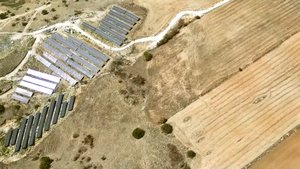
Metamorfosi
Machines relentlessly working under the scorching sun. Pumps, reels, and unbearable horizons behind corrugated metal sheets that spark at the touch. Eleven months after the devestated floods of 2023, the rural greek settlement of Metamorfosi, awaits the end of a suffocating August and its inevitable transformation.
2025

Hotel Chocolat at Christmas
In the lead-up to the festive bonanza, an exclusive look inside the chocolate-maker's inventing room, and its 'chocolate imaginarium' too. Prepare for special choc drinks and cranberry treats.
2024
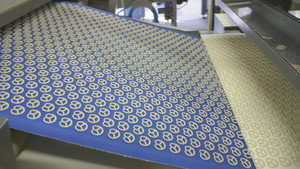
The Snack Giants – Behind the Scenes of Confectionery Manufacturers
The high consumption of snacks and sweets in Germany keeps producers on their toes. In Viersen, consumer giant Mars produces 10 million cookie chocolate bars every day-and each of them must look and taste absolutely identical. In Erdmannhausen, snack pretzels are produced in the first Württemberg pretzel factory, Huober. And the Lübeck-based marzipan manufacturer Niederegger wants to use traditional production processes to produce what it claims is the best marzipan in the world.
2022
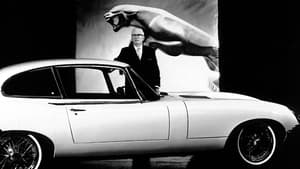
Classic British Cars: Made in Coventry
Find out how the cars were crafted and discover the secret family stories behind the most famous marques including Riley, Standard, Triumph and Jaguar. Legendary racers Rosemary Smith, Pat Quinn and Norman Dewis share their memories of competing Coventry’s cars in some of the world’s most dangerous motorsport events. And, meet the people passionate about preserving the city’s extraordinary motoring heritage.
2021

À la canne blanche
2019
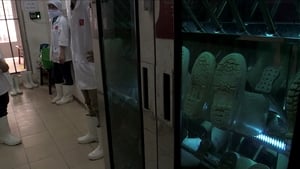
Ho Chi Minh Kim Chi
The sights and sounds of a kimchi factory in Vietnam.
2016
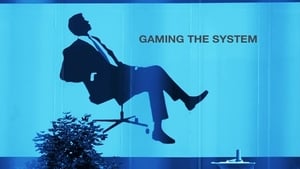
The Price We Pay
A documentary on the history and present-day reality of big-business tax avoidance, which has seen multinationals depriving governments of trillions of dollars in tax revenues by harboring profits in offshore havens.
2014
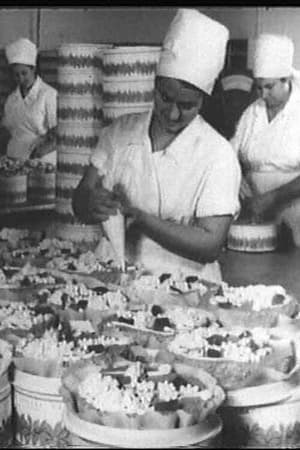
Charlie Marx and the Chocolate Factory
Charlie Marx and the Chocolate Factory started as an investigation of the link between politics and chocolate, at the Karl Marx Confectionary Factory in Kiev, Ukraine. Since access to the factory was denied, the project had to be re-considered, re-invented or re-enacted. Mostly made of archival footage and re-enacted performances based on the company's website, the film merges what was left of the initial idea with what has been collected and realized instead. It borrows from the genres of video art, 'Man on the street' interview, direct address, corporate film, essay, and music video, without legitimately belonging to any of them. The film unravels as a reflection on its own failure, and yet keeps on investigating what has always been at stake: the shift from public to private property (and from analog to digital technology), dialectics of permanence and change, language as a mirror of ideology, and post-Soviet oligarchy culture.
2009
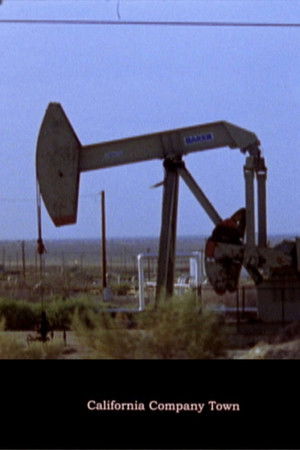
California Company Town
Lee Anne Schmitt explores California's landscape and past to document the history of one-time boom towns built and abandoned by the industries that necessitated their creation. Sold as a limitless land expansive with free opportunity, California was actually, from its onset, fissured by the interwoven needs of private and public interests. Schmitt's film covers various locations through time, as the major industries of the early 20th century (mining, lumber, oil) give way to the military, eventually leading to multinational corporations, and the use of small towns as satellites for growing urban metropolises.
2008
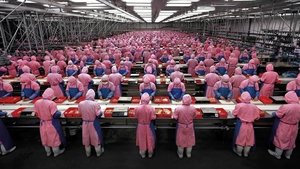
Manufactured Landscapes
MANUFACTURED LANDSCAPES is the striking new documentary on the world and work of renowned artist Edward Burtynsky. Internationally acclaimed for his large-scale photographs of “manufactured landscapes”—quarries, recycling yards, factories, mines and dams—Burtynsky creates stunningly beautiful art from civilization’s materials and debris.
2006

The Corporation
Since the late 18th century American legal decision that the business corporation organizational model is legally a person, it has become a dominant economic, political and social force around the globe. This film takes an in-depth psychological examination of the organization model through various case studies. What the study illustrates is that in the its behaviour, this type of "person" typically acts like a dangerously destructive psychopath without conscience. Furthermore, we see the profound threat this psychopath has for our world and our future, but also how the people with courage, intelligence and determination can do to stop it.
2003
Megacities
Megacities is a documentary about the slums of five different metropolitan cities.
1998
Cotton Mill, Treadmill
Director Denys Arcand made an inquiry on textile industry in Quebec, meeting employers and workers of that industry.
1970
Hmoty zítřka
1961
Lobsters Unlimited
An overview of the lobster fishing industry in Nova Scotia.
1959
Reconstruction of Hill Street Birmingham
An engineering feat: Second city civil engineers complete a new bridge to carry traffic over New Street's tangled railway intersections.
1949
Radostná práce
1946
Atlas
The concept of machine-made knit was known as early as the 1850s, but it was only during the 1920s that the quality of the material had improved. When the plant known as "Atlas" was introduced in 1931, the shop windows drew a lot of attention, and Aho & Soldan was ordered to make a promotional film. In this well-paced film, we see the jersey production step by step.
1931
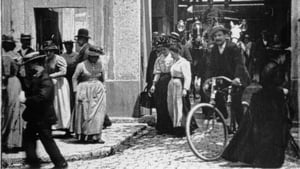
Workers Leaving the Lumière Factory
Working men and women leave through the main gate of the Lumière factory in Lyon, France. Filmed on 22 March 1895, it is often referred to as the first real motion picture ever made, although Louis Le Prince's 1888 Roundhay Garden Scene pre-dated it by seven years. Three separate versions of this film exist, which differ from one another in numerous ways. The first version features a carriage drawn by one horse, while in the second version the carriage is drawn by two horses, and there is no carriage at all in the third version. The clothing style is also different between the three versions, demonstrating the different seasons in which each was filmed. This film was made in the 35 mm format with an aspect ratio of 1.33:1, and at a speed of 16 frames per second. At that rate, the 17 meters of film length provided a duration of 46 seconds, holding a total of 800 frames.
1895
