Watch Entendidos (1982) Online Free
A documentary on the history of the gay magazine Entendidos, a pioneering publication on LGBTQ+ rights in Venezuela.
More Like This
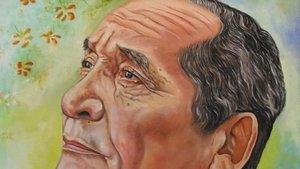
La Memoria es un Caracol
Documentary about the life of Luis Mariano Rivera.
2025

Love & Rage: Munroe Bergdorf
Focuses on one of the most talked about and important issues of our time – how to find yourself and your truth. It follows model and transgender activist Munroe Bergdorf’s journey and provides hope for those facing similar challenges.
2025

Trans and Pregnant
Two men undertake a thought-provoking journey to parenthood. Not by adoption or surrogacy, but by Frankie, a trans man, carrying their baby. Made with support from NZ on Air.
2024
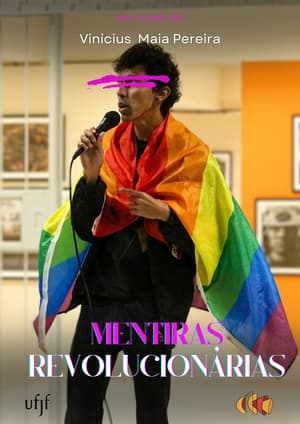
Mentiras Revolucionárias
A documentary that explores the conflicts between the fear of family repression and the desire for social change by telling the story of the director who, at the age of 18, creates an LGBTQUIA+ struggle movement without his parents knowing.
2023
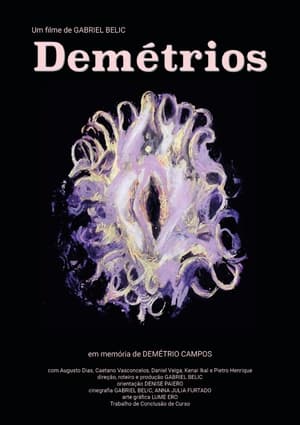
Demétrios
Performative and expository documentary, which highlights the contrast of experience among transgender men in Brazil. The short film brings five characters - Kenai, Caetano, Augusto, Pietro and Daniel -, each one reflecting a different reality.
2022

Que sirva de ejemplo
What is heteronormativity, what does it mean for men and women, what is the cultural canon, does culture reflect or does culture construct? We reflect on all this by putting in dialogue ten people who, from different fields of culture, have thought about this.
2021
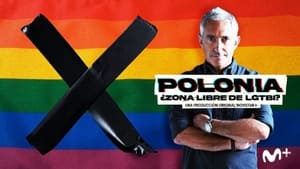
Polonia: ¿zona libre de LGTBI?
Jon Sistiaga takes an immersive trip to Poland, a country divided into two zones: on the one hand, the urban and pro-European, and on the other, the rural and ultra-Catholic, still anchored in the traumas of the war and the post-war period. Is Poland a homophobic country or does it have a homophobic government? How does the European Union allow this situation?
2021

Being BeBe
The intimate journey and unpublished backstory of BeBe Zahara Benet – a charismatic drag performer originally from Cameroon, and the very first winner of the culture-changing phenomenon, RuPaul’s Drag Race. With over a decade of unprecedented access, we observe BeBe’s struggles with celebrity, authenticity, success, and failure.
2021
Así Pasó
2021

The Beauty President
In 1992, at the height of the AIDS pandemic, activist Terence Alan Smith made a historic bid for president of the United States as his drag queen persona Joan Jett Blakk. Today, Smith reflects back on his seminal civil rights campaign and its place in American history.
2021

Letter Beyond the Walls
Letter Beyond the Walls reconstructs the trajectory of HIV and AIDS with a focus on Brazil, through interviews with doctors, activists, patients and other actors, in addition to extensive archival material. From the initial panic to awareness campaigns, passing through the stigma imposed on people living with HIV, the documentary shows how society faced this epidemic in its deadliest phase over more than two decades. With this historical approach as its base, the film looks at the way HIV is viewed in today's society, revealing a picture of persistent misinformation and prejudice, which especially affects Brazil’s most historically vulnerable populations.
2019
Una Fabula Muy Trillada: The Legacy Of Dermis Tatú
Two decades ago, Venezuela's power trio Dermis Tatú released their only album, "La violó, la mató y la picó" ("Raped her, killed her and cut her"). The band was an offspring from the separation of Sentimiento Muerto, and was formed by Carlos "Cayayo" Troconis (voice and guitar), Héctor Castillo (bass) and Sebastián Araujo (drums). The record is still considered by many as the most influential in the Venezuelan rock scene. Twenty years later, Castillo and Araujo remember the stories behind the recording, as a group of the current generation of Venezuelan rockers, not only explain its influence and impact, but also play all the songs from the album, making them their own.
2017
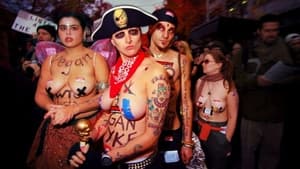
Queercore: How to Punk a Revolution
A documentary on Queercore, the cultural and social movement that began as an offshoot of punk and was distinguished by its discontent with society's disapproval of the gay, bisexual, lesbian and transgender communities.
2017
The heart of Caracas
Caracas has been changing since the nineteenth century this is a story that tries to explain why the Venezuelan capital is complex, chaotic and fertile. In light of these new evidences, community experiments, social awareness and organization of people, seem to be the necessary ingredients to rescue a metropolis that is not yet completely lost.
2013
Final Absolution: History of a Photograph
During a military uprising known as “El Porteñazo”, a priest is photographed while trying to help a soldier wounded in combat. The photo travels the world and is awarded the most important prizes in photojournalism, such as the Pulitzer Prize and the World Press. Throughout this documentary, photographers, editors and witnesses reveal various aspects surrounding that image: who is the priest, who was its author, the events that surrounded the photographic event, what was its political role and what said image represents in the history of Venezuelan journalism. Additionally, it allows the presentation of other photographs, some unpublished, that Rondón managed to capture in those difficult moments.
2010
Swing con Son
Music documentary about Billo Frómeta by director Rafael Marziano Tinoco from Venezuela.
2009
Electofrenia
Electofrenia (1978), Neri's third political film, requires a critical distance in order to consider the reasons why Venezuelans choose their presidential candidate in the 1978 election. Electofrenia, signifying the chaos of the elections, proposes that many Venezuelans select the candidate who benefits them personally rather than the one who is good for the country at large. Not without irony, the film brings up Venezuela's two decades of peaceful democratic government. If people choose what is good for them, can we call it a democracy?
1978
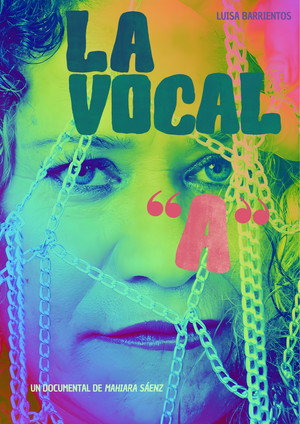
The Vowel A
The story of Luisa Kiara Marabolí Barrientos a transgender woman, and her journey from living 44 years in obscurity under an imposed identity to becoming a proud social leader and role model in her community.

Basquete das excluídas
Originating in Curitiba in 2013 and spreading to Portugal, Spain, Mexico and Brazil, “Basket das Excluídas” consists of an LGBTQIA+ group gathering to play basketball on a public court in the city. They vogue and resist with their bodies around the city, challenging norms and celebrating diversity while engaging in a game that expresses identity and a form of resistance.
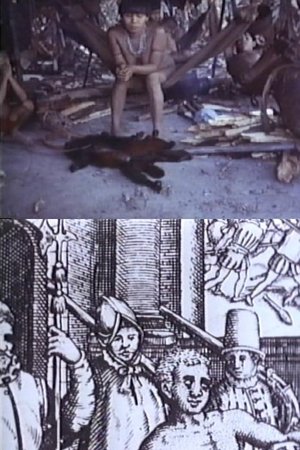
Colonial Times
Three centuries of Venezuela's history as a Spanish colony are considered from economic, political and social standpoints; evocations of the past are compared to the present. Based on the ideas and research of Federico Brito Figueroa, Alfredo A. Alfonso, Miguel A. Saignes, Josefina Jordan, and Thaelman Urgelles among others.
1976