Watch El Ouelf Essaïb (1990) Online Free
More Like This
A l'ombre des draps
2025

The King of Algiers
Omar, better known as Omar the Strawberry, is an old-fashioned bandit. Forced to flee to Algeria, he makes a living out of petty crime, accompanied by his famous sidekick Roger. After decades of ruling the French criminal underworld, they must come to terms with their new life together, which until now has been one of debauchery and violence.
2023
Mascarades
Mounir Mekbek lives with his family in a small village in the heart of the Algerian countryside. Very proud and sure of himself, he has only one dream- to finally be appreciated by his fellow villagers. Screwing up his carefully maintained image is his headstrong, narcoleptic sister Rym who falls asleep anywhere and whom the village is convinced will end up a spinster. One evening, Mounir returns from town drunk and announces that he's found a suitor for his sister. The fake story snowballs and snowballs until the suitor morphs into a rich, blonde Australian. The village begins preparing for the wedding in earnest - but without a bridegroom in sight.
2008
Once Upon a Time in the Oued
In 1988, Johnny Leclerc, the son of a Norman mother and an Alsatian father, lives in a suburban housing estate with his friends. He behaves like a Muslim, observes Ramadan and wears a djelaba. He's even convinced that his name is Abdelbachir and that he was born in a small village in the bled. When his friend Yacine gets into trouble with a local kaid and decides to return to Algeria for the vacations, he smuggles himself into the Sabri family's luggage to fulfill his dream and finally get to know his "roots". As soon as he arrived on the Algerian coast, Johnny felt right at home. But Yacine is opposed to his father, who wants to arrange his marriage.
2005

The Harem of Madame Osmane
In Algiers in 1993, while the civil war is starting, Mrs Osmane's tenants have to endure her bad temper. Her husband left her and the fear to lose her respectability haunt her. The former member of the Resistance during the Independence War persists in controlling the slightest moves of the households rather than struggle against her own frustrations. Learning her daughter is in love, the possibility of finding herself alone will push her to the limit: The symbolical Mrs Osmane "harem" is about to collapse.
2000
From Hollywood to Tamanrasset
On the outskirts of Algiers, Algeria. the arrival of the satellite dishes governs the lives of the inhabitants. Dissatisfied with their lives, they think of themselves as the heroes of American soap opera and movies, so JR, Sue Ellen, Rambo, Kojak, Spock and others take possession of bodies and minds, with many typical American culture elements. These heroes mix in a beautiful funny mess, with tradition and modernism, Islam and television, reality and fiction.
1990
Elli Fat Mat
27 years after 1962, Antoine returns to Algiers...
1989
The Mill of M. Fabre
The story of the post-independence nationalization of the mill of Monsieur Fabre, an old man attached to the land of Algeria where he was born. In this small town in eastern Algeria, there was nothing else to nationalize and they were actively preparing for the arrival of high dignitaries who would elevate the mill to the rank of an industrial flour mill even though it was threatened with ruin. The comedy gets worse when the football player from the local team withdraws for love, the officials' visit is canceled and Mr. Fabre returns.
1983

One Roof, One Family
Selim Mechoubine, a young man of 28, is the eldest of a large family. In the cramped accommodation he shares with his parents, brothers and sisters... he occupies the kitchen, the refuge of his dreams and his many fantasies. Selim, the court clerk where divorcing couples parade..., wants to get married. His mother finds him “the rare pearl”. But now, the bride's family demands that the couple have their own home... Selim's misadventure begins; he finds himself confronted with the problems of the housing crisis which forces him to begin a long quest, procedures, requests to find the sine qua non condition for his marriage.
1982
Take Your Ten Thousand Francs and Get Out
In 1980, Lionel Stoléru—France’s Secretary of State for Migrant Workers—introduced a "repatriation grant" of 10,000 francs (known as the "Stoléru million"), paid to immigrants who agreed to return permanently to their countries of origin. One Algerian family decided to leave France. Upon arriving in the small rural town of Boufarik, Algeria, in a brand-new Peugeot 404, they caused a scandal. Their liberated ways drew the villagers' ire, and the two children knew nothing about Algeria or local customs. The film was selected for the Cannes Film Festival in 1981, and in 1982, it won the Critics' Prize at the Chamrousse International Comedy Film Festival.
1981

Saha Dahmane
Film about Dahmane El Harrachi, musician, singer and composer of the famous song "Ya Rayah", a cult song covered by Rachid Taha, which will enjoy international success. Virtuoso of the banjo, the work of Dahmane El Harrachi did not initially respond to the canons of the purists of Algiers Chaâbi song. However, he will end up establishing himself alongside great masters of the genre, El Hadj M'hamed El Anka, Boudjemaâ El Ankis, El Hachemi Guerouabi, Amar Ezzahi... He plays his own role in this film shot with his musician friends, just before his tragic death in 1980 in a car accident on the Corniche of Algiers.
1980
Kahla wa Bayda
Rabie is a kid from Sétif in 1980, trying to collect money to buy a wheelchair for his paralyzid sister Sassia, so she can get out of the house.
1980
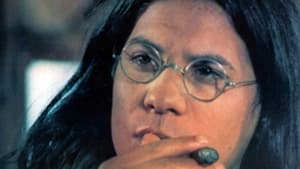
The Adventures of a Hero
In one of the tribes of the Algerian Sahara, everyone awaits the arrival of the hero who will defend the rights of the poor. A man decides one day to put the mark of the "hero" on his newborn son and the whole tribe celebrates the arrival of this eagerly awaited messiah who came to save them. This false hero then grows up by assuming his role of savior. Filled with cynicism, he crosses the countryside and has a number of adventures.
1979
The Good Families
The film dialectically explores the phenomena of family alliances in urban and rural areas, technocracy, and the Algerian landed bourgeoisie. The film was completed but apparently never distributed by the ONCIC.
1973

Inspector Tahar's Holiday
Inspector Tahar and his apprentice are invited by Mama Traki, a popular Tunisian heroine, to spend their vacation in Tunis. Before leaving Algiers, they stop at a tourist complex where a murder has just been committed. The investigation full of surprises and twists and turns will take them to Tunis where they will find Ommi Traki and his family...
1972
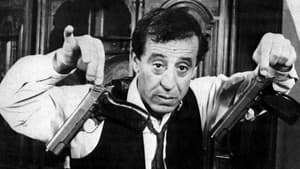
Hassan Terro
While he tries by all means to stay out of the bloody upheavals caused by the battle of Algiers, Hassan, an honest and naive father, unknowingly offers hospitality to a mujahid actively sought by the army. French. A series of events and misunderstandings quickly catapult him to the forefront, presenting him under the pseudonym “Hassan Terro”, a great fictitious terrorist who would have sworn the doom of the French army...
1967
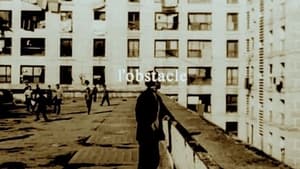
L'Obstacle
Algerian youth of the 1960s, straddling traditional South Mediterranean and Western culture and the desire for emancipation of younger generations to find true love.
1965
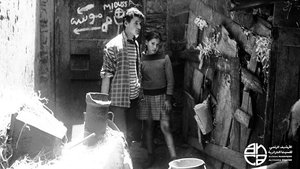
Fadila
Fadila is a short film shot in the Casbah of Algiers during the Algerian War by a young French army conscript with the young Fadila Tizraoui and Djamel Bendeddouche who would become filmmakers after independence. The film depicts the friendship of two children in the streets of the Casbah and their encounter one day in December with Santa Claus... Fadila won the Grand Prix du Cinéma at the 1959 Children's Fair, was awarded a prize by the National Center for Cinematography (CNC) and was successfully exported.
1960
The Unexpected Party
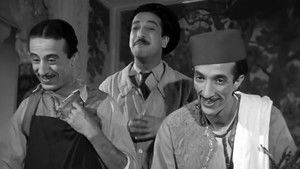
This musical comedy produced in 1953 for the General Government of Algeria, features the comic trio composed of Rouiched, Mohamed Touri and Sid Ali Fernandel, accompanied by the orchestra of the master of the Algiers Chaâbi El Hadj M'hamed El Anka, the singer Fadhéla Dziria, Mustapha Skandrani on the piano. Some scenes were filmed at the Summer Palace (the current Palace of the Algerian Presidency, called the People's Palace). André Zwobada, the director, will play an important role after the independence of Algeria in 1962, in the production and preservation of the first Algerian newsreels.
1953
Ikach
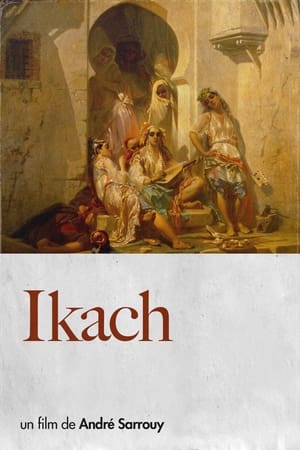
Ikach, is a farce in two acts in popular Arabic, written by André Sarrouy and adapted and directed by himself. A critique of marriage in colonial Algeria at a time when women were little taken into account. Cunning of women and stupidity of husbands, on an original soundtrack composed by Mohamed Iguerbouchène.
1937