Watch Einmal Hooligan - immer Hooligan? (2006) Online Free
The documentary accompanies a group of soccer fans twice on a train ride to a soccer match - first in 1991 and then again in 2006. Have the fans learned something or are they still hooligans?
More Like This
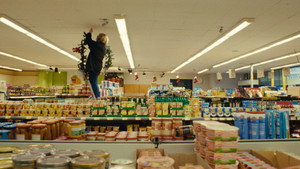
Nothing Remains Nothing Disappears
A Berlin street corner is slowly changing: an aging supermarket turns into a construction site and finally a new building. People restock shelves, demolish walls, take breaks and count money. Those who work here participate in the making and unmaking of the place. How does it shape the conditions of their labor? Between supermarket aisles, construction scaffolding and exposed concrete, different versions begin to overlap. Repetitions appear like echoes between worlds, both playful and eerie.
2026
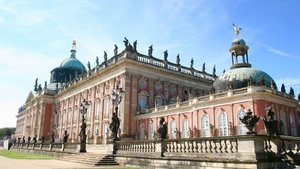
Sanssouci, Friedrichs Paradies
2025
The Block
Home game, that's 90 minutes of commitment. You suffer jointly, demand the next goal, and you know where the referee’s car is parked. And in the break, there’s beer and sausages. Whether it’s the Champions League or the local league: the fans stand together.
2024
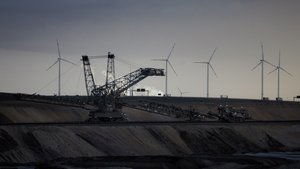
The Unpredictable Factor
In today's climate debate, there is only one factor that cannot be calculated in climate models - humans. How can we nevertheless understand our role in the climate system and manage the crisis? Climate change is a complex global problem. Increasingly extreme weather events, rising sea levels, and more difficult living conditions - including for us humans - are already the order of the day. Global society has never faced such a complex challenge. For young people in particular, the frightening climate scenarios will be a reality in the future. For the global south, it is already today. To overcome this crisis, different perspectives are needed. "THE UNPREDICTABLE FACTOR" goes back to the origins of the German environmental movement, accompanies today's activists in the Rhineland in their fight against the coal industry and gives a voice to scientists from climate research, ethnology and psychology.
2022
Drei Frauen
2022
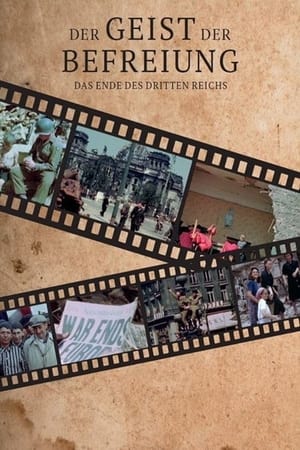
Der Geist der Befreiung – Das Ende des Dritten Reichs
Experience the fall of the Third Reich like never before, the last year of the war and the liberation of Europe from Nazi rule. Documented up close by the most courageous cameramen of their time and uniquely edited. The most authentic documentary about the fall of Hitler's Germany, over ninety minutes of brilliant HD color footage with impressive original commentary from the time.
2017
Junge Deutsche im Mai
Every year, the most beautiful, best and proudest representatives of German youth meet in Dresden to take to the streets together.

Russia's Hooligan Army
At the 2016 European Championships, violent clashes between Russian and English supporters in Marseille put the spotlight on Russian hooliganism. Russian hooligans injured over 100 English supporters, beating two into a coma, and it raised serious concerns ahead of Russia hosting the 2018 World Cup. Filmmaker Alex Stockley von Statzer travels to Russia to experience the country's football fan culture first hand. Featuring footage filmed in Marseille in 2016, rare interviews with members of some of the most feared firms like the Spartak Gladiators and Orel Butchers, and new footage of an organised fight for wannabe recruits, this show uncovers a world where brutal violence has become a mark of honour and a symbol of newly resurgent Russian masculinity.
2017

Peter Eisenman: Building Germany's Holocaust Memorial
This documentary explores the creation of the Holocaust Memorial in Berlin as designed by architect Peter Eisenman. Reaction of the German public to the completed memorial is also shown.
2009
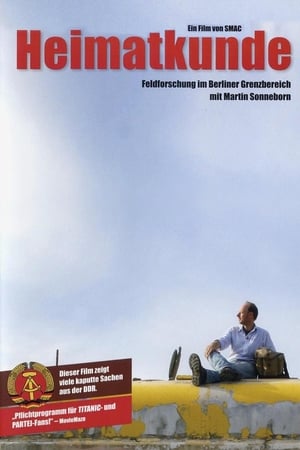
Heimatkunde
Former "Titanic" satire magazine editor Martin Sonneborn takes an undercover trip around Berlin and discovers the East-German mentality and what is left of the socialist German Democratic Republic.
2008

Prinzessinnenbad
A film about three teenagers - Klara, Mina and Tanutscha - from the Berlin district of Kreuzberg. The trio have known each other since Kindergarten and have plenty in common. The three 15-year-olds are the best of friends; they are spending the summer at Prinzenbad, a large open-air swimming pool at the heart of the district where they live. They're feeling pretty grown up, and are convinced they've now left their childhood behind.
2007

Queens Don’t Cry
Bosom buddies BeV StroganoV, Ovo Maltine, Ichgola Androgyn and Tima die Göttliche are four Berlin drag queens who met in the mid 1980s. These four queens became Germany’s most popular drag performers and have been busy fertilizing the German cultural scene. Besides being performers, they are also political activists – in AIDS awareness, anti-gay violence, the sex workers movement and the struggle against the extreme right and racism. The film tells their story.
2002
Keepers of Hope
"For the sake of the neighborhood, for the sake of the children of the neighborhood. lets go Bnei Yehuda ." There are films that cannot be forgotten, that have become the soundtrack of Israeli football. One of them is "Shomrim Al H'tikva", which accompanied Bnei Yehuda in the survival campaign in 2000. Shia Feigenbaum, Yossi Medar, Hezi Shirazi and others on a heroic journey in the Hatikva neighborhood. 40 minutes of a cult film, which every Israeli football fan must see.
2000
Nick Cave: Stranger in a Strange Land
Documentary made for Dutch television about Nick Cave in Berlin in 1987.
1987
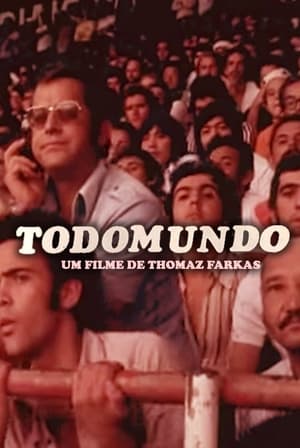
Todomundo
The crowd is the focus of this documentary, which presents historical scenes of the Brazilian Championship. Irreverent and poetic, the movie pays homage to the spectacle provided by football.
1980
Das Märkische Viertel - Aussichten und Einblicke
Documentary about a district of Berlin
1973
Begegnung in Berlin
Short documentary directed by Günter Schlesinger
1965

Berlin under Construction
Documentary short about the rebuilding of Berlin in 1946 from a Soviet perspective, showcasing the social changes that have taken place since the fall of Hitler and of Jews working side-by-side with non-Jewish counterparts.
1946

How the Berlin Worker Lives
This documentary shows how the Berliner workers lived in 1930. The director Slatan Dudow shows through images: a) the workers leaving the factory; b) the raise of the rents; c) the "unpleasant" guest, meaning the justice officer that brings the eviction notice; d) the fight of classes of the houses of capitalists and working classes; e) the parks of the working class; f) the houses of the working class, origin of the tuberculosis and the victims; g) the playground of the working class; h) the swimming pool for the working class, ironically called the "Baltic Sea" of the working class; i) the effects of humidity of basement where a family lives, with one member deaf; j) one working class family having dinner while the capitalist baths his dog; k) the eviction notice received from an unemployed family and their eviction.
1930
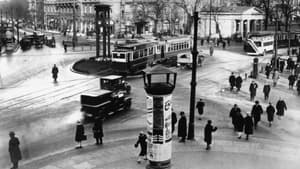
Berlin: Symphony of a Great City
A day in the city of Berlin, which experienced an industrial boom in the 1920s, and still provides an insight into the living and working conditions at that time. Germany had just recovered a little from the worst consequences of the First World War, the great economic crisis was still a few years away and Hitler was not yet an issue at the time.
1927