Watch Egypt: The Treasure Of The Sacred Bulls (2024) Online Free
This documentary follows a team of archaeologists, mandated by the Louvre Museum, as they pick up where Egyptologist Auguste Mariette left-off with his discovery of the Serapeum tomb of the bull of Apis - one of the most sacred places in Saqqara, Egypt, in 1850. Mariette also managed to map out a network of underground tunnels leading to other burial sites that he did not have time to uncover. With exclusive access, we follow a team of archaeologists continue the research of Mariette.
More Like This
BRUTE
Imhotep, le Secret des Tombes Pharaoniques
2023

Imhotep, la momie aux bijoux d'or
Zahi Hawass, an Egyptian archaeologist, has been excavating the ancient necropolis of Saqqara, south of Cairo, for several decades. He hopes to discover the tomb of Imhotep, the architect of humanity’s first pyramid: Djoser’s Step Pyramid. Together with his team, he will unearth fabulous tombs and uncover the secrets of Egyptian mummies.
2023

Magie & Medizin - Die Geheimnisse des Papyrus Ebers
At around 3,500 years old, the Ebers Papyrus is the oldest completely preserved medical manual in the world. Recipes were written down here on 18.6 meters in ancient Egypt. When Georg Ebers set out in search of the scroll in 1872, its existence was questionable and its sensational condition only a rumor.
2023
Égypte - Enquête sur la nécropole des taureaux sacrés
On the mythical site of Saqqara, the Apis bulls were buried for more than a thousand years in the immense underground necropolis of the Serapheum. Discovered in 1850 by the French Egyptologist Auguste Mariette, this place shelters a treasure of which a part is preserved in the Louvre. The collapse of the ceiling of one of the galleries had however prevented the archaeologist from venturing into the entire necropolis. More than 170 years later, the museum's Egyptologists are continuing the work of their famous predecessor. Investigating the cult of the Apis bull and the mysterious rituals that surrounded it, the team is especially looking for access to the unexplored parts, which have at least eight burial chambers, with the hope of finding intact tombs.
2023

Egypt: The Treasure Of The Sacred Bulls
Through their fieldwork, scientists bring to life a lost and unknown chapter of ancient Egypt, and write the next of the greatest adventures in the history of archaeology.
2022

Omm Sety
This documentary explores the life of Dorothy Eady, also known as Omm Sety, who believed she was a reincarnated ancient Egyptian priestess. It features re-enactments at the archaeological site of the Temple of Seti I in Abydos, highlighting her unique story and contributions to Egyptology in which she became a notable figure.
2021

Valley of the Kings: The Lost Tombs
With over 60 tombs, the Valley of the Kings is the most-famous burial ground on Earth. In the biggest Egyptian excavation ever, a team of archaeologists led by Zahi Hawass heads into the Western Valley to hunt for evidence of an undiscovered tomb.
2021
Tutankhamun In Colour
The BBC version of "King Tut In Color" documentary. A century after the world’s most exciting archaeological find - the tomb of Tutankhamun - we can witness the dramatic scenes of its discovery and marvel at its extraordinary treasures exactly as they were then, in colour.
2020
Le pouvoir des prêtresses égyptiennes
2019
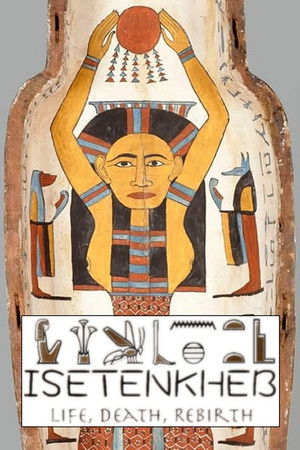
Isetenkheb: Life, Death, Rebirth
Follow from the amazing restoration process of one of the most cherished and mysterious pieces of History: an Egyptian sarcophagus covered with hieroglyphics (painted wood). With exclusive interviews of experts, art curators and restorators, discover everything about the story of the Isetenkheb coffin of Ancient Egypt dated from around 664-500 BC !
2018
Le monde de Khéops
2018
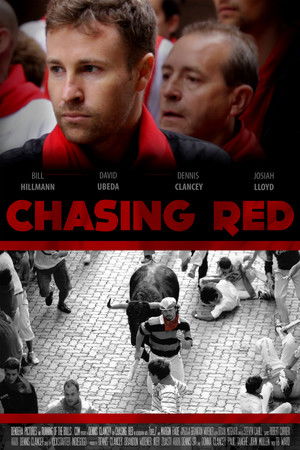
Chasing Red
Everyone has heard of Pamplona's Running of the Bulls, yet so few know much about it. Even fewer know that there is an elite group of runners who brave dozens of bull runs each year, risking their life to run inches away from the sharp horns of the 1000+ pound ferocious animals they revere. Chasing Red is a character-driven documentary following 4 runners across the eight bull runs of a single fiesta in Pamplona. Braving through injury and looming risk of death, they embark on an endeavor that will shape their lives forever.
2015
Tutankhamun: The Mystery of the Burnt Mummy
2013
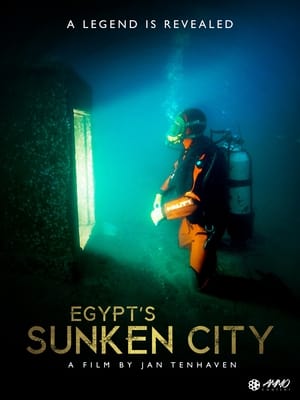
Egypt's Sunken City – A Legend Is Revealed
Looking for a forgotten city: off the coast of Egypt, just a few metres under the surface, but blanketed by sand and mud, slumbers the ancient port of Heracleion.
2013
Ultimate Tutankhamun
This special takes a 21st century approach to ancient history, bringing together the latest scientific evidence to build the ultimate picture of King Tutankhamun.
2013
Ramesses II: The Great Journey
3,200 years ago, Egypt is living the final hours of its golden age under the reign of Ramesses II. After ruling the country for 67 years, the great pharaoh dies at the old age of 92. His mummy is burried in the heart of the Valley of the Kings. This is the beginning of his great journey towards the afterlife but only under one condition: that his tomb remains off limits forever. However, in the 19th century, many European adventurers explore the tomb of the king searching for the burial chamber. Then begins an archeological investigation, which reveals the story of Ramesses II after-life.
2011
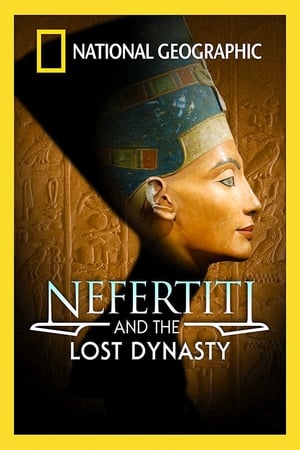
Nefertiti and the Lost Dynasty
It is one of Egypt's enduring mysteries. What happened to Nefertiti and her husband, Akhenaten - the radical king, and likely father of King Tut? In a dark and mysterious tomb located in the Valley of the Kings, there is a small chamber with two mummies without sarcophagi or wrappings. At times, both have been identified as Queen Nefertiti by scholars, filmmakers and historians. But the evidence has been circumstantial at best.
2007
King Tut's Final Secrets
As part of a high-tech forensic probe into the demise of Egyptian Pharaoh Tutankhamun, scientists use X-rays and CT scans as they attempt to reach a conclusion about just how this famed king died. In addition, they explore the mysterious curse on explorers linked to Tut's tomb excavation.
2005
The Search for Tutankhamun
Howard Carter hunts for the tomb of the boy king Tutankhamun.
2005