Watch Eating Up Easter (2019) Online Free
The Rapanui community on Easter Island fights to prevent an environmental collapse due to overwhelming tourism and industrial progress, and to preserve their cultural traditions.
More Like This
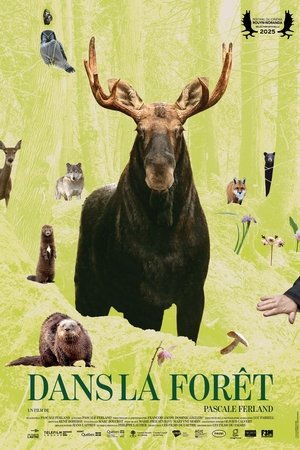
In the Forest
In the Forest is a documentary essay that explores the deep connections between humans, animals, and the forest. Through fragments of lives that intersect, echo, or contradict one another, the film gradually weaves the portrait of a rich, complex, and sometimes unsettling world where the desire to protect coexists with the drive to exploit. Moving between realism, political engagement, and dreamlike imagery, it reveals a forest that - in the face of multiplying climate upheavals and an accelerating sixth mass extinction - whispers, to those who know how to listen, the urgent need to safeguard the fragile balance between humanity, fauna, and flora.
2025
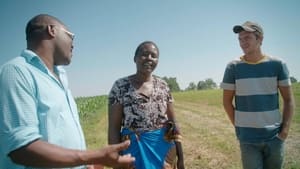
The Ants and the Grasshopper
Anita Chitaya has a gift: she can help bring abundant food from dead soil, she can make men fight for gender equality, and maybe she can end child hunger in her village. Now, to save her home in Malawi from extreme weather, she faces her greatest challenge: persuading Americans that climate change is real. Traveling from Malawi to California to the White House, she meets climate sceptics and despairing farmers. Her journey takes her across all the divisions that shape the USA: from the rural-urban divide, to schisms of race, class and gender, and to the American exceptionalism that remains a part of the culture. It will take all her skill and experience to help Americans recognise, and free themselves from, a logic that is already destroying the Earth.
2021
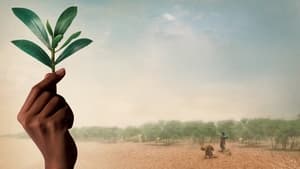
The Great Green Wall
An epic journey along Africa's Great Green Wall — an ambitious vision to grow a wall of trees stretching across the entire continent to fight against increasing drought, desertification and climate change.
2020
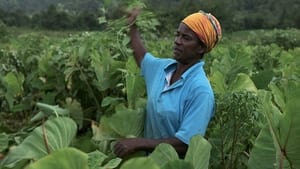
You Think the Earth Is a Dead Thing
Just one of the many far-reaching impacts of the slave trade on human history is on agriculture and horticulture. While the French plantation owners on the Caribbean island of Martinique had their gardens laid out, Versailles-style, their enslaved workers continued their tradition of using medicinal wild herbs. Nowadays these herbs represent one of several resources through which the people of Martinique counter the health and ecological ravage caused by the use of pesticides on the banana plantations. Farmers are reclaiming uncultivated lands to grow indigenous vegetables, without any industrial pesticides; they fight boldly for simple biodiversity.
2019
The Smog of the Sea
The Smog of the Sea chronicles a 1-week journey through the remote waters of the Sargasso Sea. Marine scientist Marcus Eriksen invited onboard an unusual crew to help him study the sea: renowned surfers Keith & Dan Malloy, musician Jack Johnson, spearfisher woman Kimi Werner, and bodysurfer Mark Cunningham become citizen scientists on a mission to assess the fate of plastics in the world’s oceans. After years of hearing about the famous “garbage patches” in the ocean’s gyres, the crew is stunned to learn that the patches are a myth: the waters stretching to the horizon are clear blue, with no islands of trash in sight. But as the crew sieves the water and sorts through their haul, a more disturbing reality sets in: a fog of microplastics permeates the world’s oceans, trillions of nearly invisible plastic shards making their way up the marine food chain. You can clean up a garbage patch, but how do you stop a fog?
2017
White Earth
An oil boom has drawn thousands to America’s Northern Plains in search of work. Against the backdrop of a cruel North Dakota winter, the stories of three children and an immigrant mother intertwine among themes of innocence, home, and the American Dream.
2015
Anticosti: La chasse au pétrole extrême
2014
Stelvio: Crossroads of Peace
2014
Another World
A feature documentary about the journey of mankind to discover our true force and who we truly are. It is a quest through science and consciousness, individual and planetary, exploring our relationships with ourselves, the world around us and the universe as a whole.
2014
Apocalypse, Man
Most people were first exposed to Michael C. Ruppert through the 2009 documentary, Collapse, directed by Chris Smith. Apocalypse, Man is an intimate portrait of a man convinced of the imminent collapse of the world, but with answers to how the human spirit can survive the impending apocalypse.
2014
Uranium Drive-In
A new uranium mill -- the first in the U.S. in 30 years -- would re-connect the economically devastated rural mining community of Naturita, Colorado, to its proud history supplying the material for the first atomic bomb. Some view it as a greener energy source freeing America from its dependence on foreign oil, while others worry about the severe health and environmental consequences of the last uranium boom.
2013
An Inconvenient Truth
A documentary on Al Gore's campaign to make the issue of global warming a recognized problem worldwide.
2006
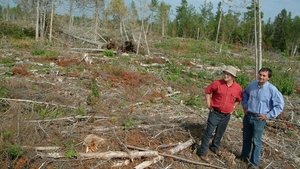
Forbidden Forest
Two very different men are brought together by New Brunswick's decision to hand the management of millions of acres of Crown land to six multinationals. One man is an Acadian woodlot owner retired after nearly 40 years in a pulp mill; the other is a painter and winemaker with homes in France and New Brunswick. They travel to Finland to urge officials at one of the largest licence holders of New Brunswick Crown lands to practise responsible forestry, then go head-to-head with the provincial government to secure a new community-based forestry policy that is environmentally sustainable and produces more jobs than the highly mechanized techniques used today.
2004
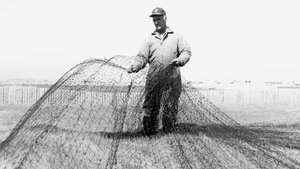
Taking Stock
The cod fishery off the east coast of Newfoundland was a way of life, the backbone of society -- until it collapsed. A review of the history leading up to the crisis and the subsequent call for a moratorium of the northwest Atlantic cod fishery.
1994
Echo in the Desert
In the vastness of the Iranian desert, young artists strive for freedom, community, and the preservation of their cultural heritage in the ancient caravanserai of Deyr-e Gachin, while facing the harsh conditions of their surroundings.
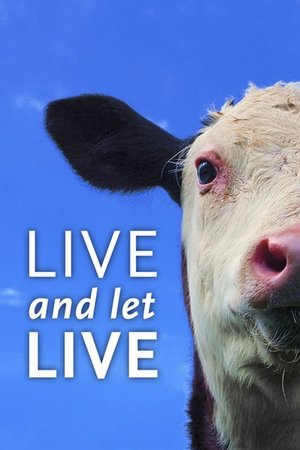
Live and Let Live
Live and Let Live is a feature documentary examining our relationship with animals, the history of veganism and the ethical, environmental and health reasons that move people to go vegan.
2013
Blue Vinyl
With humor, chutzpah and a piece of vinyl siding firmly in hand, Peabody Award-winning filmmaker Judith Helfand and co-director and award-winning cinematographer Daniel B. Gold set out in search of the truth about polyvinyl chloride (PVC), America's most popular plastic. From Long Island to Louisiana to Italy, they unearth the facts about PVC and its effects on human health and the environment.
2002
Koyaanisqatsi
Takes us to locations all around the US and shows us the heavy toll that modern technology is having on humans and the earth. The visual tone poem contains neither dialogue nor a vocalized narration: its tone is set by the juxtaposition of images and the exceptional music by Philip Glass.
1983
Another Side of the Forest
Developments in the Canadian forestry industry during the 1970s are shown being carried out both as lab experiments and in the field to protect and conserve the country's vast forests. These include turning a Newfoundland bog into woodland, fostering British Columbia seedlings that withstand mechanical planting, inoculating Ontario elms against the bark beetle, devising ways of controlling fire, and more.
1974
The Water Cycle
An award-winning short exploring man-made impacts on New Zealand’s water cycle.
1972