Watch Dong (2012) Online Free
Loading Cinehub...
Shenyang, in deep winter snow. Two promising 12-year-old Beijing opera students, Dong (‘winter’ in Chinese) and Nuannuan (literally meaning ‘warmth’) are practising their stage moves diligently and fervently in order to secure their place in an upcoming performance in the capital. Nuannuan has a crush on Dong but Dong is lost in a daze – of a muted longing for his dead mother and a nameless affection for the girl’s young aunt – which unfolds in the juxtaposing scenes of a lone balloon drifting away and a colourful kite soaring into the sky. The train is soon to leave for Beijing, a fond farewell has been bided. Dong has to make his journey, with or without Nuannuan.
Cast
Wang Yao-Hong, Wang Mei-Yi, Chen Jia-Qi
More Like This
Arrow Sworn
Brilliantly played by LAW Ka-ying, the revered Skyblade hails from a prestigious family of Cantonese opera singers. Pressured into performing opposite the sponsor’s child at the celebrated Red Banquet in return for financial support, the reluctant Skyblade is further taken aback when he realises that Jade is a girl slated to play a male lead role in a predominantly masculine cast. However, as Jade’s talent becomes apparent to Skyblade, a bond is formed between the two during rehearsals, and a mutual understanding that both have been sacrificing their dreams and passions out of duty towards the family. When Jade reveals a shocking resolution to take control of her life, it is up to Skyblade to decide their fate on stage.
2022

Bamboo Theatre
This film is a portrait of unique cultural space for Spirits, Gods and People. While permanent theatres are commonly built in most cosmopolitan modern cities, Hong Kong preserves a unique theatrical architecture, a Chinese tradition that has lasted more than a century - Bamboo Theatre.
2019
Havana Divas
The story focus on Caridad and Georgina, who had learned the art of Cantonese Opera in Havana as a young age and performed as divas for over a decade before their lives were changed by Fidel Castro's revolution.
2018
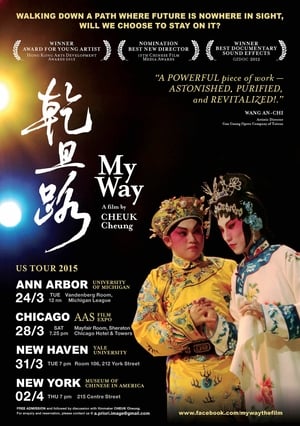
My Way
When facing a path with no future or precedent success, will we ever choose to stay? Cheuk Cheung’s My Way explores the Cantonese Opera tradition of male Dan performers, men who play female roles, against the backdrop of a Hong Kong society increasingly putting less value on art. Although female performers have long been part of the mainstream of Cantonese Opera, the film follows the stories of two young men who are still fascinated by the art of the male Dan, striving to find their own way to carry on the practice. A moving and searching look at the struggle for identity, My Way is a colourful, musical and moving film which offers a unique and highly personal look at perseverance in the face of a changing society.
2012
Unsuk Chin: Alice in Wonderland
A live recording of the premier of Korean composer Unsuk Chin's Alice in Wonderland opera at National Theater Munich in June 2007. It is a modern opera based on Lewis Carroll's fantasy novel of the same name. The amazing characters Alice meets are portrayed with a colorful combination of puppets and singer-actors.
2008
Demi-Haunted
Wan Fei (Joey Yung) is a promising Chinese Opera singer who is secretly in love with Ho Fung (Nicholas Tse). She plans to sing for him from the stage, but, in a tragic accident, dies mid-song. Years later, Wan Fei's ghost returns, and finds that part of her spirit has been reincarnated in the form of Chor-bat (Eason Chan). Wan Fei still longs to sing her song for her lover, and, after much humorous confusion, her dream is fulfilled.
2002
The Peony Pavilion
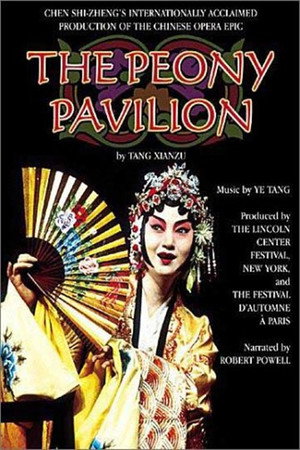
Narrated excerpts from Chen Shi-Zheng’s acclaimed stage production of Tang Xianzu’s The Peony Pavilion, filmed in Paris after its Lincoln Center presentation. This two-hour document condenses the epic kunqu love story of Du Liniang and Liu Mengmei through opera, dance, acrobatics, puppetry, martial arts and Robert Powell’s narration, preserving the atmosphere of a much longer theatrical event.
2001

Farewell to a Warrior
Disillusioned by years of futile bloodshed, General Chang Ta initially refuses the emperor’s call to defend the collapsing dynasty. It is his wife, Chen Pi-niang, a woman of exceptional intelligence and resolve, who urges him to answer his duty. At Tzu Lang Chow, she bids him farewell with a lock of her hair, a symbol of devotion and sacrifice, as he marches toward a seemingly hopeless battle. While Chang Ta fights at the front, Chen Pi-niang organizes local militias and leads a daring volunteer fleet of fishing boats to deliver supplies and strike the enemy. As defeat closes in and betrayal looms, husband and wife each face their fate with unyielding loyalty to their country.
1976
River Of Fury
River Of Fury presents the self-discovery and awakening of a young man (Danny Lee), who has been exposed and fallen for the lucrative powers of wealth. Lily Ho played a role in sharp contrast with Lee, which has helplessly fallen prey to the irresistible temptations of wealth under the influence of her mother. Once again, Ho demonstrates her remarkable talent in Chinese opera following her Beijing-opera showcase in The Warlord (co-starring Michael Hui Kwun-man).
1973
The Eighteen Darts (Part 2)
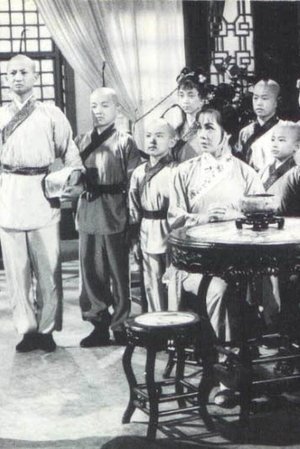
The Eighteen Darts (Part 2) is a Chinese Opera Musical starring Jackie Chan, Sammo Hung and Yuen Biao in child roles.
1966
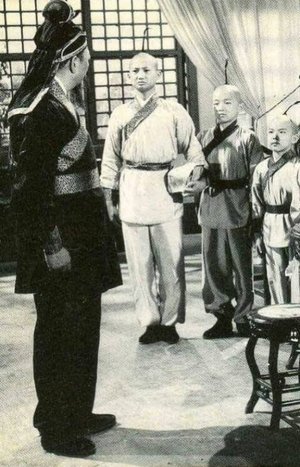
The Eighteen Darts (Part 1)
The Eighteen Darts (Part 1) is a Chinese Opera Musical starring Jackie Chan, Sammo Hung and Yuen Biao in child roles.
1966
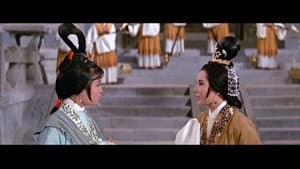
The Grand Substitution
With China under control of a weak Emperor, two officials compete to steer the future destiny of the land. Chiu believes the people are the future of China, while the diabolical Tu wishes to grind the people beneath an iron heel. Tu decides to take out Chiu's family, but one lone infant escapes.
1965
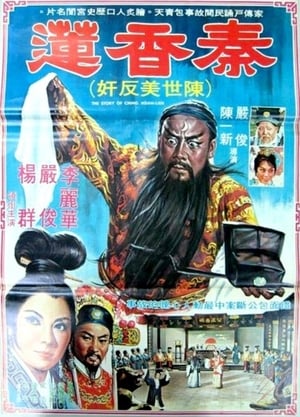
The Story of Qin Xiang-Lian
The Story of Qin Xiang-Lian is a Hong Kong Chinese Opera musical starring Jackie Chan in a child role.
1964
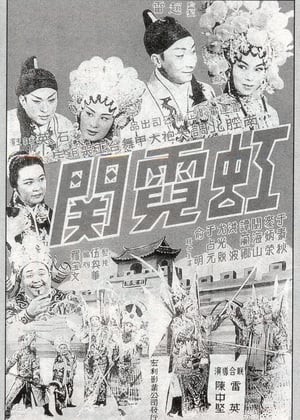
The Rainbow Pass
The Rainbow Pass is a Chinese Opera starring Sammo Hung in a child role
1964
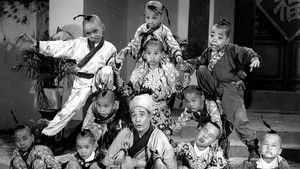
The 7 Tyrants of Jiangnan
A child learns martial arts in order to become a Kung Fu warrior. Features the Seven Little Fortunes, and is the debut film of Jackie Chan.
1962
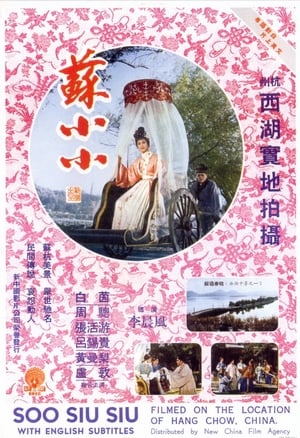
So Siu Siu
The film opens with a travelogue, showcasing West Lake and the real Mainland Chinese locations used by the film to which only the Left Wing of Hong Kong Cinema had access to at the time. The title character is a young woman raised by her courtesan aunt in the West Lake scenic resort area in Hangzhou. Siu Siu is perused by a local Official, but falls in love with the son of the Prime Minister. They marry, but are separated by the Prime Minister who arranges another marriage for the son. Siu Siu remains at West Lake, where she regretfully uses the desire of the earlier Official to help another of the girls find happiness.
1962
The Peach Blossom Fan
A Shaw Brothers Chinese Opera based on the Qing dynasty musical play that recounts the death of the Ming dynasty through the love story of its two main characters, young scholar Hou Fangyu and a courtesan named Li Xiangjun.
1961
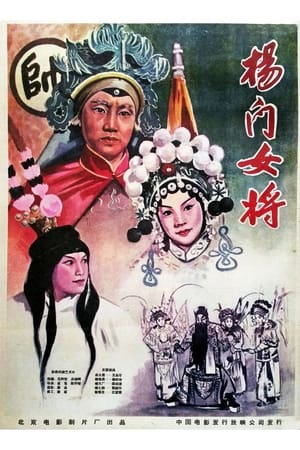
Yang Female Warriors
1960
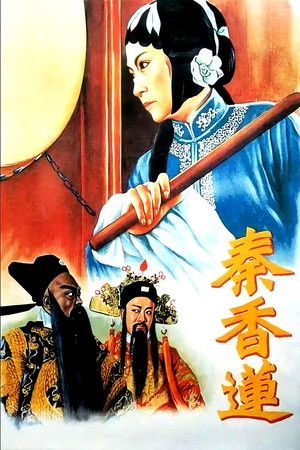
Qin Xianglian
Qing (i.e. Qin) Xianglian was the wife of a man named Chen Shimei, who won the first title of national examination and awarded as husband of the emperor's daughter. Then Qing (i.e. Qin) sues Chen as a murderer who plans to kill his wife and son. In spite of the royal power, gownsman Bao Zhen settles the lawsuit and sentences Chen to serve his head.
1955

Baijin Long
A wealthy man's son, who has a sinecure as a hotel owner, poses as a bellhop to win the affections of a woman guest with whom he has fallen madly in love, but who seeks a common man who is earning his own way. This first Cantonese-language talkie was based on a successful 1930 stage musical written by and starring Xue JueXian (Sit KokSin), the plot of which was in turn inspired by a 1929 silent Hollywood romance called "The Grand Duchess And The Waiter" which Xue admired. The film was produced not in Shanghai, by the Tianyi studio, headed by the eldest of the Shaw Brothers, Shao Zuiweng (RunJe Shaw), and was so successful in the Cantonese-speaking parts of China that Shaw moved the Tianyi company to British-administered, Cantonese-speaking Hong Kong to make more Cantonese films in the face of the right-wing Chinese Nationalist government's ban on Cantonese language in favor of Mandarin. A sequel to Baijin Long was made in 1937, and the film itself was remade in 1947.
1933