Watch DO CONCRETO A ZABUMBA Online Free
More Like This
Copan
In the heart of São Paulo, the Copan building houses more than five thousand residents and becomes the stage for a heated election. The building manager, who has held the position for 30 years, fights to keep his job, while an even bigger dispute unfolds outside the building's walls, with Lula and Jair Bolsonaro vying for the presidency of Brazil.
2026
Common Ground
After her father's death, Lilo wanders through Zurich's Allmend, a common public space on the edge of the city. It is there that her father spent most of his time during the last years of his life. In her search for his traces, she listens to the landscape, sketches nature and meets the regular walkers.
2026

seaward
Singapore’s coastlines are always in flux - a delicate dance between the receding tides and the rising earthmovers. 'seaward' drifts through the peripheries of this very landscape, offering a quiet meditation on the life that endures at the edges of a changing island.
2025

Amora
2025

Ellas en la ciudad
"Ellas en la ciudad" (Them in the City) focuses on the first settlers of the neighborhoods on the outskirts of Seville. Through their stories, we discover that they have been the backbone of a city that has turned its back on them.
2025
Alliances Terrestres
2024
Together We Cycle
The film Together we cycle investigates the critical events that has led to the revival of the Dutch cycling culture. For most people, cycling in the Netherlands, seems a natural phenomenon. However, until the 1970s the development of mobility in the Netherlands followed trents across the globe. The bicycle had had its day, and the future belonged to the car. The only thing that had to be done was to adapt cities to the influx of cars. Then Dutch society took a different turn. Against all odds people kept on cycling. The question why this happened in the Netherlands, has not an easy answer. There are many factors, events and circumstances that worked together, both socially and policy-wise. In Together we cycle, key players tell the story of the bumpy road which led to the current state. Where cycling is an obvious choice for most citizens.
2022
Body-Buildings
2021
Everything Will Be
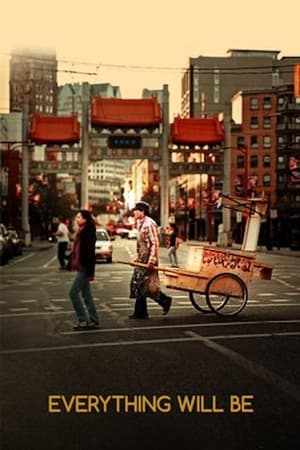
Sundance award-winning director Julia Kwan’s documentary Everything Will Be captures the subtle nuances of a culturally diverse neighbourhood—Vancouver’s once thriving Chinatown—in the midst of transformation. The community’s oldest and newest members offer their intimate perspectives on the shifting landscape as they reflect on change, memory and legacy. Night and day, a neon sign that reads "EVERYTHING IS GOING TO BE ALRIGHT" looms over Chinatown. Everything is going to be alright, indeed, but the big question is for whom?
2014
Glasgow versus Glasgow - A Tale of Two Cities
The World Health Organisation has revealed that Glasgow's wealthiest live on average 28 years longer than its most deprived inhabitants. Journalist Julien Brygo asked the wealthy how they interprate the poverty of their neighbors. A photographic movie.
2014
The heart of Caracas
Caracas has been changing since the nineteenth century this is a story that tries to explain why the Venezuelan capital is complex, chaotic and fertile. In light of these new evidences, community experiments, social awareness and organization of people, seem to be the necessary ingredients to rescue a metropolis that is not yet completely lost.
2013
Amancio Williams
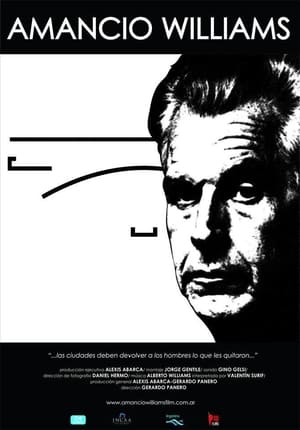
A biography documentary of the Argentine modernist architect Amancio Williams.
2013
La Meilleure Façon de tracer
2010
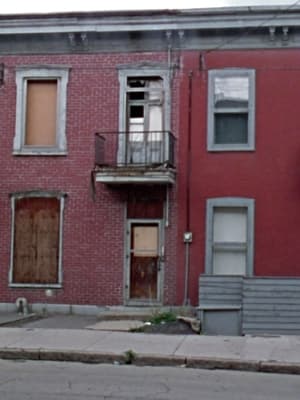
Montréal: The Neighborhood Revived
This full-length documentary from the Challenge for Change program addresses housing issues affecting Montreal in the mid-1970s. As the city is restoring older apartments through direct action and government subsidies, new, low-rent housing is being integrated into old neighborhoods.
1974
Bologna: An Ancient City for a New Society
Exemplary in its town planning and administration, Bologna has been transformed into a city that is avant-garde, both socially and culturally, yet still preserves its historical roots.
1974

The Coldspring Project
The human side of town planning, as exemplified in Baltimore, Maryland. The Coldspring Project concerned a proposed housing development for lower and upper income levels on a three hundred-acre site adjoining a wildlife sanctuary. The film records the differences aired in meetings of various interest groups that tried to modify the plan according to their views, and the compromise reached, based on plans drawn up by Montréal architect Moshe Safdie.
1974
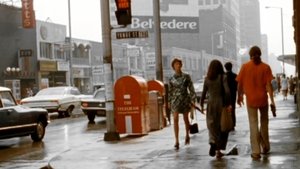
City Limits
Author and activist Jane Jacobs talks about the problems and virtues of North American cities.
1971
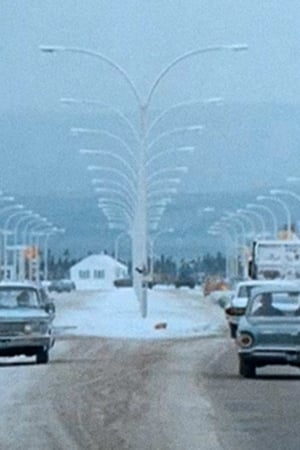
Québec...?
This short documentary film is a fascinating portrait of urban and rural Quebec in the late 1960s, as the province entered modernity. The collective work produced for the Quebec Ministry of Industry and Commerce calls on several major Quebec figures.
1967
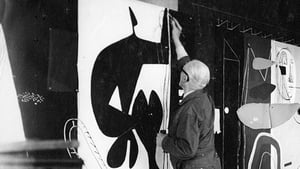
Le Corbusier, l'architecte du bonheur
Documentary devoted to the architectural and urban planning designs of Le Corbusier. The architect supports his in-depth reflection on the city and its necessary adaptation to modern life with plans, drawings and images, particularly Paris, whose revolutionary development dreamed of by Le Corbusier is exhibited here. Its first projects will remain at the stage of a model: the modernization plan for the city of Algiers. Some will be created by other architects: Ministry of Education in Rio de Janeiro, UN Palace in New York. From the post-war period in less than 10 years, Le Corbusier created large housing units in Marseille, Nantes, a chapel in Ronchamps, a factory in Saint-Dié, a town in Chandigarh in India. Through diagrams, the architect presents his theory of the "radiant city", the mathematical key modulor of his work as well as his project for reorganizing the countryside, industrial and urban cities into a grouping around a cooperative system.
1957