Watch CzechMate: In Search of Jiří Menzel (2018) Online Free
An epic exploration of the Czechoslovak New Wave cinema of the 1960s and 70s, structured around a series of conversations with one of its most acclaimed exponents - Closely Observed Trains director Jiří Menzel.
Cast
Jiří Menzel, Antonín Máša, Dušan Hanák, Ivan Passer, Miloš Forman, Juraj Jakubisko, Věra Chytilová, Karel Kachyňa, Pavel Juráček, Ján Kadár, Elmar Klos, Ester Krumbachová
More Like This
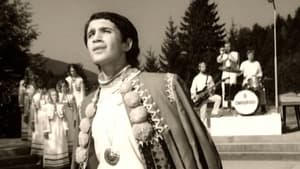
Mustache Funk
The early 70s is a golden epoch of our popular music. Hundreds of songs of exquisite beauty. Groundbreaking sound. Futuristic suits. How and whence could all of this emerge in a Soviet socialist republic? How did a brand new music scene, original in sound and philosophy in every way, and at the same time absolutely in sync with global music trends come forth? They weren't that fond of the Soviet label «VIA». And since neither of us is fond of this acronym, let us rechristen this music.
2021

Handbook of Movie Theaters' History
Handbook of Movie Theaters' History is a documentary about the history, the development in the present days and the future of movie theaters in the city of Turin, Italy. It mixes the documentary language with comedy and fiction, and is enriched by interviews to some of the most important voices of Turin cinematography. The film follows the evolution of movie theaters by enlightening its main milestones: the pre-cinema experiences in the late 19th Century, the colossals and the movie cathedrals of the silent era, the arthouse theaters, the National Museum of Cinema, the Torino Film Festival, the movie theaters system today and the main hypothesis about its future. The mission of Handbook of Movie Theaters' History is to explore and give back to the audience a deep reflection about the identity and the value of movie theater, in its social and anthropological role and as a mass media, and to analyze the experience of the viewer.
2021
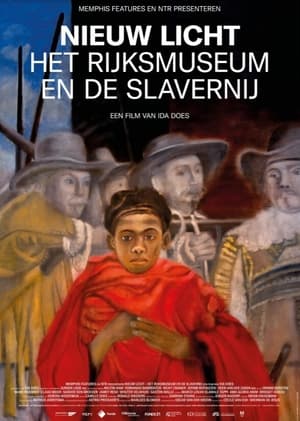
Nieuw Licht - Het Rijksmuseum en de Slavernij
2021
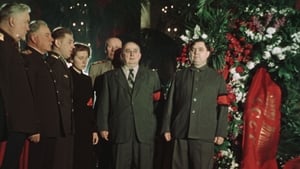
State Funeral
The enigma of the personality cult is revealed in the grand spectacle of Stalin’s funeral. The film is based on unique archive footage, shot in the USSR on March 5 - 9, 1953, when the country mourned and buried Joseph Stalin.
2019
Enter the Anime
What is anime? Through deep-dives with notable masterminds of this electrifying genre, this fast-paced documentary seeks to find the answers.
2019
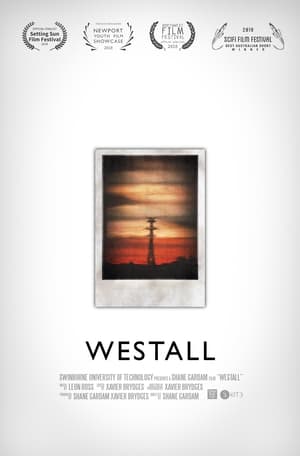
Westall
In 1966, over one hundred school kids became witness to one of the biggest UFO sightings in history. What they all have in common are five words… "I know what I saw." It still remains a mystery to this day.
2018
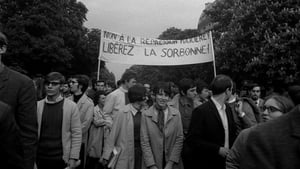
In the Intense Now
A personal essay which analyses and compares images of the political upheavals of the 1960s. From the military coup in Brazil to China's Cultural Revolution, from the student uprisings in Paris to the end of the Prague Spring.
2017

The MovieLand Movie
I go to Movieland at least once a week, every week, for the last five years to sink some quarters into the games and the Movieland movie is an accumulation of the friends, lights, textures, and narratives that I have experienced in that time. I love Movieland!
2017
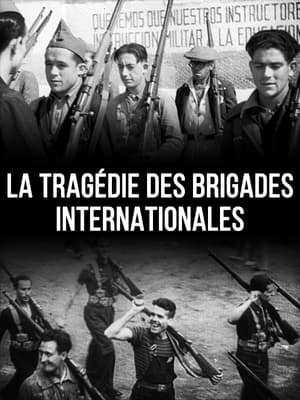
La Tragédie des Brigades Internationales
2016

Planet Food: Spice Trails
In this remarkable journey, Planet Food travels the world to see how control of the spice trails, over the last five millennia, has made great cities and destroyed ancient civilizations. Our guides travel from the Molucca Islands of Indonesia, the original home of cloves and nutmeg, to the Indian province of Kerala, with its native pepper and cardamom. Additional stops include Venice, Beirut, Cairo and other significant places in the spice trade that created and toppled empires.
2012
Swing con Son
Music documentary about Billo Frómeta by director Rafael Marziano Tinoco from Venezuela.
2009
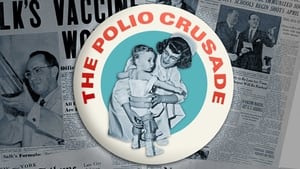
The Polio Crusade
The film interweaves the personal accounts of polio survivors with the story of an ardent crusader who tirelessly fought on their behalf while scientists raced to eradicate this dreaded disease. Based in part on the Pulitzer Prize-winning book Polio: An American Story by David Oshinsky, Features interviews with historians, scientists, polio survivors, and the only surviving scientist from the core research team that developed the Salk vaccine, Julius Youngner.
2009

Ottoman Empire: The War Machine
This History Channel documentary traces the Ottoman Empire from its beginnings in the 14th century to its incarnation as one of the largest empires in history, spanning three continents.
2006
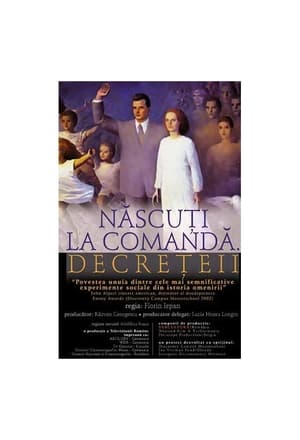
Children of the Decree
Procreation is the social duty of all fertile women, was the political thinking during the 1960s and 1970s in Romania. In 1966, Ceaucescu issued Decree 770, in which he forbade abortion for all women unless they were over forty or were already taking care of four children. All forms of contraception were totally banned. The New Romanian Man was born. By 1969, the country had a million babies more than the previous average. Romanian society was rapidly changing. By using very interesting archival footage and excerpts from old fiction films and by interviewing famous personalities from that time – gynecologists or mothers who were part of the new society - the director revives this period of tremendous oppression of personal freedom. Many deaths were caused by the mere fact that women, including wives of secret Romanian agents, famous TV presenters, and actresses, had to undergo illegal abortions. Many women were jailed for having them.
2005
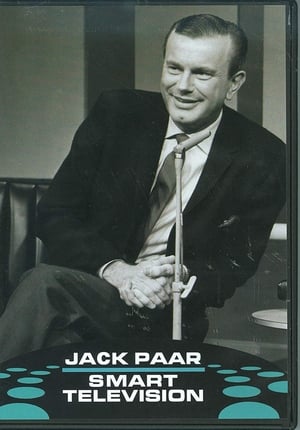
Jack Paar: Smart Television
PBS documentary examining the work of Jack Paar.
2003
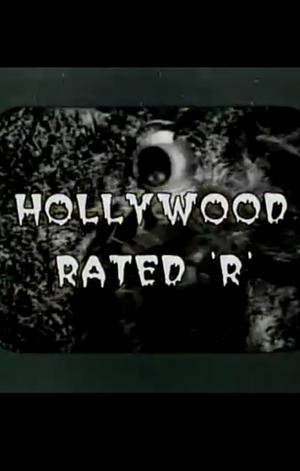
Hollywood Rated 'R'
A roller-coaster ride through the history of American exploitation films, ranging from Roger Corman's sci-fi and horror monster movies, 1960s beach movies, H.G. Lewis' gore-fests, William Castle's schlocky theatrical gimmicks, to 1970s blaxploitation, pre-"Deep Throat" sex tease films, Russ Meyer's bosom-heavy masterpieces, etc, etc. Over 25 interviews of the greatest purveyors of weird films of all kind from 1940 to 1975. Illustrated with dozens of films clips, trailers, extra footage, etc. This documentary as a shorter companion piece focusing on exploitation king David F. Friedman.
1997

Grisha
An up-close look into the life of the often misunderstood movie director Grigori Kromanov through the lens of old friends and colleagues.
1996
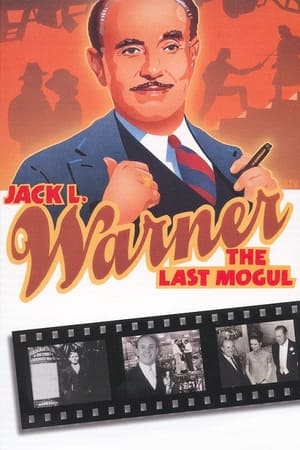
Jack L. Warner: The Last Mogul
An insider's account of Jack Warner, a founding father of the American film industry. This feature length documentary provides the rags to riches story of the man whose studio - Warner Bros - created many of Hollywood's most classic films. Includes extensive interviews with family members and friends, film clips, rare home movies and unique location footage.
1993
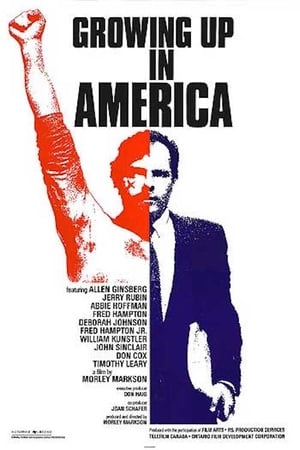
Growing Up in America
Filmmaker Morley Markson shows Abbie Hoffman, Jerry Rubin, Allen Ginsberg, Timothy Leary, and other '60s rebels, then and now in a follow up to his 1971 film "Breathing Together: Revolution of the Electric Family."
1989
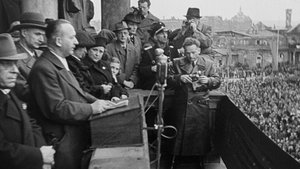
Unity SPD – KPD
Documentary about the merging of the Communist Party of Germany and the Socialist Unity Party of Germany in the Soviet occupation zone, a merger that would lead to the creation of the Socialist Unity Party that would rule the soon-to-be-created East Germany until 1989.
1946