Watch Cupid Angling (1918) Online Free
Loading Cinehub...
Cupid Angling is a 1918 silent film starring Ruth Roland and Albert Morrison, with walk-on appearances by Mary Pickford and Douglas Fairbanks. It was the only feature film photographed using the Douglass Natural Color process.
Cast
Ruth Roland, Albert Morrison, Mary Pickford, Douglas Fairbanks
More Like This

The Big Fight
Based on the David Belasco stage production of the Max Marcin play in which heavyweight-champion Jack Dempsey played the role of the fighter, Tiger: This "behind-the-scenes look of a heavyweight-championship fight" looks much like all of the other boxing films in which the Champ gets involved in a frame-up and is asked to take a dive.
1930
Eugene Aram
A blackmailed ex-thief is executed for a murder he didn't commit.
1924
The Experiment
A rich girl's fiancé poses as a chauffeur to stop her eloping with a major.
1922

The Wise Kid
Rosie Cooper is a cashier in a cheap restaurant and among those she favors is ... Smith, the bakery boy. Rose is a 'wise kid' all right, but it takes her some time to see through a shiny young thin model gent... The girl entertains his advances because he means romance to her. But he proves his shallow character and Rosie is glad to turn to Jimmy, the bakery youth.
1922
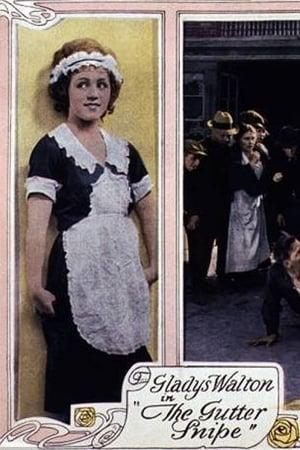
The Guttersnipe
Mazie, a shop-girl of New York City's Little Ireland, goes to the aid of a young man in formal attire involved in a street fight. Though badly beaten, he bears a strong resemblance to Lord Lytton, the hero of a magazine story Mazie is reading in installments. Although he is, in reality, a soda clerk, Mazie permits his attentions, and together they read the "Sloppy Stories" yarn about English nobility.
1922

Opened Shutters
When her father, an indigent artist, dies, Sylvia Lacey goes to live with her Aunt Martha and her uncle, Judge Trent, in New England, where she is unwanted and humiliated. Though she and John Dunham, her uncle's young law partner, fall in love, she believes he intends to marry the daughter of a wealthy neighbor.
1921
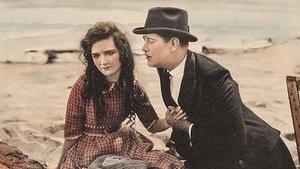
Danger Ahead!
The impoverished Harlow family of New England is forced to take in summer boarders. Teenaged niece Tressie welcomes the change and promptly falls in love with a wealthy young guest named Norman Minot. Although Norman returns Tressie’s affection, he is driven away by a fortune-hunting mother who wants him to marry her daughter. Robert Kitteridge, a scheming artist friend of Norman's, takes Tressie on a sailboat outing, during which they narrowly escape death when their boat is rammed by a steamship. After being put ashore the next morning in Boston, MA, Robert takes Tressie to his studio and attempts to seduce her.
1921
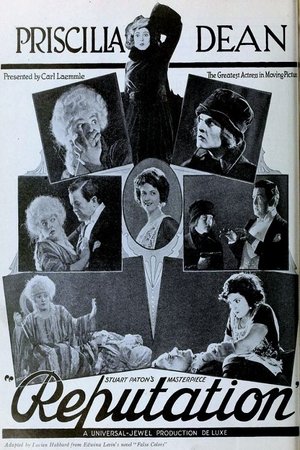
Reputation
Actress Fay McMillan finds her child, Pauline, whom she deserted years ago, in an orphanage, but Monty, her financer, objects to her taking the girl back.
1921
Finders Keepers
Amy Lindel, a church choir singer, goes to the city to pursue a singing career, but finds herself only able to get cabaret gigs. She then becomes entangled in a situation involving stolen diamonds, and is saved by the "good guy" whom she later marries.
1921
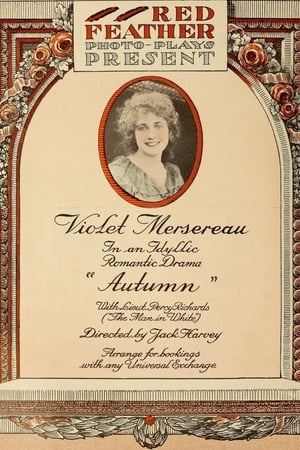
Autumn
Jeanette Arden dies giving birth to her daughter Autumn, and Jeanette's husband George, who had gone for a doctor, receives a head wound. The injury makes him lose his memory, and so Autumn is raised by her godfather. Many years pass, and Royal Mounted Policeman Dick Leslie is assigned to locate George. Dick meets Autumn, who also comes to the attention of the gambler, Diamond Jack.
1916
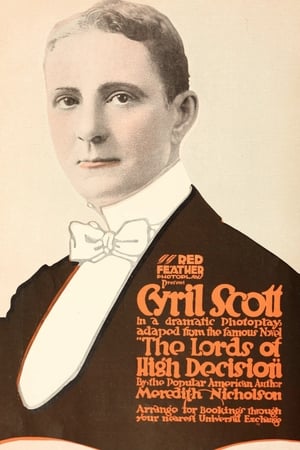
The Lords of High Decision
Even though he disapproves of the harshness with which his father, the Colonel, treats his employees, Wayne Craighill joins the old man's mining business. Adding to the strain between father and son, Wayne soon falls in love with Jean, the daughter of a small mine owner whom the Colonel wants to put out of business.
1916
The Man of Shame
After Roger Laroque maims Louversan, his look-alike, in an honorable duel during the Franco-Prussian War, Louversan swears revenge on his better. In Paris, Roger falls in love with Julia, who he later discovers is married to Lucien, his close army friend. Out of duty to Lucien, Roger ends the affair and leaves for the country where he meets and marries Marie Greville, his uncle's ward. Furious at Roger's desertion, Julia vows revenge and joins forces with Louversan.
1915
The Woman Who Lied
After a stirring performance, Cleo Martell, a renowned stage actress, is visited in her dressing room by Gordon Trent, a too ardent admirer. When Cleo's husband enters, a fight ensues, and Trent kills his rival in the struggle. Jack Stanley arrives on the scene to help but is accused of the murder by Cleo and is sent off to prison. The opportunistic Trent marries Jack's rich fiancée Helen Forde, who believes that her former lover is guilty of unfaithfulness. Jealous of the arrangement, Cleo eventually tells Helen the truth about the killing, causing Betty, Helen's daughter, to cry over her mother's unhappiness. Moved by the girl's tears, Cleo joins forces with Helen against Trent, and the two women go West where Jack, escaped from prison, works as a cowboy.
1915
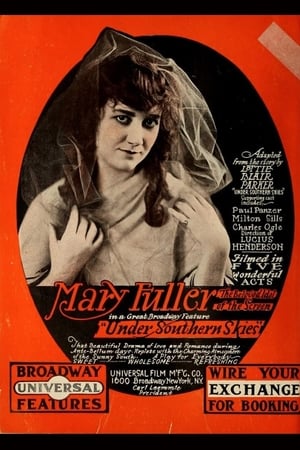
Under Southern Skies
Lelia Crofton, a Louisiana belle of the 1860s, loves Burleigh Mavor. By chance, she sees one of her father's black stablemen making love to a neighbor's maid, whom she supposed was white. The incident shocks Lelia and leaves a great impression upon her. When she rejects suitor Steve Daubeney, he threatens to expose a damaging secret about her mother, whom she has never met. Remembering the incident with the neighbor's maid, Lelia worries that her mother might be black, and when Daubeney learns of her fears, he leads her to believe that they are well-founded.
1915
The Apple
Promising to send for his sweetheart Roza, when he gets settled, Hugo Hunfalvy leaves Hungary for America. In New York he meets Louis Kaplan, an old friend, who owns a fruit store. Louis' sister, Marie, is pretty and flirtatious, and is much impressed by Hugo. He soon falls under the influence of her wiles and buys part interest in Louis' store.
1914
The Soul of Luigi
In the poor Italian quarter of New York lives Luigi, an Italian peasant and inventor, who is so absorbed in his work that he greatly neglects his wife, Nedda. She is younger than he and fond of pleasure. Not understanding his neglect, she strongly resents it.
1914
Two Stepchildren
Born with an artistic temperament, Joe Leigh feels keenly the bitterness and drudgery of life on a small farm and longs to get away from it. Jabez, his uncle, who owns the farm, is a hard, matter-of-fact man, utterly out of sympathy with his nephew's ambitions.
1914

The Little Minister
To start a little in advance of our story, Lord Rintoul, of the English nobility, finds a little Gypsy girl three years old, who had been deserted by her parents. Fifteen years later, Gavin Dishart, the Little Minister, receives an appointment, his first, at Thrums, Scotland. This was made possible through the self-sacrifices of his widowed mother, to educate him for the ministry. The community of Thrums is made up of weavers, who work hard, have little and accomplish much. They are ultra-religious and look upon their pastor with such reverence that he is a little lower than the angels. While naturally intelligent, they are grounded in dogma and intolerance. Just after the Little Minister takes charge of the "Auld Licht Kirk" and the Manse, the weavers resent a reduction, by the manufacturers, in their pay and a strike is declared.
1913
A Modern Atalanta
Fresh from her college matriculation. Ruth Grantland returns to her country home. She is courted by two of the village beaux, who propose marriage. She likes the boys, but not sufficiently to marry them. Her preference is for Jack Hall, a young man of extreme culture and refinement. She tells the two boys that she will consent to marry them if they can beat her in a footrace, taking each one on separately. They agree, and she, being fleet of foot, runs away from them, crossing the line far in the lead. Jack, riding horseback, happens along and takes in the fun. Later, he proposes to Ruth.
1912
Anfisa
The Kostomarov family falls apart when a female relative joins the household.
1912