Watch Crackle of Time: Christoph Schlingensief and his Opera Village in Burkina Faso (2012) Online Free
Loading Cinehub...
Documentary about filmmaker, author, director, and performance artist Christoph Schlingensief and his last major project, building an opera village in Burkina Faso. What was initially planned as a festival theater soon developed into a more ambitious idea, and in addition to the theater, a school, a hospital, and living quarters for teachers and nursing staff were also planned. Beginning with the search for a suitable building site, the film also recounts the difficulties encountered during the work and Schlingensief's advancing cancer.
Cast
Christoph Schlingensief, Diébédo Francis Kéré, Aino Laberenz
More Like This
Three Letters: La Mamma Morta
'La Mamma Morta’ is an aria from the opera Andrea Chenier that is also well-known for its use in a memorable sequence in the Oscar award-winning Philadelphia. Thirty years on, this new short film from WNO includes a brand-new recording of the aria featured alongside recreated scenes that better encapsulate the perspectives of people living with HIV today. To mark World AIDS Day 2023, the Welsh National Orchestra released a special new version of La mamma morta, featuring WNO Orchestra, soprano Camilla Roberts and Nathaniel Hall from Channel 4’s It’s a Sin. Released as part of the last rendition in the Three Letters project, this film aims to tackle societal stigma around HIV.
2024
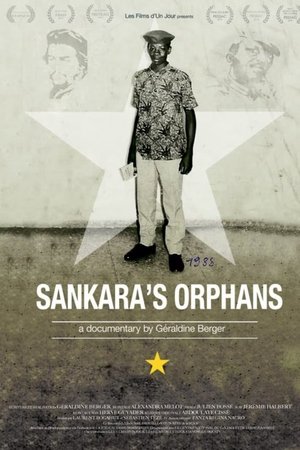
Sankara's Orphans
Thomas Sankara came to power in Burkina Faso in 1983, with the promise of a revolutionary government that would transform the West African country. To help build the revolution, he sent 600 children — many orphans from rural areas — to be educated in Cuba. But after Sankara’s assassination, the children were stranded. The last would only return to Burkina Faso in 2005. SANKARA’S ORPHANS tells their stories through interviews with some of the 600, along with archival footage of their lives on Cuba’s Isle of Youth — where both Sankara and Fidel Castro came to visit. Along with their education, the children worked in the fields and received weapons training. This, combined with their idealism, frightened the new Burkina Faso regime, which worried they might return and take up arms.
2023
Land of Upright People
October 2014. Ouagadougou, the capital of Burkina Faso, is the scene of an unarmed uprising that ousts the dictator in power since 1987 and later staves off an attempted coup. In 2015, the country votes freely for the first time in its history, yet real change remains allusive, especially regarding ongoing economic exploitation by foreign companies. In one year of struggle and resistance, the film follows the daily life of four Burkinabes: a musician and leader of the revolution, a local political candidate, a miner engaged in the labor movement, and an impoverished mother, all sharing hopes that the elections will change the country’s path.
2023
Walter Hus, a Musical Journey
During his thirty-year career, Walter Hus, a Belgian composer and pianist, has taken a thousand musical faces. While he wanted to compose a new work, a crisis blocked his creation. During an exchange with his therapist, he comes to an existential question: "Who am I musically? » Through the portrait of this composer, as abundant as it is fascinating, the film aims to give access to his creative process and thus to the endurance and beauty of creation.
2021
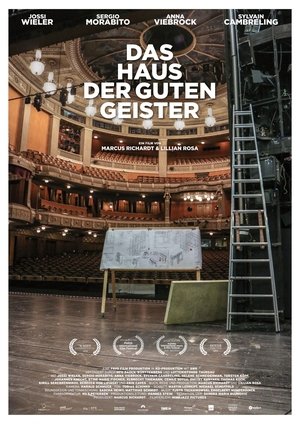
Das Haus der guten Geister
A documentary about the Staatsoper Stuttgart (Stuttgart State Opera) in Germany.
2020
Zaryadye Hall: A Diamond is Hatched
Concert and documentary celebrating the 1st Anniversary of Moscow’s Zaryadye Hall
2019
The Paris Opera
A behind-the-scenes look at the of how the Paris Opera is run under the direction of Stephane Lissner.
2017
Confession of the Vanished
The film follows the staging of the opera Olimpiade while at the same time exploring the dramatic life of its composer Josef Mysliveček, a friend and teacher of W. A. Mozart.
2015
The Blu-ray Experience II: Opera, Ballet & theatre
2010
Callas Assoluta
This revealing documentary from director Philippe Kohly examines the storied life of renowned soprano Maria Callas, from her troubled childhood in New York City to her scandal-laden but triumphant international career in opera. Featuring archival interviews with Callas herself and footage of contemporaries such as her lover Aristotle Onassis, this celebration of "La Divina" pays tribute to her enduring legacy some three decades after her death.
2007
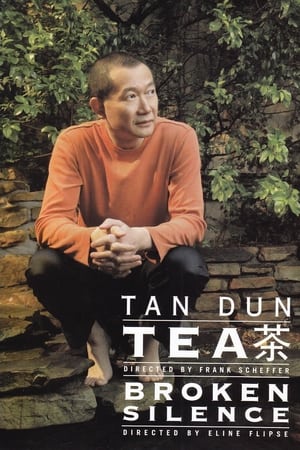
Tea
Director Scheffer registered a performance of the Tea Opera by Chinese composer Tan Dun (who won an Oscar in 2001 with his score for Crouching Tiger, Hidden Dragon). Scheffer interlaces the images with interviews with Dun, stage director Pierre Audi and librettist Xu Ying, about the opera and the role tea and oriental philosophy play in this work. Using monochrome, sometimes abstract images (in yellow, blue, red and green), close-ups of plants and flowers and images of the Chinese nature and people (sometimes accelerated or decelerated, sometimes in black-and-white), he mirrors the stylised opera performance and Dun's reflective music.
2005
Dennis Cleveland
A 2002 live performance of Mikel Rouse's Dennis Cleveland, a multimedia opera set entirely on a television talk show in the late 20th century.
2004

Solti: The Making of a Maestro
One of the world's most acclaimed conductors, Sir Georg Solti has consistently inspired audiences around the world through his extreme discipline and passion. This documentary takes us behind-the-scenes through archival footage of Solti's career and along for the ride as the great conductor travels the world.
1998
The Art of Singing: Golden Voices of the Century
Imagine a window into the past. Imagine finally connecting singers' bodies to the voices you have always treasured on record, watching footage of performances from another era. All of singers featured here have something in common (with one exception, Sutherland): they sang and performed on stage before the advent of filmed opera. . And it shows, for the first time, a few tantalizing minutes of recently recovered footage from Callas' legendary Lisbon Traviata, featuring Addio dal Passato and Parigi oh cara with Alfredo Kraus. This DVD will leave you asking for more.
1998
Patrice Chéreau, Pascal Greggory, une autre solitude
A look at the entire process of creating and developing Patrice Chéreau’s third staging of "In the Solitude of Cotton Fields" by Bernard Marie Koltès with Pascal Greggory and Chéreau himself. From the first reading around the table through the first contact with the performance space, rehearsals and lighting to opening night, the entire creative process unfurls in front of our eyes. The film shows us the evolving and ongoing dialogue between Greggory and Chéreau, a dialogue full of crises and magical moments of harmony and insight via which the truth, intensity, complexity, mystery and depth of Koltès’ text gradually emerge to form an implicit bond between these two men. The film also shows Chéreau directing rehearsals for Mozart’s "Don Giovanni" in Salzburg, revealing both the unity of and profound differences between his opera and theater work.
1996
Arabella
Arabella, Op. 79, is a lyric comedy or opera in three acts by Richard Strauss to a German libretto by Hugo von Hofmannsthal, their sixth and last operatic collaboration.
1994
Adolphe Appia Visionary of Invisible
The life and work of stage designer ADOLPHE APPIA, originator of the most profound agitations in contemporary theatre. Through the dynamic alternation of animated drawings and choreographies specially conceived for the film, we discover the steps of his artistic evolution.
1988
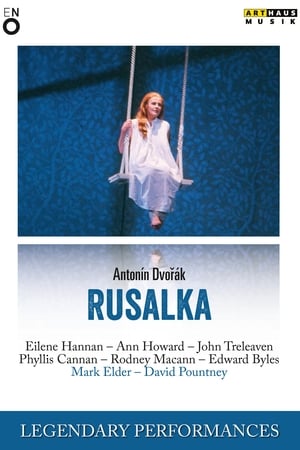
Rusalka
Dvořák's "Rusalka" in a production by David Pountney at the English National Opera in 1986. Mark Elder conducts the orchestra, accompanied by the English National Opera Chorus in English.
1986
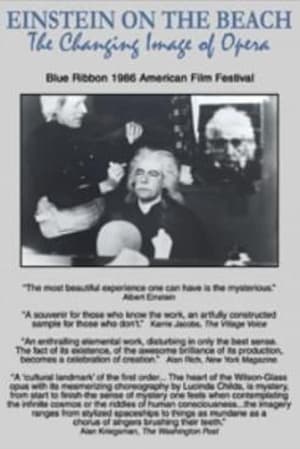
Einstein on the Beach: The Changing Image of Opera
The creative processes of avant-garde composer Philip Glass and progressive director/designer Robert Wilson are examined in this film. It documents their collaboration on this tradition breaking opera.
1985
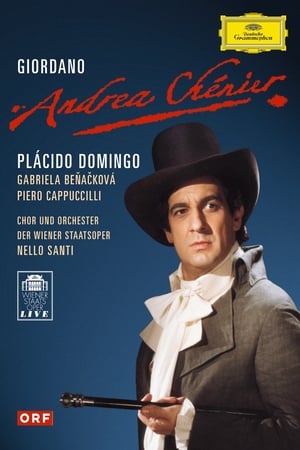
Andrea Chenier
Although Domingo was younger and Banackova looked more like the sweet and innocent young Madalena than the one played by Tomowa-Sintow in the ROH production, this production was not as good. It was not as tight and neat. The tempo set was far too slow for the time-period of the story. The stage setting was distracting. The lighting was too dark. Except Domingo, a natural actor who was always into his role and sings and acts with passion, none of the other performers came up with a convincing portrayal of the role he/she played.
1981