Watch Copal Dreams (2019) Online Free
The communities of San Martin Tilcajete and San Antonio Arrazola in Oaxaca, Mexico are best known for being the main source of the "Alebrijes" (wood carving) in the state; a relatively new but powerful tradition in mexican folklore. In both communities, there is a family that claims they're father started this tradition in all the state of Oaxaca.
Cast
Nayelli Cruz, Isaías Jiménez
More Like This

Altarpiece Artists
The art of votive offerings is fading, and with it, its creators, the retableros. We will witness the work of some of these last artisans, masters of a craft deeply rooted in tradition, religious and social identity in Mexico; they will tell us about their lives, their work, and their future.
2025
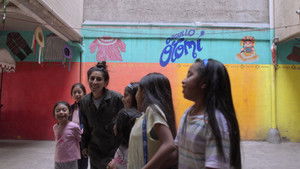
Skate Territory
After a long and successful career as a skater, Veronica has stepped away from competing, but continues her legacy by organizing skateboarding workshops to teach young girls from indigenous communities to skate, and to push them to fight back for the public spaces that have been occupied by men and to practice a sport that also belongs to women.
2024
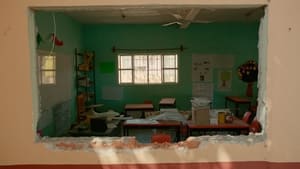
Aftermath
Documentary about the aftermath of the earthquake that shook Juchitán, on the Mexican Pacific coast. It tells the story of Dxani -muxe seamstress- and Jacinto -mason- and how their lives were radically changed by the strongest earthquake that hit this community; and the poor response of the corrupt authorities.
2021

Radio Silence
Mexico, March 2015. Carmen Aristegui, incorruptible journalist, has been fired from the radio station where she has worked for years. Supported by more than 18 million listeners, Carmen continues her fight. Her goal: raising awareness and fighting against misinformation. The film tells the story of this quest: difficult and dangerous, but essential to the health of democracy. A story in which resistance becomes a form of survival.
2021
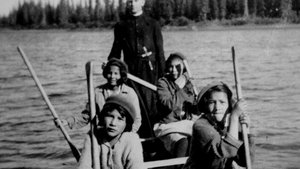
Killing the Indian in the Child
The Indian Act, passed in Canada in 1876, made members of Aboriginal peoples second-class citizens, separated from the white population: nomadic for centuries, they were moved to reservations to control their behavior and resources; and thousands of their youngest members were separated from their families to be Christianized: a cultural genocide that still resonates in Canadian society today.
2021
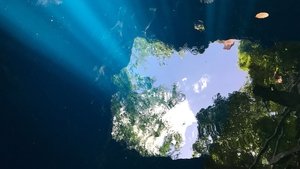
Cenote
Cenotes—sources of water that in ancient Mayan civilization were said to connect the real world and the afterlife. The past and present of the people living in and around them intersect, and distant memories echo throughout immersive scenes of light and darkness.
2020

The Jump
Luis Rivera, the best Mexican high jumper of the history, seeks to inspire a generation by qualifying for the Olympic Games as he finishes his doctorate studies. Injuries threaten his dream while his younger brothers follow in his path and example.
2019
Chavela
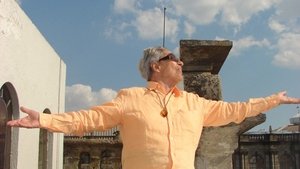
Inspired by an exclusive interview and performance footage of Chavela Vargas shot in 1991 and guided by her unique voice, the film weaves an arresting portrait of a woman who dared to dress, speak, sing, and dream her unique life into being.
2017

Meth Storm
As police and DEA agents battle sophisticated cartels, rural, economically-disadvantaged users and dealers–whose addiction to ICE and lack of job opportunities have landed them in an endless cycle of poverty and incarceration–are caught in the middle.
2017
Viacrucis Migrante
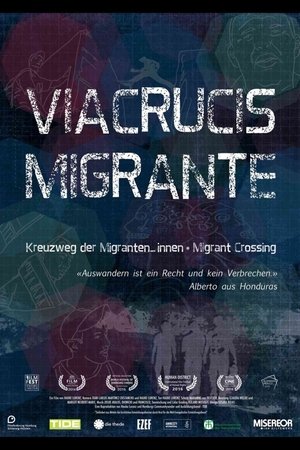
A documentary film about men, women, and children fleeing northward from the existential threats in their home countries of Honduras, El Salvador, and Guatemala. They embark on a perilous journey with an uncertain outcome. Shortly after crossing the southern Mexican border, they find shelter with people who want to help them survive the ordeal of the at least 1,700-kilometer journey to the US.
2017
L'écolo qui défie la mafia de Mexico
2015
Chuy, The Wolf Man
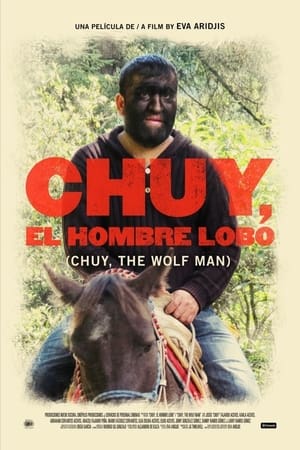
Jesus 'Chuy' Aceves and a dozen living members of his extended family suffer from the very rare condition of congenital hypertrichosis, meaning they were born with excessive hair on their faces and bodies. Due to their appearance, they suffer from discrimination in all areas of their lives: the children are made fun of at school and abandoned by their 'non-hairy' parents, and the adults cannot find work unless they choose to exhibit themselves as freaks in circuses. This moving and visually arresting documentary is a portrait of Chuy and his family members. It examines their day-to-day lives and their struggle to find love, acceptance and employment.
2015
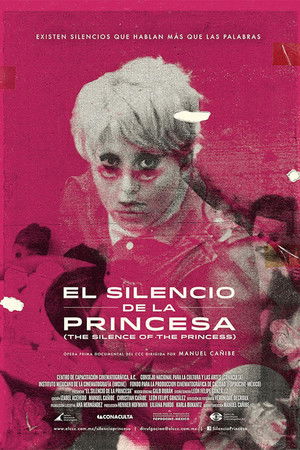
The Silence of the Princess
Diana Mariscal reached a moment of fame in the sixties, when at just 18 years of age she was the lead actress of the movie Fando and Lis by Alejandro Jodorowsky. The moment seemed to trigger a promising career, but her public image faded little by little until disappearing. Forty years later the traces of her existence have not been entirely erased.
2014

My Life Inside
Rosa is a Mexican woman who, at the age of 17, migrated illegally to Austin, Texas. Some years later, she was jailed under suspicion of murder and then taken to trial. This film demonstrates how the judicial process, the verdict, the separation from her family, and the helplessness of being imprisoned in a foreign country make Rosa’s story an example of the hard life of Mexican migrants in the United States.
2007
Oaxaca - Zwischen Rebellion und Utopie
2007
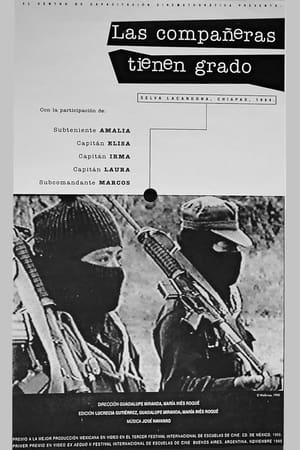
Zapatista Women
April 1994 in the Lacandona Jungle, Chiapas, México. The Zapatista women talk about the living conditions of Mexican indigenous populations and the life of peasant women. They explain the reasons for their struggle and their uprising.
1995
The Snake in My Bed
In common with many L.A. Rebellion films, Snake touches on such themes as institutionalized racism, colonialism and the plight of women of color. Narrated in the first person by the filmmaker as an epistle to her son, The Snake in My Bed tells Diegu's story as a Nigerian woman in Lagos who is romantically pursed by a German national who has “gone native.” Despite his secretive and duplicitous actions, she eventually agrees to marry him and has his child, only to learn that he is a bigamist with a German wife and child.
1995

Ôrí
A look at the Brazilian black movement between 1977 and 1988, going by the relationship between Brazil and Africa.
1989
Curse of the Mayan Temple
A documentary exploring the ruins of a Mayan temple in Mexico and a "cursed" medallion that was found there.
1977

Mexican Moods
This 1942 travelogue film, directed by Aldo Ermini and sponsored by the Office of the Coordinator of Inter-American Affairs, showcases Mexican culture during World War II, focusing on various cultural activities and popular entertainers of the time. The film features notable figures like Puerto Rican actress and singer Mapy Cortés, Mexican comedian Cantinflas, and a re-enactment of Aztec traditions.
1942