Watch Cilicia: The Land of Lions (2019) Online Free
This story is about a medieval king, Hetoum I, who saved Christianity from the threat of extinction and succeeded in his mission to entrust the defense of the country, which was surrounded by enemies, to his queen, Zabel, who was carrying the future heir of the throne.
Cast
Michael Aleksanyan, Nora Badalian, Devin Eghyan, Grigor Gabrielyan, Hayk Galstyan
More Like This

The Last Sparapet
Based on true events, the film presents nearly all stages of national hero Sparapet Vazgen Sargsyan's life, intertwined with significant events in the modern history of our country.
2025

Ladaniva : Carte blanche
2023

Nina's Children
The 40-day war has just ended in Armenia. David completed a 2-year service and has returned home from the front. Uncertain about his next steps, he is actively searching for a job that resonates with him. Arthur served in the army for a year and is currently on vacation. He continues his efforts to recall his favorite tune on the piano. Serezha harbors jealousy toward his brothers who experienced the war. He is getting ready to enlist in the army, as he will turn 18 this year. All three are brothers, and they are all Nina's children.
2023
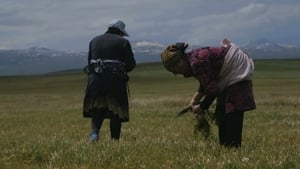
Village of Women
Only women, children and old people live in this Armenian village, while the men work in Russia. A life with a rhythm of its own, an independent daily life marked nonetheless by exile.
2019
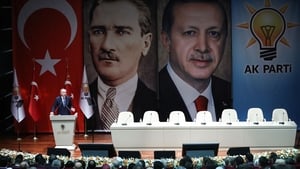
From Atatürk to Erdoğan: Building a Nation
Turkey's history has been shaped by two major political figures: Mustafa Kemal (1881-1934), known as Atatürk, the Father of the Turks, founder of the modern state, and the current president Recep Tayyıp Erdoğan, who apparently wants Turkey to regain the political and military pre-eminence it had as an empire under the Ottoman dynasty.
2019
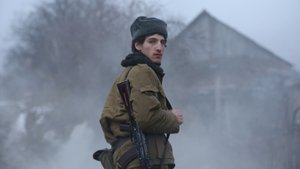
The Line
Taking place in 1991, Tigran, who teaches math at a village school to avoid the army, loses the girl he loves. Consumed by abject wretchedness, he decides to enlist as a volunteer in the Nagorno‑Karabakh war to give meaning to his hollow life.
2016
From Two Worlds as a Keepsake
In Soviet Azerbaijan, a divorced Armenian couple fights over the custody of their daughter, Ashen. Stolen from one parent to another, Ashen's guardians are tragically killed in the bloody war surrounding them. Will the arrival of a new savior finally bring Ashen freedom? Official selection of the Global Lens Collection presented by the Global Film Initiative.
2012
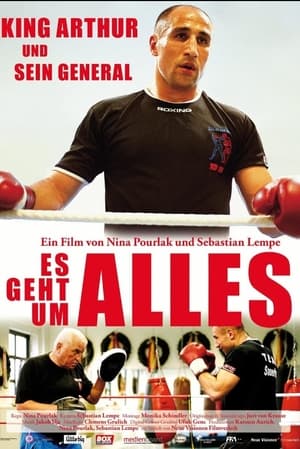
Es geht um Alles
2008

The Lark Farm
The Lark Farm is set in a small Turkish town in 1915. It deals with the genocide of Armenians, looking closely at the fortunes, or rather, misfortunes of one wealthy Armenian family.
2007
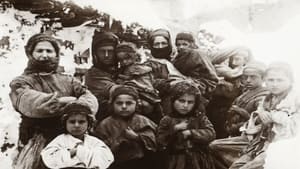
The Armenian Genocide
Explores the Ottoman Empire killings of more than one million Armenians during World War I. The film describes not only what happened before, during and since World War I, but also takes a direct look at the genocide denial maintained by Turkey to the present day.
2006
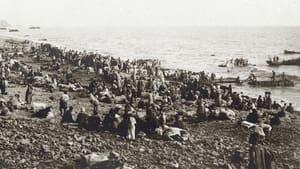
The Armenian Genocide
More than one million Armenians perished between 1915 and 1916 in massacres or brutal deportation programs. Turkey still denies it ever happened. Laurence Jourdan examines massacres of Armenians in the decades leading up to the mass murder, and the geopolitical situation both before and after the genocide. Contemporaneous reports and documents written by Western diplomats stationed in the Ottoman Empire describe the methods used and the deportation routes. These accounts are mixed with personal stories from the living survivors and archive footage from Ottoman authorities.
2005
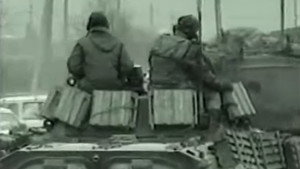
Dark Forest in the Moutains
In the early 1990's, as the Soviet Empire disintegrated, two former Soviet Republics, Armenia and Azerbaijan, squared off against each other over the fate of the 170,000 Armenians living in the small mountainous region of Nagorno-Karabakh. The war eventually claimed tens of thousands of lives and displaced close to a million people. By the time of the tenuous cease-fire, most of the enclave was in the hands of its longtime Armenian inhabitants. Dark Forest in the Mountains was shot on location in Nagorno-Karabakh and uses a mix of digital animation, live footage and expert interviews to tell the story of that region of the world, and the events that led up to the conflict. It also focuses on N.K.'s northernmost territory, Shahumian, and the partisans who manned its treacherous Gulistan Front.
2002
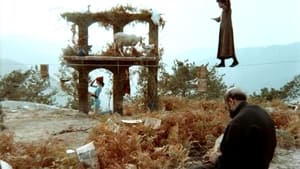
Komitas
The film is dedicated to the Armenian monk and genius composer Komitas, and the 2 million victims on his people in Turkey in 1915. The final 20 years of Komitas life were spent in various mental hospitals. The destiny of Komitas? This is the magic beauty of Armenian culture and the abhorrent brutality of Armenian history. A cultural and artistic world that was slaughtered with a curved knife. A humanity that doggedly advances towards an apocalyptic catastrophe, that does not recognize its own original purpose, eradicates its own memory, its final roots.
1988

Return to Khodorciur—Armenian Diary
Raphael, Yervant Gianikian's father, survived the Armenian genocide in 1915 in Eastern Turkey. In April 1988, while living in Venice, he sat for his son's camera and read an excerpt from his memoirs, translated from Armenian into Italian.
1986

Star of Hope
Two part film about David Bek and Mkhitar Sparapet's major Armenian uprising against Safavid Persia in the Syunik region in the 18th century.
1978
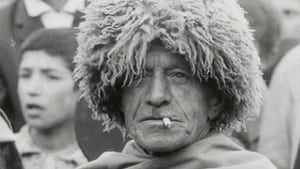
The Seasons
The last collaboration of Artavazd Peleshian and cinematographer Mikhail Vartanov is a film-essay about Armenia's shepherds, about the contradiction and the harmony between man and nature, scored to Vivaldi's Four Seasons.
1975
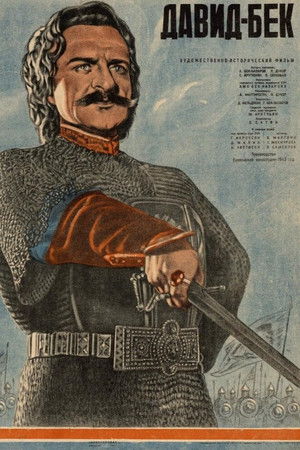
David Bek
The Armenian national hero, David Bek, leads a major Armenian uprising against Safavid Persia in the Syunik region in the 18th century.
1944
Ar
Based on true events, the film presents nearly all stages of national hero Sparapet Vazgen Sargsyan's life, intertwined with significant events in the modern history of our country.
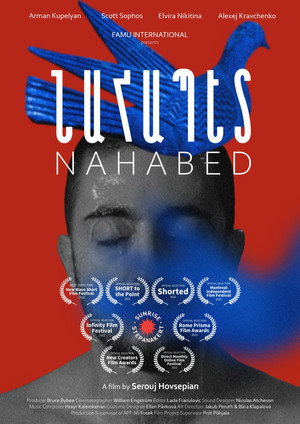
NAHABED
In the aftermath of a recent genocide, Haïg, a young survivor is chosen to father a new generation of his people and ensure the survival of his endangered Armenian race, while sacrificing his personal freedom.

Artavazd II Between Rome and Parthia
The reign of the Armenian king Artavazd Il coincided with the period of fierce Roman-Parthian wars, in which Greater Armenia always took a direct part. Greek and Roman historians called Armenia the third power in the world, and its king Artavazd Il one of the most influential and authoritative rulers of his era. This was the era of great personalities Julius Caesar, Cleopatra, Mark Antony, who became part of the great policy of the Armenian king Artavazd II.