Watch Churchill, Roosevelt & Stalin: The Road to Yalta (2025) Online Free
Between February 4 and 11, 1945, three months before World War II ended in Europe, US President Roosevelt, British Prime Minister Churchill, and Soviet leader Stalin met in the Ukrainian city of Yalta to discuss how the continent should be politically reorganized after the imminent defeat of Nazi Germany.
More Like This

Tradição e Herança Ancestral - A história dos Mestres de Folias de Reis de Nova Iguaçu
2024

Il était une fois... « La Conspiration du Caire »
2024

L'autre monde des dinosaures
2024

Christspiracy
The moral dimension of humanity's interaction with nonhuman animals and the industries that profit from their exploitation, as informed by world religions. A historical explanation of how the current global situation came to be.
2024

The Egypt Code Breakers
By decoding ancient hieroglyphic texts, Jean-François Champollion gave voice to an enigmatic civilization, but behind his legendary feat is a mysterious brother who made it possible. The recent discovery of correspondence between Jean-François Champollion and his brother Jacques-Joseph now allows us to fully understand how a young, self-taught genius was able to make one of the most important discoveries of the 19th century. Without the ingenuity and unfailing support of his older brother, Jean-François would never have succeeded in solving this enigma, which had international repercussions. With animated sequences of their private correspondence, and with the help of archives and expert analysis, this film revisits this unique scientific, human and intellectual adventure to celebrate the bicentenary of the decoding of hieroglyphics.
2022
L’épopée des vignerons
2022
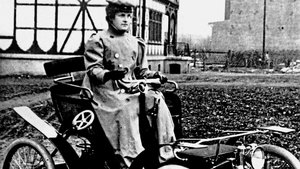
Women and Cars: The Story of an Underestimated Liaison
Since the invention of the automobile, women have distinguished themselves by their daring: the history of women in motor sport.
2022

The Great Wall: The Making of China
2021
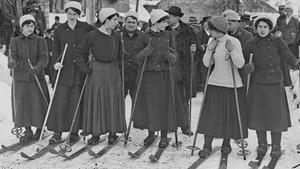
The Fabulous History of Skiing
The history of skiing is an amazing journey through small and big events starring strong and avant-garde people who were not afraid to break with the prevailing social prejudices of their time and invented a new sporting discipline.
2021
Herbst 1929 - Schatten über Babylon
2020
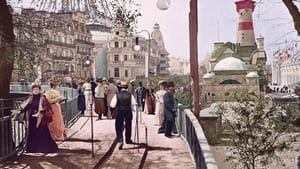
Paris 1900
In 1900, the eyes of the whole world are on Paris. The World's Fair welcomed 50 million amazed visitors, and the city celebrated itself in a glamorous era. This period went down in history as the "Belle Époque." Elaborately restored and colorized historical photographs bring to life the exciting life in Paris between the end of the 19th century and the beginning of World War I in 1914. Bicycles, cars, airplanes, moving pictures, newly founded film studios, revolutionary composers and painters, avant-garde ballet performances, fashion houses, summer resorts on the Atlantic coast – life was intoxicating. People celebrate in the variety shows, cabarets, and revue theaters of Paris. Moulin Rouge, Folies Bergères, Bal Tabarin—in Paris, the nights are long and life is too short to sleep through. It is a dance on the volcano, given the political developments in the world.
2019
Apollo 11 : Retour vers la lune
2019
Apollo: The Forgotten Films
Recently discovered footage reveals the secret history of NASA's first landing on the moon, and using this brand-new evidence, former astronauts and experts challenge everything known about the Apollo missions.
2019
Ellis Island, une histoire du rêve américain
In 1892, Ellis Island, in New York Bay, became the main gateway to the United States for immigrants arriving increasingly from Europe. The story of immigration to the United States from 1892 to 1954, an enthralling polyphonic narrative that embraces both small and great history.
2014

Collapse
From the acclaimed director of American Movie, the documentary follows former Los Angeles police officer turned independent reporter Michael Ruppert. He recounts his career as a radical thinker and spells out his apocalyptic vision of the future, spanning the crises in economics, energy, environment and more.
2009
Nuremberg: The Nazis Facing their Crimes
The documentary of the Nuremberg War Trials of 21 Nazi dignitaries held after World War II.
2006

Mutig in die neuen Zeiten - Im Reich der Reblaus
Austria in the mid-1950s. Seamstress Elfi Redlich and her two children are about to emigrate to America with occupation officer Hal when her husband, missing for eleven years, returns home from Siberia. Factory owner Ulmendorff is deported to Russia on his way to his niece Valerie's wedding as a result of an intrigue by his employee Hasak. Hasak's joy is short-lived, as the Jewish owner of the factory asserts his ownership.
2005
Los últimos guerrilleros - Historia de la A.G.I. (Agrupación guerrillera de Levante)
2003
Gandhi
In the early years of the 20th century, Mohandas K. Gandhi, a British-trained lawyer, forsakes all worldly possessions to take up the cause of Indian independence. Faced with armed resistance from the British government, Gandhi adopts a policy of 'passive resistance', endeavouring to win freedom for his people without resorting to bloodshed.
1982
The Battle of France
A montage of newscasts tracing the events of the "damned war" and the German invasion of 1940.
1964