Watch Churchill and the Movie Mogul (2019) Online Free
Winston Churchill understood the power of films, but the true extent of his use of cinema as a propaganda tool is rarely explored. In 1934, one of Britain's most celebrated film producers, Alexander Korda, signed Churchill up as a screenwriter and historical advisor. It was the start of a unique collaboration. Churchill provided script notes for Korda's productions and penned an epic screenplay. When war broke out, their collaboration took on national importance. Korda was sent on a mission to Hollywood to help bring America into the war, with positive results. With access to previously undiscovered documents, this film documentary examines that mission and a friendship that underpinned a unique, creative partnership.
Cast
Dilly Barlow, Charles Barr, Charles Drazin, Stephen Fry, David Lough, Jonathan Rose, David Thomson, Greg Walker, Lady Williams, Ian Beyts, John Standing, Robert Firth
More Like This
The Last Daughter
Brenda’s first memories were of growing up in a loving white foster family, before she was suddenly taken away and returned to her Aboriginal family. Decades later, she feels disconnected from both halves of her life, so she goes searching for the foster family with whom she had lost contact. Along the way she uncovers long-buried secrets, government lies, and the possibility of deeper connections to family and culture.
2023
The Imperial Lullaby
The armies of Fascist Italy conquered Addis Ababa, capital of Abyssinia, in May 1936, thus culminating the African colonial adventure of the ruthless dictator Benito Mussolini, by then lord of Libya, Eritrea and Somalia; a bloody and tragic story told through the naive drawings of Pietro Dall'Igna, an Italian schoolboy born in 1925.
2020
Poland 1939: When German Soldiers Became War Criminals
September 1st, 1939. Nazi Germany invades Poland. The campaign is fast, cruel and ruthless. In these circumstances, how is it that ordinary German soldiers suddenly became vicious killers, terrorizing the local population? Did everyone turn into something worse than wild animals? The true story of the first World War II offensive that marks in the history of infamy the beginning of a carnage and a historical tragedy.
2019
Elemental: Hydrogen vs. Hindenburg
"Elemental" is the groundbreaking television event from Academy Award-winning executive producer Robert Zemeckis that reveals how the elements of the periodic table have controlled the outcome of human history. This one-hour drama tells the harrowing story of the Hindenburg disaster. Sophisticated cinematography, animation and spectacular visual effects bring this fiery saga to life in a way no audience has seen before.
2017
La Tragédie des Brigades Internationales
2016
Challenging Churchill
Churchill, a name typically associated with braveness and altruism. Recently found evidence from Soviet and British sources however brings up questions about Churchill's doings in the conferences of Tehran, Yalta and Potsdam. Why did he agree to give Stalin large parts of Poland? The story of two world leaders in times of war - it is also the story of Poland.
2012

Glorious 39
A mysterious tale set around a traditional British family on the eve of World War Two. Oblivious to the looming shadow of World War II, the wealthy Keyes maintain a confident façade in the British countryside until daughter Anne becomes an unexpected pawn. Her accidental discovery of secret recordings creates a rift in the family.
2009
1939: Hollywood's Greatest Year
This documentary focuses on 1939, considered to be Hollywood's greatest year, with film clips and insight into what made the year so special.
2009
John Rabe
A true-story account of a German businessman who saved more than 200,000 Chinese during the Nanjing massacre in 1937-38.
2009
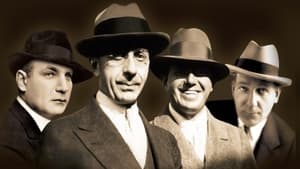
The Brothers Warner
An intimate portrait and saga of four film pioneers--Harry, Albert, Sam and Jack who rose from immigrant poverty through personal tragedies persevering to create a major studio with a social conscience.
2008
Bin nur ein Jonny
2008
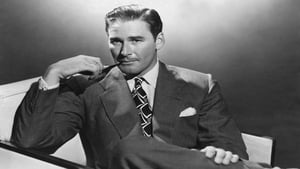
Tasmanian Devil: The Fast and Furious Life of Errol Flynn
The story of Tasmanian-born actor Errol Flynn whose short & flamboyant life, full of scandals, adventures, loves and excess was largely played out in front of the camera - either making movies or filling the newsreels and gossip magazines. Tragically he was dead from the effects of drugs and alcohol by the time he was only 50 & the myths live on. But there is another side of Flynn that is less well known - his ambitions to be a serious writer and newspaper correspondent, his documentary films and his interest in the Spanish Civil War and Castro's Cuba
2007
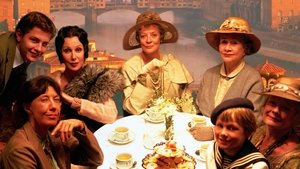
Tea with Mussolini
In 1930s fascist Italy, adolescent Luca just lost his mother. His father, a callous businessman, sends him to be taken care of by British expatriate Mary Wallace. Mary and her cultured friends - including artist Arabella, young widow Elsa, and archaeologist Georgie - keep a watchful eye over the boy. But the women's cultivated lives take a dramatic turn when Allied forces declare war on Mussolini.
1999
Hitler's Forgotten Victims
The story of black and mixed race people in Nazi Germany who were sterilised, experimented upon, tortured and exterminated in the Nazi concentration camps. It also explores the history of German racism and examines the treatment of Black prisoners-of-war. The film uses interviews with survivors and their families as well as archival material to document the Black German Holocaust experience.
1997
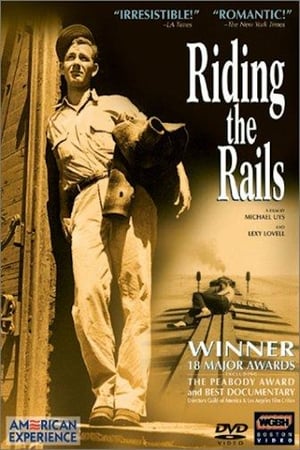
Riding the Rails
Riding the Rails offers a visionary perspective on the presumed romanticism of the road and cautionary legacy of the Great Depression. The filmmakers relay the experiences and painful recollections of these now-elderly survivors of the rails. Forced to travel more by economic necessity than the spirit of adventure, the film's subjects dispel romantic myths of a hobo existence and its corresponding veneer of freedom. Riding the Rails recounts the hoboes' trade secrets for survival and accounts of dank miseries, loneliness, imprisonment, death, and dispossession. Sixty years later, the filmmakers transport their subjects back to the tracks, where the surging impact of sound and movement resuscitates memories of a shattered adolescence and devastating rite of passage.
1997
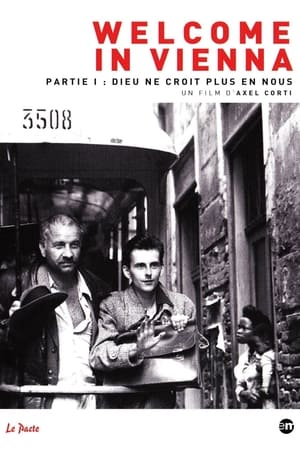
God Does Not Believe in Us Anymore
After his father is murdered by the Nazis in 1938, a young Viennese Jew named Ferry Tobler flees to Prague, where he joins forces with another expatriate and a sympathetic Czech relief worker. Together with other Jewish refugees, the three make their way to Paris, and, after spending time in a French prison camp, eventually escape to Marseille, from where they hope to sail to a safe port.
1982
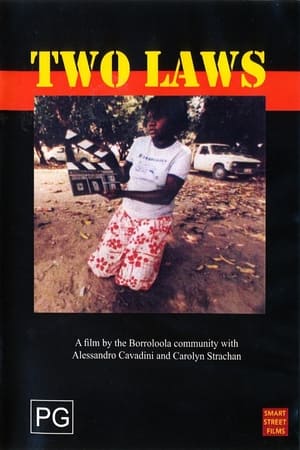
Two Laws
White people don't understand that there are two laws - white people have different laws from Aboriginal people. TWO LAWS is a film about history, law and life in the community of Borroloola in far North Queensland. The films offers viewers a remarkable and different way of seeing and hearing. Like the film, BACKROADS, it is one of the few productions at that time in which Aboriginal people had creative input. The impetus for TWO LAWS came from the community themselves. There was substantial collaboration with the film makers before and during the shooting period. It is one of the most outstanding films to be made during the 1980s. It is an historical analysis of what, nearly forty years later, is an increasingly contemporary question. Two Laws.
1982
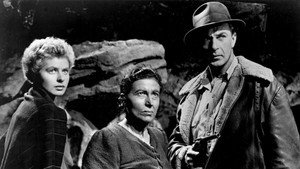
For Whom the Bell Tolls
Spain in the 1930s is the place to be for a man of action like Robert Jordan. There is a civil war going on and Jordan—who has joined up on the side that appeals most to idealists of that era—has been given a high-risk assignment up in the mountains. He awaits the right time to blow up a crucial bridge in order to halt the enemy's progress.
1943

Triumph of the Will
A showcase of German chancellor and Nazi Party leader Adolf Hitler at the 1934 Nuremberg Rally.
1935
Land Without Bread
An exploration —manipulated and staged— of life in Las Hurdes, in the province of Cáceres, in Extremadura, Spain, as it was in 1932. Insalubrity, misery and lack of opportunities provoke the emigration of young people and the solitude of those who remain in the desolation of one of the poorest and least developed Spanish regions at that time.
1933