Watch Chinese Chariots Revealed (2017) Online Free
For over 1,000 years, chariots were indispensable weapons in ancient China. The art of chariot driving and special warfare were used there for longer than anywhere else. Their contribution to the unification of the Chinese empire is undisputed. New archaeological discoveries reveal how the Chinese developed and perfected this sophisticated weapon. In the Bronze Age, over 3,000 years ago, chariots and other war equipment arrived in China from Central Asia via the Hexi Corridor. In addition to trade and new alliances, their spread was mainly due to the Zhou dynasty's incessant military campaigns against rebellious vassal states and the constant attacks by the mobile cavalries of its northern neighbors. Manned with spearmen or archers, the chariots were a decisive weapon in battle.
Cast
Russell Norman, Tim Dow, Gordon Summers
More Like This

Handbook of Movie Theaters' History
Handbook of Movie Theaters' History is a documentary about the history, the development in the present days and the future of movie theaters in the city of Turin, Italy. It mixes the documentary language with comedy and fiction, and is enriched by interviews to some of the most important voices of Turin cinematography. The film follows the evolution of movie theaters by enlightening its main milestones: the pre-cinema experiences in the late 19th Century, the colossals and the movie cathedrals of the silent era, the arthouse theaters, the National Museum of Cinema, the Torino Film Festival, the movie theaters system today and the main hypothesis about its future. The mission of Handbook of Movie Theaters' History is to explore and give back to the audience a deep reflection about the identity and the value of movie theater, in its social and anthropological role and as a mass media, and to analyze the experience of the viewer.
2021
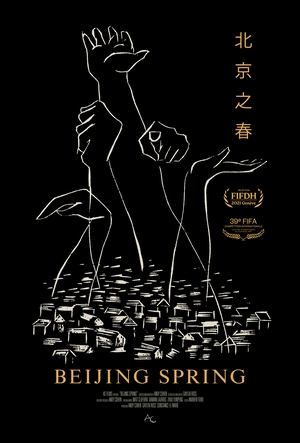
Beijing Spring
The documentary film of the brief window of artistic freedom and democracy movement 1978 - 1982 following China's brutal cultural revolution.
2021
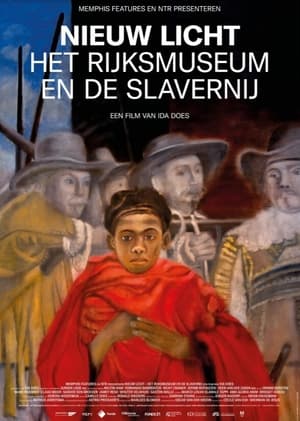
Nieuw Licht - Het Rijksmuseum en de Slavernij
2021
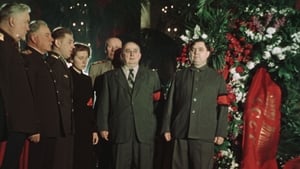
State Funeral
The enigma of the personality cult is revealed in the grand spectacle of Stalin’s funeral. The film is based on unique archive footage, shot in the USSR on March 5 - 9, 1953, when the country mourned and buried Joseph Stalin.
2019

Genji Fantasy: The Cat Fell in Love With Hikaru Genji
The Tale of Genji Museum in Uji City, Kyoto will be airing a short film blending history and fantasy, the story follows a modern high school girl named Hana who is transformed into a cat and transported back in time. She travels 1,000 years ago to the Heian Era as portrayed in The Tale Of Genji, arguably the most famous novel in Japanese literature. Guided by the novel's titular character Hikaru Genji, Hana experiences firsthand the emotions that the author Murasaki Shikibu depicted in her novel. The short features scenes based on The Diary of Lady Murasaki and other historical materials, such as the real-life noble Fujiwara no Michinaga swiping early drafts of The Tale Of Genji because he could not wait to read chapters as Murasaki wrote them.
2019
The Ghazi Attack
India’s first underwater war film tries to decode the mystery behind the sinking of Pakistani submarine PNS Ghazi during the Indo-Pak war of 1971.
2017

The MovieLand Movie
I go to Movieland at least once a week, every week, for the last five years to sink some quarters into the games and the Movieland movie is an accumulation of the friends, lights, textures, and narratives that I have experienced in that time. I love Movieland!
2017
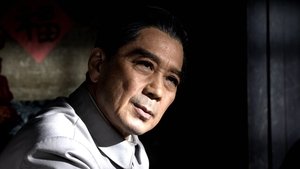
The Story of Zhou Enlai
With a unique perspective of the accompanying cameraman of Premier Zhou Enlai, the film tactfully tells the story that Premier Zhou went to the old revolutionary base area of Hebei Province at the beginning of the 1960s when our country suffered from the Great Chinese Feminine. He made in-depth research in Boyan commune of Handan District, work closely with the masses, followed up a clue and seized the culprit in four days and nights.
2013

Planet Food: Spice Trails
In this remarkable journey, Planet Food travels the world to see how control of the spice trails, over the last five millennia, has made great cities and destroyed ancient civilizations. Our guides travel from the Molucca Islands of Indonesia, the original home of cloves and nutmeg, to the Indian province of Kerala, with its native pepper and cardamom. Additional stops include Venice, Beirut, Cairo and other significant places in the spice trade that created and toppled empires.
2012

John Rabe
A true-story account of a German businessman who saved more than 200,000 Chinese during the Nanjing massacre in 1937-38.
2009
Swing con Son
Music documentary about Billo Frómeta by director Rafael Marziano Tinoco from Venezuela.
2009

The Polio Crusade
The film interweaves the personal accounts of polio survivors with the story of an ardent crusader who tirelessly fought on their behalf while scientists raced to eradicate this dreaded disease. Based in part on the Pulitzer Prize-winning book Polio: An American Story by David Oshinsky, Features interviews with historians, scientists, polio survivors, and the only surviving scientist from the core research team that developed the Salk vaccine, Julius Youngner.
2009
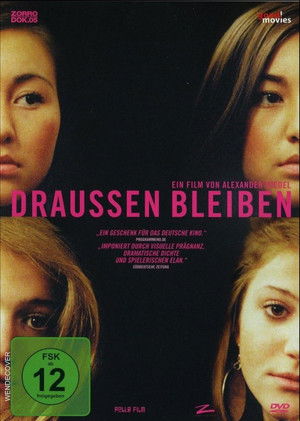
Draussen bleiben
2007
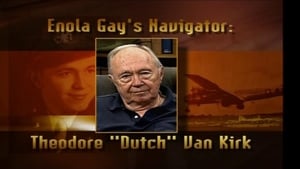
Enola Gay's Navigator: Theodore (Dutch) Van Kirk
Theodore "Dutch" Van Kirk navigated the first atomic bombing mission in Hiroshima, Japan, and later participated in the first Bikini Atoll atomic bomb tests.
2007

Ottoman Empire: The War Machine
This History Channel documentary traces the Ottoman Empire from its beginnings in the 14th century to its incarnation as one of the largest empires in history, spanning three continents.
2006
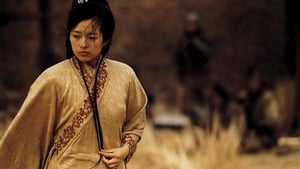
The Warrior
In 1375, China was in chaos between Yuan Dynasty and Ming Dynasty. Coryo (an ancient kingdom of Korea then) sent a delegation of many diplomats, soldiers and a silent slave to make peace with the new Chinese government. However, this delegation got charged as spies and sent in exile to a remote desert.
2001

M. Butterfly
In 1960s China, French diplomat Rene Gallimard falls in love with opera singer Song Liling – but Song is not at all who Gallimard thinks.
1993
The French Revolution
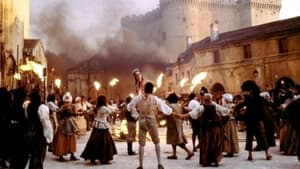
A history of the French Revolution beginning from the decision of the king to convene the Etats-Generaux in 1789 in order to deal with France's debt problem. Part one spans the event until August 10, 1792 (when the King Louis XVI lost all authority and was imprisoned). Part two carries the story through the end of the terror in 1794.
1989
El brigadista
The Castro revolution was just consolidating its power when, in 1961, over 100,000 students were sent from their schools into the countryside to teach the peasants there how to read. Coinciding with the Bay of Pigs invasion, in this docudrama, 15-year-old Mario (Salvador Wood) has come to a tiny village in the Zapata swamps and gradually wins the villagers over to his task. At the same time, he receives an education in the realities of rural life from the hard-working peasants.
1978
The Pharmacy: Shanghai
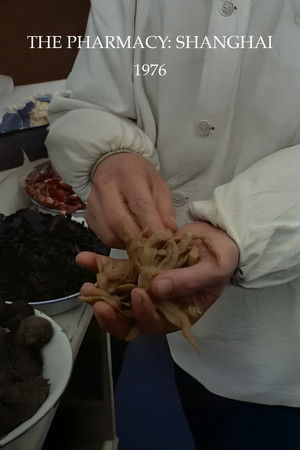
Filmed inside Pharmacy No. 3 in Shanghai, Joris Ivens and Marceline Loridan-Ivens document the daily work of a state pharmacy that functions as both a dispensary and a neighborhood medical center. The film focuses on routine interactions between staff and patients, revealing an integrated model of urban healthcare in 1970s China.
1976