Watch Chemerical (2009) Online Free
'Chemerical' explores the life cycle of everyday household cleaners and hygiene products to prove that, thanks to our clean obsession, we are drowning in a sea of toxicity. An average North American family try to turn a new leaf by creating and living in a toxic free home. Chemerical tackles the 'toxic debate' in a truly informative and entertaining way, not only by raising awareness, but more importantly, by providing simple solutions. Sparking awareness through an interesting and inspiring dialogue of an issue that affects the lives of everyone, Chemerical will seek to catalyze a change in behavior. Focusing on the lives and foibles of a family that subsists on a chemical dependent lifestyle, and bit-by-bit revealing its impact and scope on their own well-being and that of their fellow humans, the film will relate and share their story as a basis for connecting the dots between our consumer choices and community concerns.
More Like This
Dian Fossey: Ihr Leben für die Gorillas
She was the first to study gorillas in their natural environment: the high mountains of Rwanda, where she settled in 1967. For nearly twenty years, Dian Fossey lived with the gorillas, observed their behavior, and changed the way people viewed them. Her relentless fight against poaching prevented the species from becoming extinct. But in December 1985, the primatologist was murdered, and the mystery surrounding her death remains unsolved. Former colleagues, scientists, and biographers shed light on the impact of her work, but also on the darker sides of her personality and her uncompromising commitment.
2025
Wildnis 2.0 - Die Tierwelt auf Umwegen
2024
L'extraordinaire recherche du docteur Cartault
The film recounts the incredible research conducted by François Cartault, a pediatrician and geneticist on the island of Réunion. Conducted like a police investigation over more than 20 years, his research, both medical and historical, takes us on a journey through the disease of moon children, deprived of sunlight, and on the trail of slavery in Africa. The film shows how genetics is also an astonishing trace of history.
2023

Le Beurre : Du bonheur en motte ?
2023
Bright Green Lies
Bright Green Lies investigates the change in focus of the mainstream environmental movement, from its original concern with protecting nature, to its current obsession with powering an unsustainable way of life. The film exposes the lies behind the notion that solar, wind, hydro, biomass, or green consumerism will save the planet. Tackling the most pressing issues of our time will require us to look beyond the mainstream technological solutions and ask deeper questions about what needs to change.
2021

The Cost of Cobalt
In the cobalt mining areas of Katanga in the Democratic Republic of the Congo (DRC), babies are being born with horrific birth defects. Scientists and doctors are finding increasing evidence of environmental pollution from industrial mining which, they believe, may be the cause of a range of malformations from cleft palate to some so serious the baby is stillborn. More than 60% of the world’s reserves of cobalt are in the DRC and this mineral is essential for the production of electric car batteries, which may be the key to reducing carbon emissions and to slowing climate change. In The Cost of Cobalt we meet the doctors treating the children affected and the scientists who are measuring the pollution. Cobalt may be part of the global solution to climate change, but is it right that Congo’s next generation pay the price with their health? Many are hoping that the more the world understands their plight, the more pressure will be put on the industry here to clean up its act.
2021
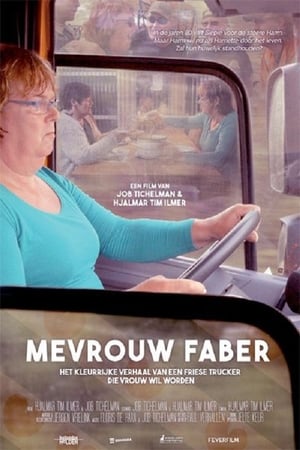
Mevrouw Faber
In the early eighties, the tough trucker Harm married the shy, country girl Siepie. Thirty years later Harm tells her that he wants to become a woman. That is difficult to hear for Siepie. Not only because she will lose her husband, but also because she is afraid of gossip in their small, Frisian village. Yet she gives Harm the space to openly live as Harriette.
2019
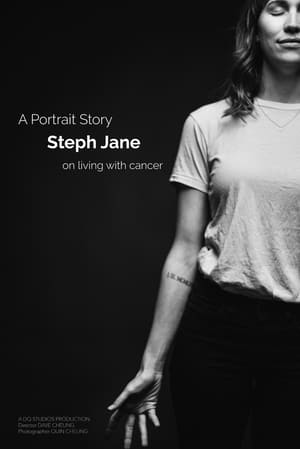
Steph Jane - A Portrait Story
Through an intimate conversation, Steph Jane, age 28, shares the struggles and lessons her second diagnosis of stage-4 cancer has taught her. From being genuinely present and savouring simple moments to thoughts of the future and what really matters, Steph reveals beauty and wisdom which transcend appearance and years.
2019
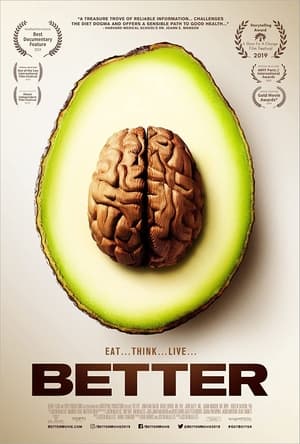
Better
Founder of Wellness Engineering and New York Times Bestselling author Jonathan Bailor shares how personal tragedy led him to dedicate his life to finding a better way to eat, think, and live that reverses the causes and symptoms of diabetes and obesity (Diabesity). Featuring expert interviews on-location at Harvard Medical School with Dr. David Ludwig, Dr. JoAnn Manson, Dr. Kirsten Davison, and Dr. John Ratey, along with intimate testimonials of everyday Americans, we see the pain and struggle of the old-fashioned and ineffective “calories in, calories out” model, expose the lies that led to it, and provide a proven, practical, and pleasurable alternative. BETTER culminates in offering a proven path toward better living by introducing revolutionary methods to lower the body weight “Setpoint” through simple, evidence-based solutions that everyone can use to optimize their current diet to prevent and reverse many of today’s most common diseases.
2019
After Haiyan
'After Haiyan' is a short film about the challenges faced by the Deaf community in Tacloban, Philippines accessing disaster relief, medical care, and basic services after Typhoon Haiyan, known locally as Yolanda.
2014
The Key Issue
A mockumentary about four people and their idiosyncratic ways of saving the planet.
2011
Prenatal & Postnatal Yoga
Both during and after pregnancy, yoga is a perfect way to firm your body, build strength, and gain flexibility. These two yoga practices, filmed in a serene garden overlooking the Pacific Ocean, are also a wonderful way to maintain emotional balance and reduce stress during the exciting and often hectic times surrounding the birth of a child. In the prenatal sequence you'll practice safe and simple movements intended to strengthen and tone your body at any stage of pregnancy, while providing relaxation that will help create a luminous space in which your baby will thrive. The postnatal sequence is designed to redefine your body, restore your energy, and help you reconnect to yourself and your own wellness.
2009

Killer at Large
Obesity rates in the United States have reached epidemic proportions in recent years. Killer at Large shows how little is being done and more importantly, what can be done to reverse it. Killer at Large also explores the human element of the problem with portions of the film that follow a 12-year old girl who has a controversial liposuction procedure to fix her weight gain and a number of others suffering from obesity, including filmmaker Neil Labute.
2008
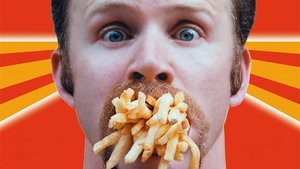
Super Size Me
Morgan Spurlock subjects himself to a diet based only on McDonald's fast food three times a day for thirty days without exercising to try to prove why so many Americans are fat or obese. He submits himself to a complete check-up by three doctors, comparing his weight along the way, resulting in a scary conclusion.
2004
Into Madness
Initially airing on HBO's "America Undercover" series, this riveting documentary focuses on three families shattered by the psychiatric disorder of schizophrenia. Subjects "Bob," "Missy" and "Steven" have lived for over a decade with schizophrenia. The film documents the difficult day-to-day existence of both those afflicted with this order and the families searching for answers to their loved ones' suffering. This film also shows the varied and variably successful treatment methods for each of the subjects—one is placed in a group home, one is placed in an institution, and one is cared for at home. The documentary was critically acclaimed for its compassionate treatment of mental illness.
1989
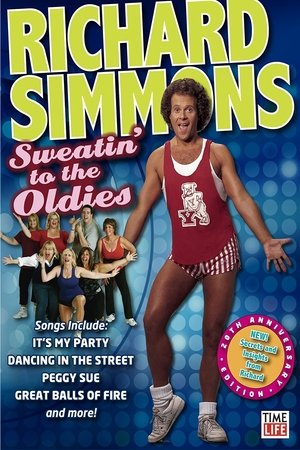
Sweatin' to the Oldies
Fitness expert Richard Simmons gets some of his friends together and invites you to the High School Prom. But there's no need to rent a gown or a tuxedo, just come as you are. This is an aerobic exercise party where, instead of boring elevator music, you get to work out to ten of the biggest hit songs from the 1950's & '60's performed by a live band! "Dancing in the Streets," "Beyond the Sea," "On Broadway," "It's My Party," "Peggy Sue," "Great Balls of Fire," "Wipeout," "He's a Rebel," "Personality" and "Ain't No Mountain High Enough." If you need to get or stay fit, but want to have fun while doing it, let Richard and his friends show you the way!
1988
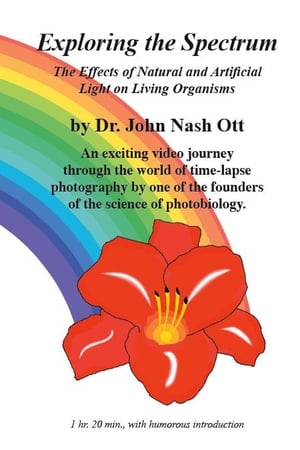
Exploring the Spectrum
An exciting video journey through the world of time-lapse photography by one of the founders of the science of photobiology, Dr. John Nash Ott. Do fluorescent lights cause cancer and childhood learning and behavior disorders? Can long-term exposure to low-level radiation as from TV sets, computers, fluorescent lights, and similar devices harm you? Does living behind window glass and with glasses covering our eyes over years affect our health? Is natural sunlight and trace ultra-violet radiation really harmful? Or is it necessary and beneficial? How do cells, plants, and animals respond to constant exposure to different light color frequencies? These and similar questions were the subjects of Dr. Ott's pioneering investigations in the field of photobiology, using the methods of time-lapse photography.
1974
Island Observed
A film record of M.E.T.E.I. (Medical Expedition to Easter Island), one of the most unusual scientific enquiries ever launched, headed by a McGill University research team. While the film is concerned mainly with the physical condition of Easter Islanders, it also provides glimpses of island activities, a village wedding, and the famous long-faced stone sculptures.
1966
Jung On Film
This compelling film represents a rare record of an original genius. In Jung on Film, the pioneering psychologist tells us about his collaboration with Sigmund Freud, about the insights he gained from listening to his patients' dreams, and about the fascinating turns his own life has taken. Dr. Richard I. Evans, a Presidential Medal of Freedom nominee, interviews Jung, giving us a unique understanding of Jung's many complex theories, while depicting Jung as a sensitive and highly personable human being.
1957
Billions Around Us
A film about occupational diseases. It shows what risks one faces in various professions and presents ways to avoid them. It is necessary to create a healthy work environment, to check the health of workers, to use protective equipment, and to build awareness of basic hygiene rules.
1948