Watch Che Guevara: The making of an icon (2014) Online Free
How does a politician – assassinated more than 50 years ago – gradually become a public figure? An extremely vibrant image which shows up where you least expect it. It served as figurehead for the Arab Spring revolutions, from Rabat to Sanaa, whereas we had thought it had been relegated to t-shirts and cigarette lighters. Why has this image become so universal that we are no longer surprised to find it in drawings, graffiti, tattoos and prints on all types of media in all sorts of contexts the world over? How can this image be used to advertise luxury automobiles and also be brandished angrily by indignant agitators? What is the formula that made this figure go viral? This documentary is a journey to investigate and decode a piece of iconography.
More Like This
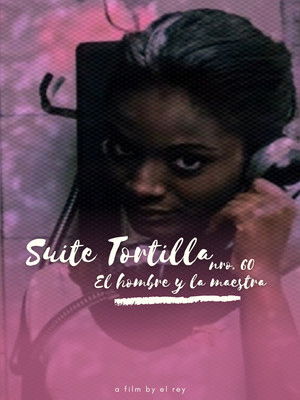
Suite Tortilla #60: The New Man and the Schoolteacher
A documentary vignette explores the life of Revolutionary feminist and filmmaker Magda Gonzalez Grau, capturing a pivotal interview moment that reveals her evolving feminist politics during the Cuban Revolution.
2024
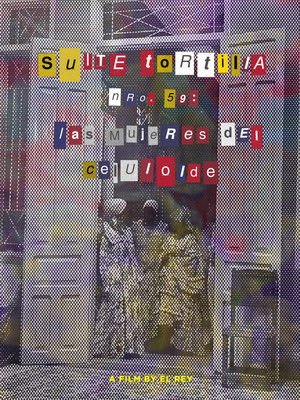
Suite Tortilla #59: The Celluloid Women
An American lesbian in Cuba explores gender through dance and film, blending personal experiences and cultural symbols with music and Revolutionary cinema and questions how lesbians fit into Cuban cinema.
2024
The Voice of Innocence
"The Voice of Innocence" is a documentary that shows how, starting in 1959, the Cuban Revolution put into practice a comprehensive and universal policy of safeguarding the rights of the child, even under the multiple difficulties resulting from the economic, commercial and financial blockade imposed by the United States more than six decades ago. Cuba is one of the main signatories of the Convention on the Rights of the Child, signed on 20 November 1989, when the country had already made extraordinary progress in protecting the rights of the child, in comparison to developed countries, such as the United States, which as of today hasn't yet ratified the Convention.
2019
The Crazy Che
The incredible story of Bill Gaede, an Argentinian engineer, programmer… and Cold War spy.
2015

Our House in Cuba
There was a time in Argentina, not so long ago, when the army wasn't only one, official, but many and made up by civilians. In those times of courageous youths determined to fight to the death for that cause upheld around Peronism as wll as some left-wing postulates, revolutionary Cubas was a beacon of hope in the world scheme -a Montonero nation. "A House in Cuba" seeks to recover the curious adventure of a couple of Montonero parents and their small children, who were lovingly sent into exile in order for their parents to take up arms.
2015
Che: A New Man
The latest documentary by Tristan Bauer took 12 years to complete. It is a unique and invaluable historical document—a jewel not to be missed—that offers us a different, more intimate and personal, perspective on the life of Ernesto Che Guevara than other films about him that have emerged recently. Presenting brilliantly edited archival material, including private documents and intimate recordings that have never been made available to the public before (including recordings of Che reading poems by Vallejo and Neruda to his wife, intimate family gatherings on 8mm, a speech given by Che in French), Bauer allows us to see the iconic figure as a hero but also as the larger-than-life passionate and idealistic human being that he was.
2010
Che: Part Two
Seven years after his triumph in Cuba, Che winds up in Bolivia, where he tries to ignite the same revolutionary fires as before.
2008
Che: Part One
Ernesto Guevara, known as 'Che', leads a group of Cuban exiles under Fidel Castro in a revolution to overthrow Fulgencio Batista, the dictator of Cuba.
2008
My Life with Him (Che)
In the 1950s, young revolutionary Ernesto Guevara meets Peruvian economist, intellectual and activist Hilda Gadea, whose sharp political vision and energy left a lasting mark on his path. At its core, the story delves into their romantic bond, Hilda’s journey through motherhood and the agonizing choice that ultimately shaped her life: remain by her daughter’s side or follow the call of the revolution.

Personal Che
A documentary that explores the myth behind the truth. Different people around the globe reinterpret the legend of Che Guevara at will: from the rebel living in Hong Kong fighting Chinese domination, to the German neonazi preaching revolution and the Castro-hating Cuban. Their testimonies prove that the Argentinian revolutionary's historical impact reverberates still. But like with all legends, each sees what he will, in often contradictory perspectives.
2007
My Enemy's Enemy
Reveals an alternate history of the post-war world. This is a version of history where, in contrast to what we are all told, fascist ideology prevailed. The story of Klaus Barbie, Nazi torturer, American spy, tool of repressive right-wing regimes, is symbolic of the real relationship that the "Western" governments had with fascism and makes us see the world as it is today - and the politicians that inhabit it - in a different way.
2007

The Lost City
In Havana, Cuba in the late 1950's, a wealthy family, one of whose sons is a prominent nightclub owner, is caught in the violent transition from the oppressive regime of Batista to the Marxist government of Fidel Castro. Castro's regime ultimately leads the nightclub owner to flee to New York.
2005
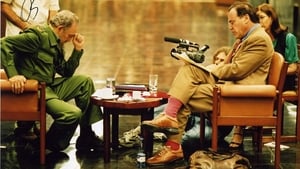
Comandante
Oliver Stone spends three days filming with Fidel Castro in Cuba, discussing an array of subjects with the president such as his rise to power, fellow revolutionary Che Guevara, the Cuban Missile crisis, and the present state of the country.
2003
Sacrificio: Who Betrayed Che Guevara
The two young Swedish journalist's Erik Gandini and Tarik Saleh have worked one year with Sacrificio, a film about the events surrounding the death of Che Guevara. They have traveled the world around and met among others the man who shot Che Guevara and the former CIA agent who walks around with Che's last tobacco in his pistol butt. In their attempts to find out what really happened they discover that the man who is accused of having betrayed Che Guevara as a matter of fact lives in Malmö, in the south of Sweden.
2001
8A
The Kafkaesque world of Cuba under Castro's rule is brought to light in this reconstruction of the 1989 trial and execution of General Arnaldo Ochoa Sanchez, the highest-ranking general and hero of the revolution, and commander of the Angolan and Ethiopian campaigns.
1993
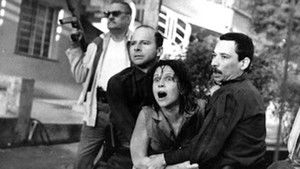
Living Dangerously
In 1950s Havana, a romance blooms between two young revolutionaries whose clandestine printing press publishes pamphlets meant to stir up rebellion against the dictatorship of Fulgencio Batista. As their popularity grows, so, too, does their revolutionary zeal and their desire to mobilize other urban guerilla units.
1987
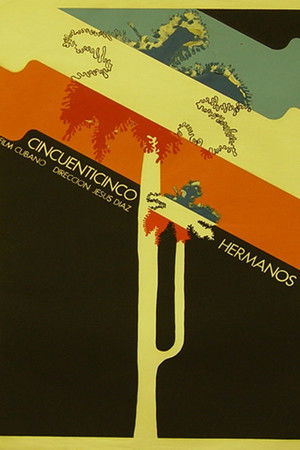
55 Siblings
The Antonio Maceo Brigade consists of fifty-five children of Cuban families that escaped the revolution and settled down in Miami. To the annoyance of their parents, the children developed pro-Castro ideas. This documentary follows the Brigade on its first visit to Cuba. When they meet family members and embrace old neighbours, childhood memories surface.
1978
El brigadista
The Castro revolution was just consolidating its power when, in 1961, over 100,000 students were sent from their schools into the countryside to teach the peasants there how to read. Coinciding with the Bay of Pigs invasion, in this docudrama, 15-year-old Mario (Salvador Wood) has come to a tiny village in the Zapata swamps and gradually wins the villagers over to his task. At the same time, he receives an education in the realities of rural life from the hard-working peasants.
1978
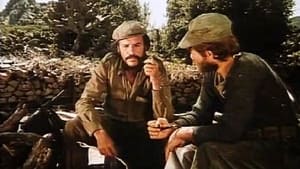
Bloody Che Contra
The story of Che Guevara's desperate attempt to escape the mountains of Bolivia. Pursued by an elite ranger unit of the army led by a determined CIA agent, Che is eventually trapped and his men are killed.
1968
Tania
GDR 1961: Tamara Bunke, daughter of Jewish exiles from Argentina, not only falls for the political goals of the rousing revolutionary Che Guevara during a state visit. She also meets Ulises Estrada, the commandant of Che's team. Ignited by the fire of the revolution, she gets involved in a diabolical espionage deal with the Stasi in order to cheat her way out of Cuba. In Cuba, she ends up caught between all fronts: under the watchful eye of the Stasi, which expects results from her, but in reality solely dedicated to Che's revolution, Tamara allows herself to be trained as a double spy by Che's troops. At the same time, her honest love grows for Commandante Ulises, who eventually gives her the choice of following her personal happiness and going into hiding rather than following Che's plans to liberate South America, which by now he considers a suicide mission. An unresolvable, deeply tragic conflict that ends fatally for Tamara in the battle of Bolivia's Rio Grande..