Watch Catch-As-Catch-Can (1927) Online Free
Reed, a small-time baseball manager in love with Lucille Bascom, takes the blame for a game-fixing scandal to protect her brother, Phil, the team's star pitcher. Disgraced, Reed becomes a reporter and uncovers a plot by the game-fixer, Ward Hastings, and a corrupt wrestler, Butch, to oust Lucille’s father from his mayoral office. After a climactic confrontation where Hastings dies and Reed defeats Butch, Phil confesses, clearing Reed's name. Reed reunites with Lucille and is appointed the town's new police chief.
Cast
Rose Blossom, William Fairbanks, Jack Blossom, Larry Shannon, Walter Shumway, George Kotsonaros, Georgie Chapman
More Like This
The Case of Lena Smith
A peasant girl goes to great lengths to protect her child in 19th century Vienna. The film is considered lost, and only four minutes of footage are known to remain.
1929
His Last Race
1923
Night Life in Hollywood
A picture depicting the engrossing adventures of a small town youth in Hollywood and showing the intimate home life of some of the screen's greatest stars.
1922
The Eternal Flame
A 1922 film directed by Frank Lloyd.
1922
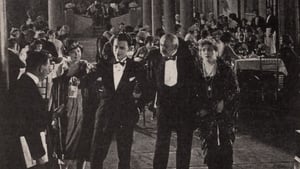
The Good Provider
A prosperous small-town peddler accedes to his family's wish to move from their secure existence to the uncertainty of New York City. It proves fruitless and eventually his kin sees the error of their ways and return to their true home.
1922
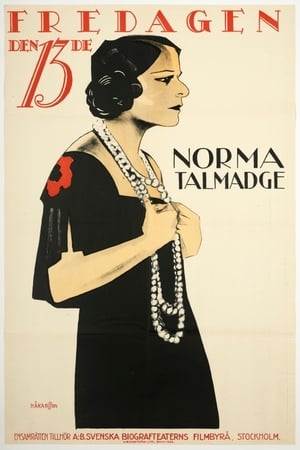
The Wonderful Thing
Jacqueline Laurentine Boggs, the daughter of an American hog farmer, is schooled in France and comes to stay with an English family. There she brings a dose of reality to her snobby hosts.
1921
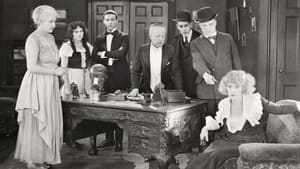
Beyond
Avis Langley's dying mother begs her to look after Avis's errant brother and continues after death to reappear in spirit form to remind Avis of her promise. Avis follows her brother to New Zealand in hopes of protecting him from his own ways, but on the trip tragedy apparently strikes.
1921
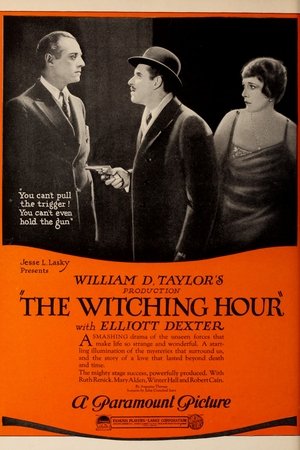
The Witching Hour
Clay Whipple is convicted of murdering the governor following an incident involving a cat's eye pin. Whipple is sentenced to death, but a mentalist named Psychic Jack believes he is innocent since Whipple had been hypnotized at the time of the murder. The psychic persuades the judge to grant the condemned man a retrial, and he sets out to uncover the identity of the real killer, during which time he manages to prevent a second murder from occurring.
1921
The Mistress of Shenstone
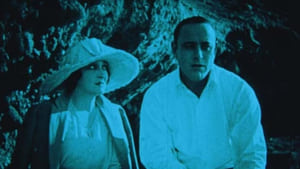
The husband of Lady Myra Ingleby is off fighting in the World War. She is devastated when Sir Derysk Brand tells her that her husband has been killed. The War Office gives her the details - Lord Ingleby was killed, not by enemy fire, but because of an error committed by one of his fellowmen, whose name is never to be disclosed. The grieving widow retreats to her Cornwall estate for a rest. Staying at the inn is a man known as Jim Airth, who carries a grief of his own.
1921

The Sins of Rosanne
Roseanne (Ethel Clayton) has grown up near some diamond mines in South Africa. As a child, she became ill and a Malay nurse, Rachel Bangat (Fontaine La Rue) promised to cure her. That she did, but she also worked some voodoo on the child, who, as a grown up now displays a powerful desire for diamonds and the ability to throw evil curses on those who displease her.
1920
The Great Light
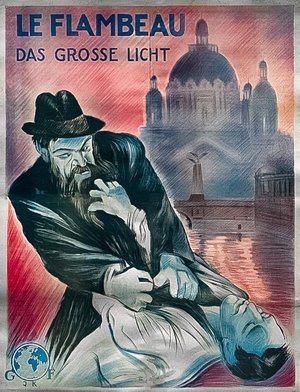
Lorenz Ferleitner has worked his way up from a poor but gifted farm boy to a recognized master builder. When a new cathedral is to be built, he is given the honor of carrying out the task. He would like to commission the unknown young painter Fritz Rasmussen to decorate the dome. The director of the art academy, Professor Marquardt, however, wants to employ his untalented nephew for the painting work. A bitter conflict unfolds.
1920
Bonds of Honor
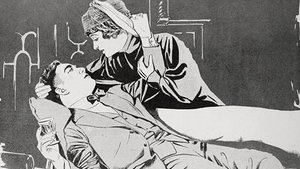
In this picture, Sessue Hayakawa is in a dual role, playing twin brothers. One of them, Yamashiro is serious and hardworking, while the other, Sadao, is a playboy. There is a girl, Toko-Ku, who loves them both, but really prefers the bad boy. Sadao encounters Paul Berkowitz in a gambling den and borrows far more money from him than he can ever pay back.
1919

The Probation Wife
A 1919 film directed by Sidney Franklin.
1919
Marriage for Convenience
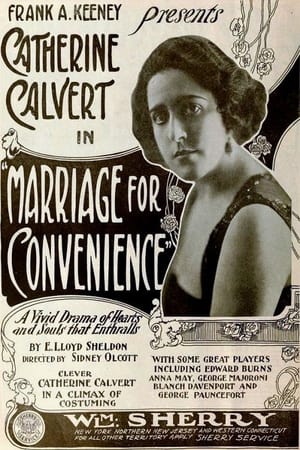
Barbara Rand is blinded when she leaps through a window to escape an assailant. Her sister, Natalie, reluctantly abandons her fiancé, Ned Gardiner, and marries Oliver Landis, who can provide the money needed for Barbara's operation. Unaware that Oliver was Barbara's attacker, Natalie blames his business partner, Howard Pollard, who was with Barbara on the night she was injured. Natalie holds Howard at gunpoint, but when her husband arrives, he promises to deal with the villain making sure Howard falls to his death. Upon Barbara’s release from the hospital, Oliver tries to blind her once. Natalie threatens him with a pistol, but Oliver wrests it away from her. He then realizes that he can no longer hide his guilt from Natalie or the police and shoots himself. Barbara has been avenged, and Natalie is free to marry Ned.
1919
Stolen Hours
During a raid on a gambling establishment run by her father, Cosmo Lester, Diana Lester rescues Hugh Carton, a member of the English Parliament and a candidate for the Cabinet. Hugh gratefully offers Diana a position as his sister's companion, and soon, the two fall desperately in love.
1918

Forbidden Paths
Sato (Sessue Hayakawa) faithfully works for importer James Thornton (James Neill). When the old man dies, he leaves his daughter Mildred (Vivian Martin) in Sato's care. Sato loves the girl, but as he is Japanese he cannot hope to ever marry her (at least not in the racially prejudiced era of the early 1900s). Besides, Mildred loves Harry Maxwell (Tom Forman), who was raised alongside her.
1917
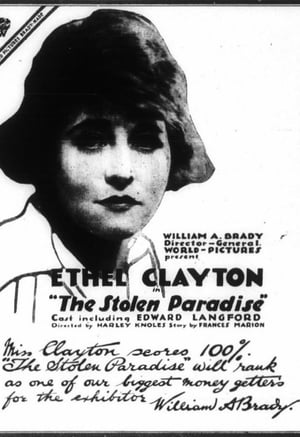
The Stolen Paradise
1917
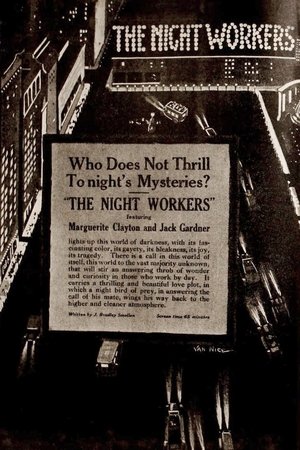
The Night Workers
1917
A Daughter of the Poor
A young girl, Rose Eastmen lives with her lazy Uncle, who works as a janitor in a publishing house. Lacking education, both Rose and her Uncle are susceptible to the socialist ideas of writer Rudolph Creig. One day Rose encounters Jack Steven's the wealthy son of the publishing house, working on his car. She believes he is a common laborer, and begins seeing him. Through her exposure to Jack, Rose begins to realize the rich are not such an abominable people. Rudolph has also reached this conclusion after learning Steven's has published his book. Now with a hefty royalty check and success, Rudolph is able to marry Rose.
1917
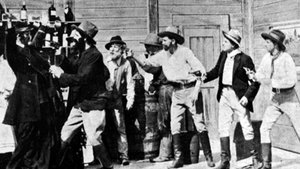
The Story of the Kelly Gang
Just as Galeen and Wegener's Der Golem (1915) can be seen as a testament to early German film artistry, The Story of the Kelly Gang (1906) symbolizes both the birth of the Australian film industry and the emergence of an Australian cinema identity. Even more significantly, it heralds the emergence of the feature film format. However, only fragments of the original production of more than one hour are known to exist, preserved at the National Film and Sound Archive, Canberra; Efforts at reconstruction have made the film available to modern audiences.
1906