Watch CARA-B (2023) Online Free
A desktop documentary that focuses on the Golden Record that NASA sent into space in the late 1970s. The piece reflects on issues such as the power of scientific discourse to produce revisions of the world, the evolution of the concept of the archive and the resignification of borders in the rhetoric of space colonialism.
More Like This
Linda
2025
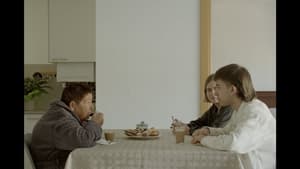
Now That the Sun Begins to Set
Rafaela, an 80-year-old woman, has a long conversation with her grandson, going over his path from childhood to old age. Now that she has been diagnosed with chronic breast cancer, faith is more present in her life than ever, which coexists with Rafaela's fear of death, and her grandson's fear of dying.
2022
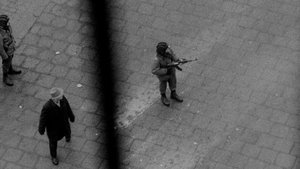
1970
Poland, 1970. When popular protests erupt in the streets due to rising prices, the communist government organizes a crisis team. Soon after, the police use their truncheons and then their firearms. The story of a rebellion from the point of view of the oppressors.
2021

Entire Days Together
A young girl is cured of her epilepsy just as summer vacation is about to begin. During her last days with her classmates, she’ll come to experience life in a new way. Arranged as a series of elliptical tableaux, this haunting narrative from Luise Donschen (Casanova Gene) captures a simultaneous sense of discovery and disorientation as it proceeds from the confines of the classroom to a wider world of adolescent anxieties.
2019
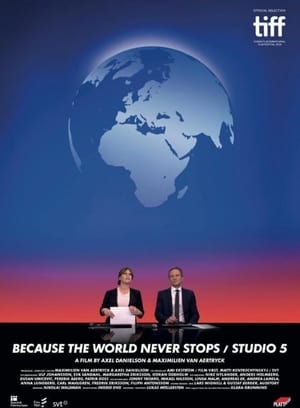
Because the World Never Stops
Shot live in the studio during the evening broadcast on Swedish public television, the film shows the news like you've never seen them before.
2016
Sur les Gratte-Ciel de New York
2014
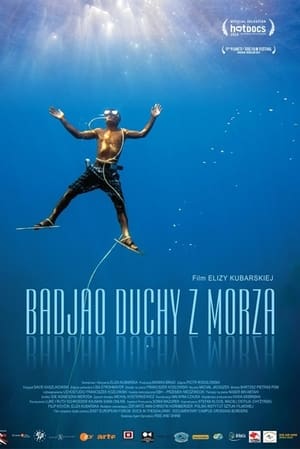
Walking Under Water
In the crystal clear waters off the coast of Borneo, a unique way of life threatens to disappear forever. For generations, the Badjao were oceanic nomads, living in harmony with the sea as fishermen and free divers. Nowadays, however, only a few Badjao remain, like Alexan, who still remembers the old ways. He hopes to pass his knowledge along to his ten-year-old nephew Sari, but time and opportunities are running out. Sari loves the sea, but it can only offer a hard life of subsistence fishing, while the nearby tourist resort sings a siren song of easy money.
2014
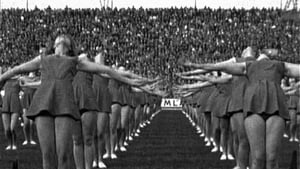
Yugoslavia: How Ideology Moved Our Collective Body
A research-based essay film, but also a very personal perspective on the history of socialist Yugoslavia, its dramatic end, and its recent transformation into a few democratic nation states.
2013
To Be or Not to Be: Klingons and Shakespeare
The story behind the translation and performance of Shakespeare's "Hamlet" in Klingon.
2009

The Hobbit Enigma
The Hobbit Enigma examines one of the greatest controversies in science today: what did scientists find when they uncovered the tiny, human-like skeleton of a strange creature, known to many as the Hobbit, on the Indonesian island of Flores in 2003?
2008

Jesus Christ Saviour
Klaus Kinski has perhaps the most ferocious reputation of all screen actors: his volatility was documented to electrifying effect in Werner Herzog’s 1999 portrait My Best Fiend. This documentary provides further fascinating insight into the talent and the tantrums of the great man. Beset by hecklers, Kinski tries to deliver an epic monologue about the life of Christ (with whom he perhaps identifies a little too closely). The performance becomes a stand-off, as Kinski fights for control of the crowd and alters the words to bait his tormentors. Indispensable for Kinski fans, and a riveting introduction for newcomers, this is a unique document, which Variety called ‘a time capsule of societal ideals and personal demons.’
2008
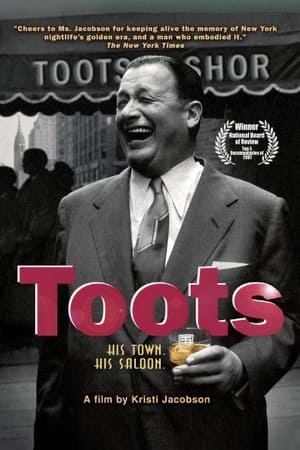
Toots
The '40s and '50s were a classic period in New York City nightlife, when the saloonkeeper was king and regular folks could drink with celebrities like Frank Sinatra and Jackie Gleason. In this documentary, Kristi Jacobson profiles her grandfather, the king of kings: Toots Shor of the eponymous restaurant and saloon, which was once the place to be seen in Manhattan. Edward R. Murrow called Toots Shor the owner of America’s greatest saloon. He became the unlikely den-mother to the heroes of America's golden age. Politicians and gangsters, sports heroes and movie stars - Sinatra, Gleason, DiMaggio, Ruth, Costello, Eisenhower, Nixon, Warren - for 30 years, they all found their way to Toots' eponymous saloon on New York's West 51st Street.
2007

Ice/Sea
Funny collage of sea, sun and ice. A show from the beach with skiers, tigers, mermaids and much more.
2005
Foster Child
Gil Cardinal searches for his natural family and an understanding of the circumstances that led to his becoming a foster child. An important figure in the history of Canadian Indigenous filmmaking, Gil Cardinal was born to a Métis mother but raised by a non-Indigenous foster family, and with this auto-biographical documentary he charts his efforts to find his biological mother and to understand why he was removed from her. Considered a milestone in documentary cinema, it addressed the country’s internal colonialism in a profoundly personal manner, winning a Special Jury Prize at Banff and multiple international awards.
1987

Portrait of an African Woman
In this segment on immigrant cultures for the television program Mosaïque, a young Senegalese woman who cooks in a workers’ hostel dreams of traveling throughout France and getting to know her adopted country, taking issue with the cliché of the impoverished and helpless immigrant.
1985

Germany in Autumn
Nine fictitious documentaries and films reflect the mood of late 1970s Germany, particularly the two-month period in 1977 when a businessman was kidnapped by the RAF (Red Army Faction). The kidnap had been made to orchestrate the release of the original leaders of the RAF, aka the Baader-Meinhof.
1978
Homage to Old Ladies
A short documentary depicting the daily lives of old country widows.
1971
Cases of NO
Chronicle of the Occupation.
1965
Twenty Years After
This short celebrates the 20th anniversary of MGM. Segments are shown from several early hits, then from a number of 1944 releases.
1944
We're in the Movies, Now!
Promotion reel/souvenir of a 1939-40 meeting of the Paramount Studios sales people.
1939