Watch Cape Verde Independence, July 5 and 6 1975 (2005) Online Free
More Like This
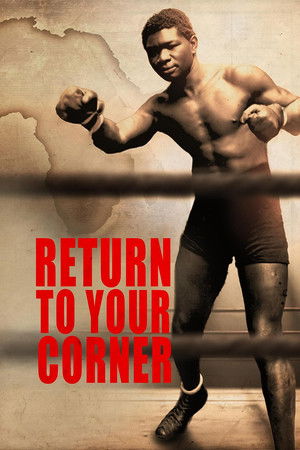
Return to Your Corner
This is the story of Africa's first Boxing World Champion, Battling Siki. Who was this boxer born in Senegal, decorated for Bravery in World War I? Why do so few know that he fought and won the World Light Heavyweight Title aged 25, only to lose it controversially six months later? And why was his life cut short on a New York Street aged 28?
2025
CARUKANGO
2025

Cape Verdean Cranberry: The Fernandes Story
Follow the story of one family's contribution to the history that ties Cape Verdean immigrants to the cranberry industry in southern Massachusetts.
2025
Dahomey
Thousands of royal artifacts of Dahomey, a West African kingdom, were taken by French colonists in the 19th century for collection and display in Paris. Centuries later, a fraction returned to their home in modern-day Benin. This dramatized documentary follows the journey of 26 of the treasures as told by cultural art historians, embattled university students, and one of the repatriated statues himself.
2024
The Imperial Lullaby
The armies of Fascist Italy conquered Addis Ababa, capital of Abyssinia, in May 1936, thus culminating the African colonial adventure of the ruthless dictator Benito Mussolini, by then lord of Libya, Eritrea and Somalia; a bloody and tragic story told through the naive drawings of Pietro Dall'Igna, an Italian schoolboy born in 1925.
2020
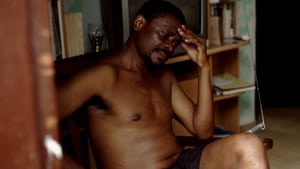
The Writer from a Country Without Bookstores
The ruthless dictator Teodoro Obiang has ruled Equatorial Guinea with an iron hand since 1979. Juan Tomás Ávila Laurel is the most translated Equatoguinean writer, but he had to flee the country in 2011, after starting a hunger strike denouncing the crimes of the dictatorship. Since then, he has lived in Spain, feeling that, despite the risks, he must return and fight the monster with words.
2019
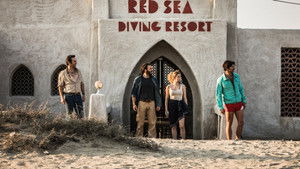
The Red Sea Diving Resort
Sudan, East Africa, 1980. A team of Israeli Mossad agents plans to rescue and transfer thousands of Ethiopian Jews to Israel. To do so, and to avoid raising suspicions from the inquisitive and ruthless authorities, they establish as a cover a fake diving resort by the Red Sea.
2019
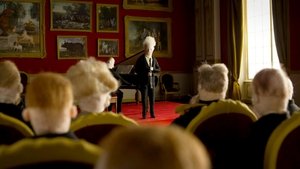
This Magnificent Cake!
In 1885, Africa is a succulent cake destined to be wildly divided and everyone wants a piece. A disturbed European king, a Pygmy working in a luxury hotel, a successful but lonely businessman, an enslaved porter, a young army deserter, a ghostly clarinetist. Some benefit from colonialism and greed. Others suffer racism and violence.
2018
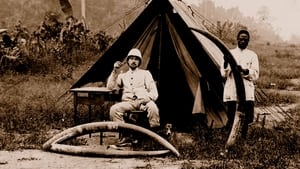
Totems and Taboos
In Brussels, Belgium, the Royal Museum of Central Africa is undertaking a radical renovation, both physical and ethical, to show with sincerity, crudeness and open-mindedness the reality of the atrocities perpetrated against the inhabitants of the Belgian colonies in Africa, still haunted and traumatized by the ghost of King Leopold II of Belgium, a racist and genocidal tyrant.
2018
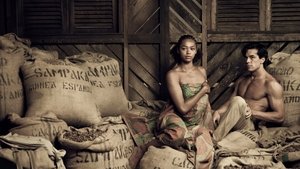
Palm Trees in the Snow
Spain, 2003. An accidental discovery leads Clarence to travel from the snowy mountains of Huesca to Equatorial Guinea, to visit the land where her father Jacobo and her uncle Kilian spent most of their youth, the island of Fernando Poo.
2015
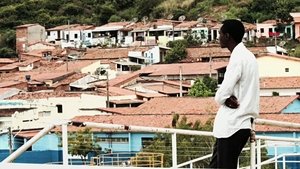
The Other Side of the Atlantic
The Other Side of the Atlantic is a documentary that builts a bridge in the ocean that separates Brazil and Africa. The film tackles the cultural exchanges, the imaginary created through the mirroring, the prejudice and dreams built in both sides of the atlantic through the life stories of the students of african countries in transit through Brazil.
2015
Cap-Vert, l'archipel créole
2013
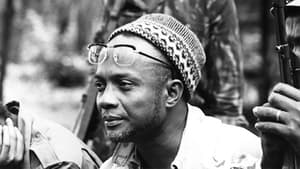
Amílcar Cabral
Documentary about African freedom fighter Amílcar Cabral, whose story is told by his relatives and friends. Amílcar, besides being a humanist and nationalist, was also a brilliant poet.
2000
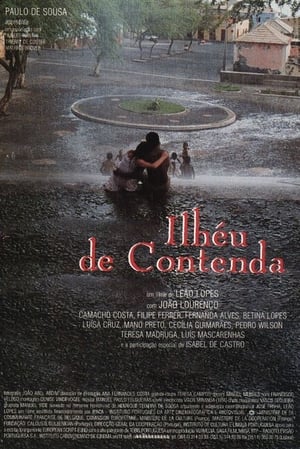
The Island of Contenda
Cape Verde, 1964. At the feet of a mighty volcano, the traditional Cape Verdean society is undergoing a steady change. The old land-owning aristocracy is disintegrating. A class of "mulattos" begins to emerge, with a trade-based financial power that threatens the landlords. A new identity arises, a mix of old and new, of African and Portuguese culture, sensual and dynamic. The songs of Cesária Évora follow this inevitable transformation. From the novel by Henrique Teixeira de Sousa.
1999
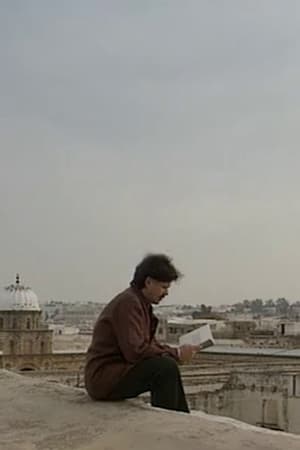
Mirror of Tunisia/Tunisia, the Trance and the Stone
Tunisia itself is the subject; we wanted to render the genius of the site. Tunisia is almost the central character of this little film: we see the relation of the city to the sea, the traces that bear witness to its foundation, the remains of Carthage, the symbolism of the recently discovered Medina coin … The splendours of the house interiors and courtyards are associated with a scene of origin, what psychoanalysis calls a primal scene. Entering these houses opens up a world peopled by women: the child’s ‘homecoming’ in the hands of women is staged as an abduction, playing doubly on fascination and terror. These places were mine, from my childhood, they can be found almost intact – it’s the return of the exile visiting the kingdom. I let Ruiz discover all this, and immediately that led him to echoes and resonances ranging from Spain to Chile.
1993
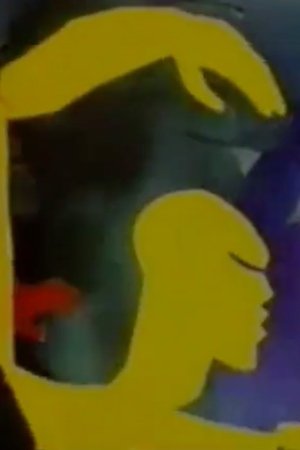
A Lesson in History
Lesson in History was produced when Peters was a student at the West Surrey School of Art and Design. Having read The People Could Fly by Virginia Hamilton, she was inspired to make what she describes as 'the stories of black achievement and how stories had not been told.' The animated film was subsequently screened on the BBC as part of the series 10X10. It was shot on 16mm using cutouts, photography and masks.
1989
Capo Verde
A film about the history, culture and occupation of the natives of Capo Verde. The film tells of Iceland's development aid program on the islands and shows a voyage with the research and fishing vessel Feng.
1986
The Spirit of Cape Verde
Originally titled, "Espirito de Cabo Verde"
1986
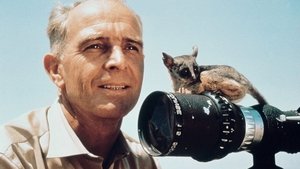
Serengeti Shall Not Die
The film tells of the beginnings of the Serengeti National Park in Tanzania. At the end of the 1950s, the Tanzanian National Park Administration wanted to fence in the protected area around the Ngorongoro Crater. Bernhard and Michael Grzimek were invited by the national park administration in 1957 to get a precise picture of the animal migrations and to provide the national park administration with the values they needed for their project. Using a new counting method with two airplanes, the Grzimeks found out that the migration of the herds was different than assumed.
1959
'77: The FESTAC Conspiracy
A former serviceman joins a movement to challenge the continent's political status quo during the Second World African Festival of Arts and Culture (FESTAC) of 1977.