Watch Burlesque (2025) Online Free
Student documentary exploring the world of burlesque as a space for artistic expression and personal liberation, where performers channel their creativity and sensuality. Through their voices, they speak about the power of the stage to reconnect with their bodies and establish a deep connection with the audience. Burlesque is presented as a feminist, inclusive, and supportive environment, celebrating gender and body diversity. The action takes place at the Wiggle Room, located in Montreal. It is the only burlesque cabaret in Canada, known for its warm atmosphere and strong sense of community.
Cast
Frenchy Jones, Lily Monroe, Jolie Lolita, Madrose, Célesta O'Lee, Ophelia Rass, Zyra Lee Vanity, Minx Arcana, Vivian Brass, Miami Minx, Rose de Flore
More Like This
Trajados
A documentary that explores how queer fashion, often born on the streets and in underground niches, has become a viral phenomenon on social media, shaping the aesthetics of global pop culture. Through the interaction between LGBTQIA+ influencers, content creators, and digital platforms such as Instagram, TikTok, and YouTube, trends that were once marginalized now occupy the center of the fashion industry. The film investigates how this evolution impacts not only the visibility of the queer community but also the consumption and creation of contemporary fashion
2025
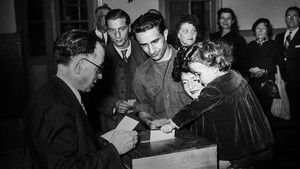
Femmes à l'Assemblée : histoire d'un combat
2025

Slashback to Viper Video
The physical media format of film is in a constant state of unease, but what happens when industry professional and legally blind business owner, Shelby McIntyre, takes it upon himself to open Tampa’s only true video shop?
2024
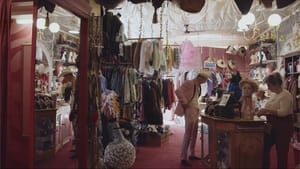
How To Dress Like Me
Since 1979, Rose Chong Costumiers have been dealing in elaborate and vibrant maximalist attire for hire. In 40 years, it has established itself as an iconic and legendary Melbourne staple among the Inner-North's queer scene. But neither Rose Chong's nor fancy-dress are as simple as they first seem according to Dan, one of the long-time "Chongettes" who works there. When considered with care and attention, they reveal glittering ideas of play and fun and community. From a queer lens - or rather, a mirror - this unassuming costume shop is a place where one might begin to conceive truths about themselves and their identities. How to Dress Like Me is a 5-minute documentary that contends with the intersections of play, queerness, and clothes.
2023
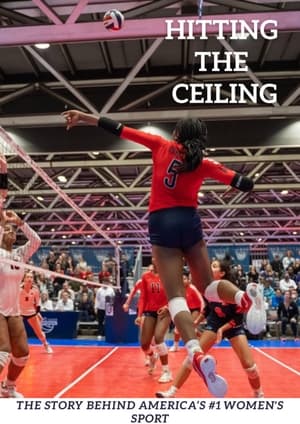
Hitting the Ceiling
The story behind the growth of women's and girls' volleyball in the United States and how it continues to bolster and empower young women in their development. Featuring direct interviews with players, coaches, and families, as well as footage of the 2022 Big South Qualifier tournament.
2023
99 days
Two instants separated by 99 days conflict with each other.
2022
Inês
Triggered by congressman Jair Bolsonaro’s homage to the torturer Carlos Alberto Brilhante Ustra, during president Dilma Rousseff’s impeachment hearing in 2016, Inês, a 70 year-old actress, starts a fragmented narrative of her own history, transforming the memories of her youth as an artist and guerrilla fighter during the military dictatorship into performances. Using as a starting point her participation in Teatro Oficina's 1967 production of the play "King of The Candle", by Oswald de Andrade, Inês creates a manifesto in defense of art's political strength, intertwined with memories of lost love and resistance.
2020
Gloria's Call
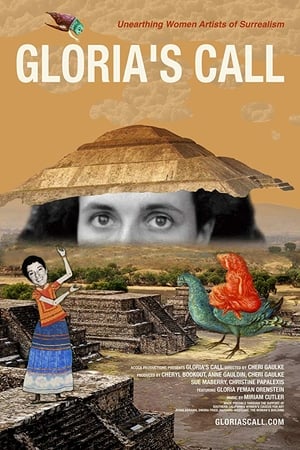
In 1971, graduate student Gloria Orenstein received a call from Surrealist artist Leonora Carrington that sparked a lifelong journey into art, ecofeminism and shamanism. This short film uses art, animation and storytelling to celebrate this wild adventure. Now more than 40 years later, award-winning Dr. Gloria Feman Orenstein is a feminist art critic and pioneer scholar of women in Surrealism and ecofeminism in the arts. Her delightful tale brings alive an often unseen history of women in the arts.
2019
The Fearless and Vulnerable
In 2016, after the hate-fuelled murder of a woman in Gangnam, young feminists gathered to talk about their experiences, which led to the ‘tsunami’ of the feminist movement reawakening in Korean society. This tsunami included street protests against misogynistic hate crimes, political campaigning in the upcoming presidential elections, protests against sexism and sexual violence in everyday life, and the ‘black’ protests calling for the abolition of the anti-abortion law. The Fearless And Vulnerable focuses on the activities and members of the Feminist Party (known in Korean as “Femidangdang”), a feminist group that was part of this tsunami wave. The pleasure and sincerity with which they conduct their activities are compounded with their courage in the face of conflict, and the sense of fear that permeates the community. The film shows Femidangdang meetings as well as the daily lives and thoughts of members during their activities post-2016.
2019

Play Your Gender
Juno Award-winning musician Kinnie Starr is on a quest to find out why only 5% of music producers are women even though many of the most bankable pop stars are female. What does it take for a woman to make it in music?
2017
EXPO 67 Mission Impossible
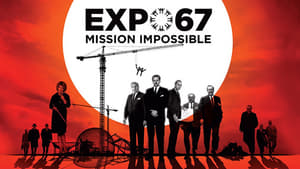
This documentary let us to relive the challenge of the men behind the 1967 Universal Exposition in Montréal, Canada. By searching trough 80,000 archival documents at the national Archives, they managed to bring light on one of the biggest logistical and political challenges that were faced by organizers during the "Révolution Tranquille" in the Québec sixties. Includes the accounts of the Chief of Advertising Yves Jasmin, and businessman Philippe de Gaspé Beaubien.
2017
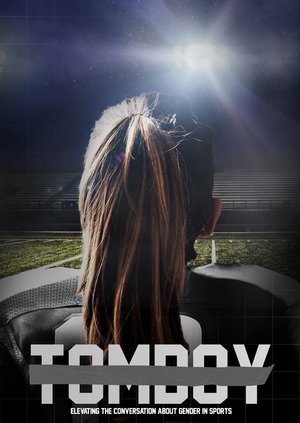
TOMBOY
TOMBOY explores the obstacles that young girls encounter on the recreational stage, the stereotypes, language issues and cultural disparities that follow, and ultimately the insufficient media coverage and compensation that afflicts elite professional athletes seeking full recognition for their talents. The journey of the female athlete is often discouraging, and despite progress achieved during the Title IX era, gender equity in athletics has a long way to go.
2017
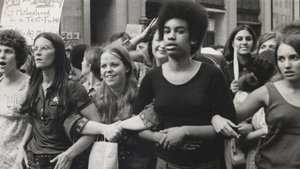
She's Beautiful When She's Angry
A documentary that resurrects the buried history of the outrageous, often brilliant women who founded the modern women's movement from 1966 to 1971.
2014
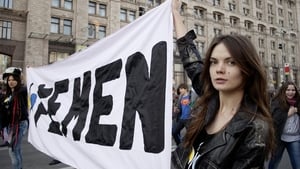
I Am FEMEN
Oxana is a woman, a fighter, an artist. As a teenager, her passion for iconography almost inspires her to join a convent, but in the end she decides to devote her talents to the Femen movement. With Anna, Inna and Sasha, she founds the famous feminist group which protests against the regime and which will see her leave her homeland, Ukraine, and travel all over Europe. Driven by a creative zeal and a desire to change the world, Oxana allows us a glimpse into her world and her personality, which is as unassuming, mesmerising and vibrant as her passionate artworks.
2014

Forever Crazy
Crazy Horse Paris' international tour started in late 2009 and continues to galvanize audiences around the world. As a tribute to its founder and a 60 years celebration, the legendary cabaret showcases the best acts from its repertoire.
2011
Roma Boys – The Love Story
The film explores the taboo subject of homosexuality within the Roma community through the personal story of a Roma activist who happens to be gay. Though his job has earned him respect among his peers, by coming out his status is in jeopardy. However, the desire to share his complex story prompted him to write a screenplay based on his life. Partly a documentary about his autobiographical script, the film switches between documentary and narrative storytelling. Owing to its distinctive style, the film offers a glimpse into the protagonist's world as he faces triple discrimination: as a Roma, as a gay man, and as a gay man in the Roma community.
2009
Foster Child
Gil Cardinal searches for his natural family and an understanding of the circumstances that led to his becoming a foster child. An important figure in the history of Canadian Indigenous filmmaking, Gil Cardinal was born to a Métis mother but raised by a non-Indigenous foster family, and with this auto-biographical documentary he charts his efforts to find his biological mother and to understand why he was removed from her. Considered a milestone in documentary cinema, it addressed the country’s internal colonialism in a profoundly personal manner, winning a Special Jury Prize at Banff and multiple international awards.
1987
Ville-Marie
Today it is the city of Montreal, but 3 centuries ago the tiny band of missionary founders called it Ville-Marie, the holy city of Mary. This film goes back to its beginning and those who felt called to plant an oasis of Christianity in the North American wilderness. In an imaginative, at times almost surrealistic, way the film recalls the highborn company from France, and shows what survives of Ville-Marie in the Montreal of today.
1965
Cabaret Girl
This ultra-kitsch documentary goes behind the scenes at Murray's Cabaret Club, where Christine Keeler was later a showgirl.
1956
The Spiral Generation
A significant group of trans and queer artists gather to mourn the loss of their friend – Indigo, AKA Spiral – to suicide.