Watch Bride Kidnapping in Kyrgyzstan (2011) Online Free
In the Issyk-Kul region of Kyrgyzstan, tradition is king. Polo's still played with a freshly killed goat and the men still marry their women the old-fashioned way: by abducting them off the street and forcing them to be their wife. Bride kidnapping is a supposedly ancient custom that's made a major comeback since the fall of Communism and now accounts for nearly half of all marriages in some parts.
Cast
Thomas Morton
More Like This

Kidnapped: Elizabeth Smart
Elizabeth Smart's harrowing abduction at 14 from her family's Utah home unfolds through her own words and never-before-seen material in this documentary.
2026

The Martha Mitchell Effect
She was once as famous as Jackie O—and then she tried to take down a President. Martha Mitchell was the unlikeliest of whistleblowers: a Republican wife who was discredited by Nixon to keep her quiet. Until now.
2022

Renée Nyberg: The Kidnap of Ulrika Bidegård
Journalist Renée Nyberg meets showjumper Ulrika Bidegård, who in 1993 was kidnapped and kept locked up for five days while the police launched an extensive search operation. Now she and her family are talking about the terrible days and life afterwards.
2021
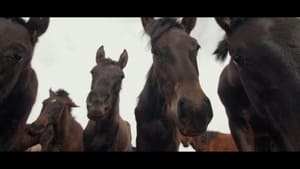
Wings of Kyrgyzstan
As „wings of men“ they became the faithful companion of a great nomadic nation thousands of years ago. Today, 28 years after the Soviet occupation, the little horse is an essential part of the cultural heritage and the search for identity of the modern Kyrgyz people. Based on its own story, a so called „good brown horse“ leads through the film and offers an insight of what it could mean to be „todays wings of men“. Told by a horse’s voice and through its eyes, this short film still is a documentary, but also a poetic journey to a nomadic culture.
2019

Abducted in Plain Sight
A family falls prey to the manipulative charms of a neighbor, who abducts their adolescent daughter. Twice.
2017
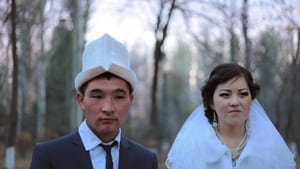
Grab and Run
After the Kyrgyzstan Independence in 1991, the ancient practice of Ala-Kachuu ("grab and run") returned. Some women escape the men that kidnap them, but many remain married because of tradition and the fear of scandal.
2017
Natascha Kampusch - Ein Schicksal im Rampenlicht
This documentary shows the enormous media impact that the abduction story has had over the years. It analyzes the media's handling of the story and shows how victims of abduction can find their way back to a normal life after their liberation...
2013

The Imposter
In 1994, a 13-year-old boy disappeared without a trace from his home in San Antonio, Texas. Three-and-a-half years later, he is found alive in a village in southern Spain with a horrifying story of kidnap and torture. His family is overjoyed to bring him home. But all is not quite as it seems.
2012
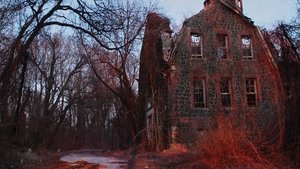
Cropsey
Realizing the urban legend of their youth has actually come true, two filmmakers delve into the mystery surrounding five missing children and the real-life boogeyman linked to their disappearances.
2010
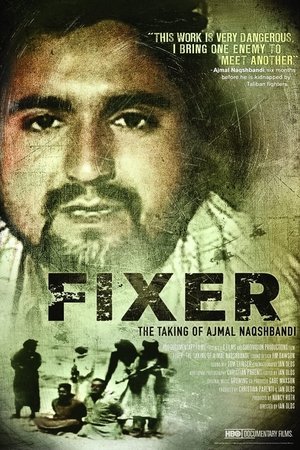
Fixer: The Taking of Ajmal Naqshbandi
In 2007, the Taliban kidnapped 24-year-old Ajmal Naqshbandi and an Italian journalist. Naqshbandi was one of Afghanistan's best "fixers" -- someone hired by foreign journalists to facilitate, translate, and gain access for their stories.
2010
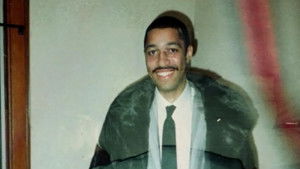
Detroit Connection Pt. 3: Last Man Standing (Demetrius Holloway)
A reputed Detroit drug kingpin who once staged his own kidnapping and assassination to disappear for several months, was killed.
2010
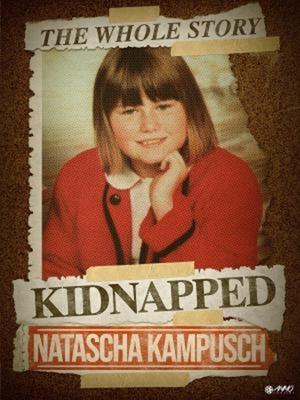
Natascha Kampusch: The Whole Story
At the age of 10, Natascha Kampusch was kidnapped and held captive for eight years by a deranged man. In 2006, she managed to escape, and the world discovered an astonishingly articulate and intelligent young woman. Not only did Peter Reichard film 14 hours of conversations with Kampusch, but he was also the very first filmmaker to obtain exclusive access to the house where she was imprisoned. This is the most complete, explicit and revealing documentary in which Kampusch has participated.
2010

Captive for 18 Years: The Jaycee Lee Story
The story of Jaycee Lee Dugard, a girl who was kidnapped outside a school bus stop and found alive eighteen years later.
2009

Sister Aimee
At the peak of her immense popularity in the 1920s, evangelist Aimee Semple McPherson was drawing larger crowds to her revivals than those of P.T. Barnum or Harry Houdini. This chapter of "American Experience" paints a vivid portrait of the controversial and charismatic religious figure. Credited with mainstreaming religion in American culture, Sister Aimee created one of the country's first Christian radio stations, among other accomplishments.
2007

The Real Blair Witch
A group of teenagers from Flint, Michigan filmed themselves kidnapping and terrorizing a new acquaintance, before taking her out to a woods and dumping her in a shallow grave. They then taunted their terrified and blindfolded victim asking if she had any last requests before they cut her throat. But was the kidnap real or just a game? Three days later the tape was in the hands of the police and the 5 teenager friends were in custody facing life imprisonment. This program talks to the people at the heart of this story - including two of the defendants - in an attempt to understand what really happened in the woods around Flint last year. It also screens the video of the 'abduction'. What is revealed is an extraordinary and disturbing record of a night when something went terribly, terribly wrong.
2003
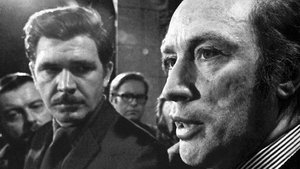
Black October
A documentary recounting the kidnappings of British Trade Commissioner James Cross and Quebec Vice-Premier & Minister of Labour Pierre Laporte by the FLQ on October 5, 1970 in Quebec.
2000
Jayuk
A 20-minute documentary film about the Kyrgyz people living by the Narym River.
1998
The Devil's Bridge
Life in a Kyrgyz aul (village) in the mountains connected to the rest of the world by a cable bridge, and the teenage boys who are constructing the rope of the bridge. A rope bridge which the locals call “The devil’s bridge” forms part of each and every event which takes place in a small village lost in the mountains of the Kyrgyz Republic. A platform driven by a huge winch which they have to pull with their own strength to cross the torrent is their only link with the outside world. But the director of the documentary wondered something else: “Does this bridge unite or does it actually separate?” Through the mist and over the thrashing waters, the inhabitants of the area glide along their ropes. A film, in the director’s own words, about ordinary people who live in an extraordinary place.
1997
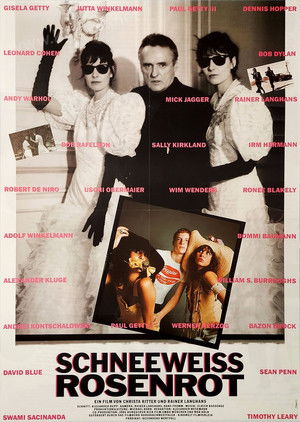
SnowwhiteRosered
Documentary about the twin sister Jutta and Gisela Schmidt. In the late sixties the two women rebelled against middle class society as if they gave vent to a new kind of art. They became active in the underground communist party KPD and showed a heart-felt interest in the colour red, the aesthetics of the revolution. Soon, though, the twins quit their experiments in Germany. They left their husbands and went to Rome, where they met the fabulously wealthy Paul Getty III, and soon things got really out of hand.
1991
Castles in the Sand
One of the highest achievements of the new wave of Kirghiz cinema, which emerged in the mid-1960s. This story of a boy building sandcastles on the shores of the Issyk-Kul Lake becomes a documentary parable on the tensions between an artist and society.
1968