Watch Bones of the Buddha (2013) Online Free
Bones of the Buddha is a 2013 television documentary produced by Icon Films and commissioned by WNET/THIRTEEN and ARTE France for the National Geographic Channels. It concerns a controversial Buddhist reliquary from the Piprahwa Stupa in Uttar Pradesh, India. It was released in May, 2013, and was broadcast in July 2013 in the US on PBS as part of the Secrets of the Dead series.
Cast
Charles Allen, Ernst Walter Siemon
More Like This
Domy mrtvých
2023
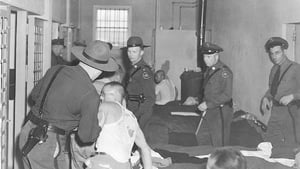
Resistance at Tule Lake
The long-suppressed story of 12,000 Japanese Americans who dared to resist the U.S. government's program of mass incarceration during World War II. Branded as 'disloyals' and re-imprisoned at Tule Lake Segregation Center, they continued to protest in the face of militarized violence, and thousands renounced their U.S. citizenship. Giving voice to experiences that have been marginalized for over 70 years, this documentary challenges the nationalist, one-sided ideal of wartime 'loyalty.'
2017
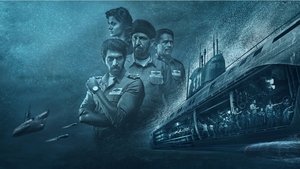
The Ghazi Attack
India’s first underwater war film tries to decode the mystery behind the sinking of Pakistani submarine PNS Ghazi during the Indo-Pak war of 1971.
2017

The MovieLand Movie
I go to Movieland at least once a week, every week, for the last five years to sink some quarters into the games and the Movieland movie is an accumulation of the friends, lights, textures, and narratives that I have experienced in that time. I love Movieland!
2017
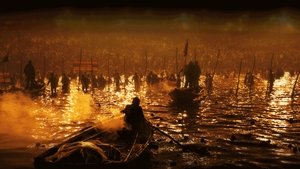
Fascinating India
"Fascinating India" spreads an impressive panorama of India’s historical and contemporary world. The film presents the most important cities, royal residences and temple precincts. It follows the trail of different religious denominations, which have influenced India up to the present day. Simon Busch and Alexander Sass travelled for months through the north of the Indian subcontinent to discover what is hidden under India’s exotic and enigmatic surface, and to show what is rarely revealed to foreigners. The film deals with daily life in India. In Varanasi, people burn their dead to ashes. At the Kumbh Mela, the biggest religious gathering of the world, 35 million pilgrims bathe in holy River Ganges. This is the first time India is presented in such an alluring and engaging fashion on screen.
2014

The Polio Crusade
The film interweaves the personal accounts of polio survivors with the story of an ardent crusader who tirelessly fought on their behalf while scientists raced to eradicate this dreaded disease. Based in part on the Pulitzer Prize-winning book Polio: An American Story by David Oshinsky, Features interviews with historians, scientists, polio survivors, and the only surviving scientist from the core research team that developed the Salk vaccine, Julius Youngner.
2009

Not Quite Hollywood
As Australian cinema broke through to international audiences in the 1970s through respected art house films like Peter Weir's "Picnic At Hanging Rock," a new underground of low-budget exploitation filmmakers were turning out considerably less highbrow fare. Documentary filmmaker Mark Hartley explores this unbridled era of sex and violence, complete with clips from some of the scene's most outrageous flicks and interviews with the renegade filmmakers themselves.
2008

Enola Gay's Navigator: Theodore (Dutch) Van Kirk
Theodore "Dutch" Van Kirk navigated the first atomic bombing mission in Hiroshima, Japan, and later participated in the first Bikini Atoll atomic bomb tests.
2007
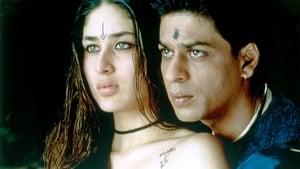
Aśoka
A young Prince Asoka works to perfect his skills in battle and also deals with family conflict. During a struggle with one of his step-brothers, his mother urges Asoka to escape to stay alive. While away, Asoka meets Kaurwaki and falls in love, but must use his skills as a warrior to protect her. A dangerous and heartbreaking web of conspiracy follows, which leads Asoka to embrace a Buddhist path.
2001
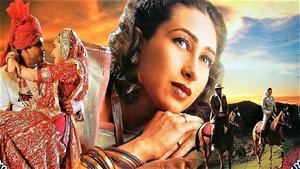
Zubeidaa
Zubeidaa, an aspiring Muslim actress, marries a Hindu prince to become his second wife. Her tumultuous relationship with her husband, and her inner demons lead her to a decision which has fatal consequences for them all.
2001
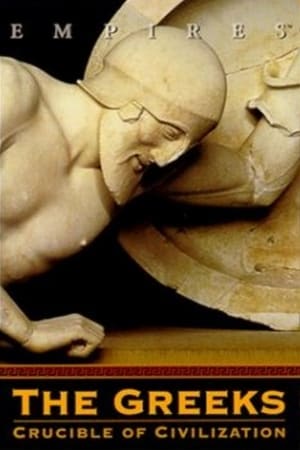
The Greeks: Crucible of Civilization
It was perhaps the most spectacular flourishing of imagination and achievement in recorded history. In the Fourth and Fifth Centuries BC, the Greeks built an empire that stretched across the Mediterranean from Asia to Spain. They laid the foundations of modern science, politics, warfare and philosophy, and produced some of the most breathtaking art and architecture the world has ever seen. This series, narrated by Liam Neeson, recounts the rise, glory, demise and legacy of the empire that marked the dawn of Western civilization. The story of this astonishing civilization is told through the lives of heroes of ancient Greece. The latest advances in computer and television technology rebuild the Acropolis, recreate the Battle of Marathon and restore the grandeur of the Academy, where Socrates, Plato and Aristotle forged the foundation of Western thought.
2000
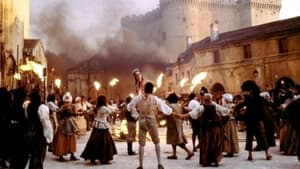
The French Revolution
A history of the French Revolution beginning from the decision of the king to convene the Etats-Generaux in 1789 in order to deal with France's debt problem. Part one spans the event until August 10, 1792 (when the King Louis XVI lost all authority and was imprisoned). Part two carries the story through the end of the terror in 1794.
1989

A Passage to India
Cultural mistrust and false accusations doom a friendship in British colonial India between an Indian doctor, an Englishwoman engaged to marry a city magistrate, and an English educator.
1984
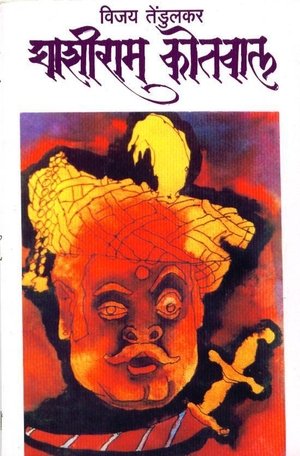
Ghashiram Kotwal
A stylized version of Vijay Tendulkar’s radical Marathi play chronicling the Peshwa regime in western India, a collective effort of direction and cinematography made by an independent group of young filmmakers.
1976
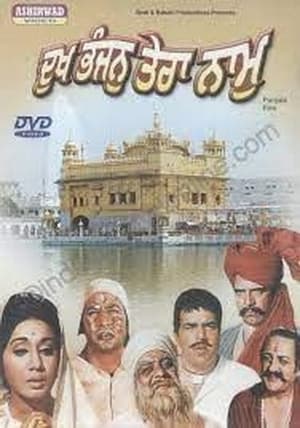
Dukh Bhanjan Tera Naam
This Punjabi Movie, Dukh Bhanjan Tera Naam is a Punjabi movie about Sikhism. It was a great success. It portrays the people's belief in the almighty god who is one and how life teaches a lesson to those who does not believe so.
1974
An Indian Day
Traveling the length and breadth of the country, S. Sukhdev constructs, a panoramic, non-narrated study of Indian life in the late 1960s. Shot across villages, deserts, countryside, and cities, the film observes daily labor, leisure, and movement without commentary, allowing humor, contradiction, and social texture to emerge organically. The result is a sensory encounter with India poised between inherited tradition and accelerating modernity.
1968
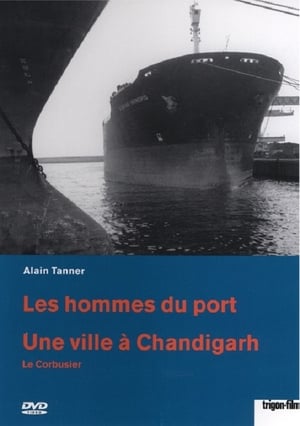
A City at Chandigarh
Documentary on the construction of Chandigarh, the new capital of the Indian Punjab region, planned by Albert Mayer and Swiss architect Le Corbusier.
1966

The Knight of the Night
Paris, 1884. Bella Fontanges, a renowned ballerina, is married to Georges de Segar. But after just a few years together, the couple slowly sinks into weariness. Bella has forgotten what happiness used to taste like. Then a mysterious squire appears. Aware of the couple's faltering situation, he makes Bella and Georges a most astonishing proposal: he claims to be able to separate Good from Evil in Georges. Reluctant at first, the couple eventually agrees to play along. But it's not long before they realize that in Georges, it's Evil that has prevailed.
1953

Ladakh
A stunning trek from the vale of Kashmir, via Sind Valley and Kargil and Lamayaru Monastry.
1943
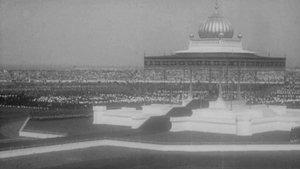
Delhi Durbar and Coronation
Jaw-dropping pomp and pageantry at the 1911 Delhi Durbar
1912