Watch Bloß keine Tochter! (2018) Online Free
Almost 200 million women are "missing" in Asia - the result of targeted abortion of girls and dubious population policies. An investigative documentary about women who are not allowed to have daughters, about desperate attempts by men to find a wife somewhere, and about the abuse of women as pawns of politics and business.
Cast
Anna-Sophia Lumpe
More Like This

How Trump’s second term will be different
"What Donald Trump’s win means for abortion, immigration, foreign policy, and more. "Donald Trump, the 45th president of the United States, will also be its 47th president. After voting him out of office in 2020, American voters changed their minds, opting for a return to his policies and his politics. "But the second Trump presidency will look very little like the first. His policies have evolved, his circumstances have changed, and he will be returning to office with a much more focused plan than the one he entered with eight years ago. "In this video, we ask six Vox reporters what we should expect from Trump’s second term, on topics from foreign policy to abortion" (Vox).
2024
Mom's Letter
The mother and daughter face the question of whether to keep the pregnancy or terminate it. Both are under pressure from relatives, friends, and doctors. Both are going through a difficult decision-making process. Each episode of the artistic part shows the life circumstances and the path that a woman in a crisis situation goes through. In documentary inserts, representatives of various professions (psychologists, lawyers, gynecologists, clergymen) tell how they face the problem of abortion in their lives.
2024

Twenty
Set in a speakeasy in Atlanta, “Twenty” is a feature documentary about fifteen young people making it through 2020. The film is an observational time capsule that lays bare the raw reflections of a group of people surviving a year that will be seared into our generational memory.
2023

Lesser Choices
The bleached palette and home-movie aesthetics of Super 8 footage provide the image track for this testimonial about an illegal abortion in Mexico City in the 1960s, delivered in voiceover by the filmmaker’s mother. In its account of this intimate and disorienting memory, Lesser Choices summons a time of profound uncertainty—a moment from an era without rights—and offers a warning to the present.
2022

The Goddesses of Food
From 3 stars chefs to female cooks, sommelières, entrepreneuses all around the world, meet innovative women who want to change the world through gastronomy.
2017

Battle of Okinawa in Color
By mid-1945, Hitler is dead and the war has ended in Europe. Halfway around the world, however, the fighting is still going strong on a small island in the Pacific. Okinawa was the site of the last battle of the last great war of the 20th century, with a casualty rate in the tens of thousands. Through it all, military cameramen risked their lives to film the conflict, from brutal land combat to fierce kamikaze attacks at sea. See the footage they captured and experience this intense battle the way the soldiers saw it -- in color.
2017

La Cicciolina: Godmother of Scandal
The personal and professional story of Ilona Staller, known as Cicciolina, is probably unique: she left communist Hungary and moved to Italy, where she found a fertile environment for a life dedicated to scandal.
2017
No Kids for Me, Thanks!
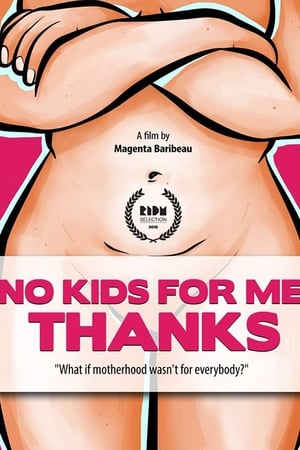
Kids, not everyone wants them. Here's an in-depth look at Western women who've decided not to reproduce and the challenges that this decision still poses in 2015.
2015
New Generation Queens: A Zanzibar Soccer Story
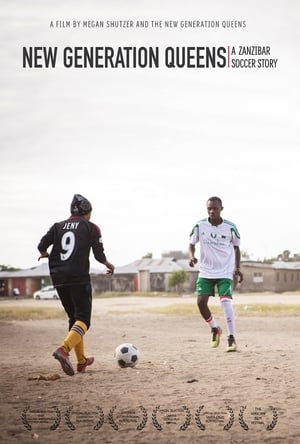
On an island where religion bars women from playing soccer, the Queens resist cultural norms and challenge local assumptions about Islam and gender identity. The film explores the history and character of the team, and the evolving perception of women in sports on the island.
2015
A Quiet Inquisition
At a public hospital in Nicaragua, Ob/Gyn Dr. Carla Cerrato must choose between following a law that bans all abortions and endangers her patients or taking a risk and providing the care that she knows can save a woman's life. In 2007, Dr. Cerrato’s daily routine took a detour. The newly elected government of Daniel Ortega, a former Marxist revolutionary who converted to Catholicism to win votes, overturned a 130-year-old law protecting therapeutic abortion. The new law entirely prohibits abortion, even in cases of rape, incest, or when a woman’s life is at stake. As Carla and her colleagues navigate this dangerous dilemma, the impact of this law emerges—illuminating the tangible reality of prohibition against the backdrop of a political, religious, and historically complex national identity. The emotional core of the story—the experiences and situations of the young women and girls who are seeking care—illustrate the ethical implications of one doctor's response.
2014
En prest og en plage
The priest Børre Knudsen is Norway's most infamous anti-abortionist, and much hated for this. He fought for his cause without thinking about the consequences for his family and his children even in the worlds most democratic country.
2014

Himalaya: The Land of Women
At an altitude of nearly 4,000 meters, Sking is one of the most isolated villages in the Himalayan region of Zanskar. In just three months, from August to October, the Zanskaris have to harvest and store all their food for the coming year. All the women-young and old alike-work nonstop, from dawn to dusk, and worry about the arrival of winter. Filmed from the point of view of a subjective camera by a young female ethnologist, Land of Women offers a sensitive and poetic immersion in the life of four generations of women during harvesting season. We share their rare intimacy and gradually grow attached to them.
2012
Raising Renee
RAISING RENEE is the story of a family's remarkable response to being broken apart and rearranged after nearly 50 years. The film explores deep themes of family, race, class and disability through the interplay of painting, cinema and everyday life. Produced and directed by Oscar nominees Jeanne Jordan and Steven Ascher, RAISING RENEE is the third part of a trilogy about resilient families that includes their acclaimed feature documentaries So Much So Fast and Sundance Grand Jury Prize winner Troublesome Creek. RAISING RENEE is about a unique group of women, the tenacity of family bonds and the power of art to transform experience into something beyond words.
2011

Butch Jamie
The film follows the story of Jamie, a struggling butch lesbian actress who gets cast as a man in a film. The main plot is a romantic comedy between Jamie's male alter-ego, "Male Jamie," and Jill, a heterosexual woman on set. The film's subplots include Jamie's bisexual roommate Lola and her cat actor Howard, Lola's abrasive butch German girlfriend Andi, and Jamie's gay Asian friend David.
2008
Beyond Belief
When terrorists shattered their lives, two women set off on an extraordinary journey to rebuild themselves and the lives of women half a world away.
2007
Unsichtbare Hausarbeiterinnen
Documentary about women without papers, living in Germany and working as maids.
1999
Wir sind schon da!
Five women, members of the Sans Papiers, talk about the history and reasons for founding the organisation, as well as their most important demands, like getting permits of residence for refugee women so they don't depend on their husbands' status.
1997

Leona's Sister Gerri
Millions have seen the photograph, and no one who has seen it will ever forget it. A naked woman, dead from a botched illegal abortion, lying on a motel room floor. The picture appeared in Ms. Magazine in April 1973, and quickly became a symbol for the abortion rights movement. LEONA'S SISTER GERRI tells the dramatic story of Gerri Santoro, a mother of two and the "real person" in the now famous photo. Should the media have used this image? What circumstances led to Gerri's tragic death? Powerfully addressing issues of reproductive rights and domestic violence, this video is a moving portrait of Gerri Santoro's life and society's response to her death.
1995

From Mother to Daughter
Documents a woman's actual pregnancy; the emotions, the affects on her husband and first-born child, the birth itself via Caesarean section, and her struggle to return to work and a social life, while still being a good mother.
1968

Achtung Australien! Achtung Asien!
1930