Watch Blindsight (2006) Online Free
Six blind Tibetan teenagers climb the Lhakpa-Ri peak of Mount Everest, led by seven-summit blind mountain-climber Erik Weihenmayer.
Cast
Gavin Attwood, Sally Berg, Sonam Bhumtso, Dachung, Jeff Evans, Gyenshen, Stefani Jackenthal, Michael Brown, Erik Weihenmayer
More Like This
When We Fight
In the second largest school district in the United States, 98% of teachers vote to authorize a strike. Watch as one of the largest educator strikes in modern U.S. history unfolds in real-time, highlighting the stories and leadership of some of the women who led it, from union leaders to classroom teachers. From strike vote to contract vote, When We Fight goes behind the picket lines, documenting how and why teachers strike. "This powerful and beautifully crafted film is a must watch for anyone interested in the state of labor in America today." - Robert Reich, former Secretary of Labor and Professor of Public Policy, UC Berkeley
2023

Adriana's Pact
Lissette's favorite aunt Adriana, who lives in Australia, is arrested in 2007 while visiting her family in Chile and accused of having worked for dictator Pinochet's notorious secret police, the DINA, and of having participated in the commission of state crimes. When Adriana denies these accusations, Lissette begins to investigate her story in order to film a documentary about her.
2017
Becoming Who I Was
Angdu is no ordinary boy. Indeed, in a past life he was a venerated Buddhist master. His village already treats him like a saint as a result. The village doctor, who has taken the boy under his wing, prepares him to be able to pass on his wisdom. Alas, Tibet, Angdu’s former homeland and the centre of his faith, lies far away from his current home in the highlands of Northern India. On top of that, the conflict between China and Tibet makes the prospect of a trip there even more daunting. Undeterred by these harsh facts, the duo set off for their destination on foot, accompanied by questions of friendship and the nature of life. With its narrative approach steeped in a serene sense of concentration, this documentary film, composed over a period of eight years, stands as a fundamental experience in its own right.
2017
Flowers from the Mount of Olives
Right alongside Jerusalem, in a Russian Orthodox Convent in the Mount of Olives, in the middle of the Arab quarter, lives the 82-year-old Estonian nun Mother Ksenya.
2013
Menstrual Man
Some folks squirm at mention of a woman’s period…not Arunachalam Muruganantham. Considered a madman and pervert by his community, he ignores his detractors and makes his dream—low-cost sanitary pads made by and for rural Indian women—a reality. Using manually operated machines, Muruganantham’s microbusiness model is focused on something more important than profits: providing sustainable employment, hygiene and emancipation to women who would otherwise go without. He’s a man with a million-dollar idea—except money has nothing to do with it. His goal is to make a livelihood, not to accumulate wealth; to operate at a human scale, not a multinational one. Menstrual Man is the inspiring story of a hero who rises above poverty and a lack of education to become a superstar social entrepreneur in the business of breaking cultural taboos and re-inventing the economic pyramid. Muruganantham is leading a movement, not a company. And it’s spreading.
2013
Ghiro ghiro tondo
Inspired by their beloved Dolomite area in Northeast Italy, a battle theater in World Wars I and II, Gianikian and Ricci Lucchi continue to explore issues of war and peace in their most recent production. The film uses shots of ordinary toys found in the area, many missing limbs and other pieces, to represent, in both direct and oblique ways, the historical period between Fascism, Nazism, and the postwar era.
2007

The 11th Hour
A look at the state of the global environment including visionary and practical solutions for restoring the planet's ecosystems. Featuring ongoing dialogues of experts from all over the world, including former Soviet Prime Minister Mikhail Gorbachev, renowned scientist Stephen Hawking, former head of the CIA R. James Woolse
2007

Two Hitlers
One is a former police officer, bodyguard and hairdresser. Currently retired, he takes care of his extravagant and almost hundred-year-old illiterate mother. He writes poems and hopes to see them published one day. The other, a declared womanizer, workaholic, and leftist, was imprisoned during the dictatorship, runs a small grocery shop, and controls the life of his young second wife. Both were born in the Uruguayan hinterland during the Second World War, and share the same name as well as the fact that neither has wished to change it. The film is a tragicomic portrait of a country whose cultural diversity, its peculiar history and the character of its inhabitants allow the existence of exceptional and remarkable persons that depict a live picture of Uruguay, with its plurality and contradictions, its small and large history, without departing a single moment from irony or reflection.
2007
Images of the Orient - "Vandalic Tourism"
Working from archives of private film footage from a trip to India by the upper class of the late 1920s, a period of strong anti-colonial outbreak, Yervant Gianikian and Angela Ricci Lucchi deconstruct the images and analyze the attitude and behavior of Westerners in the East.
2001

Balkan Inventory
Comprised of images shot by amateur photographers and German soldiers in the Balkans from the twenties through the forties, BALKAN INVENTORY was begun by Gianikian and Ricci Lucchi in response to the tragedy unfolding in the former Yugoslavia.
2000
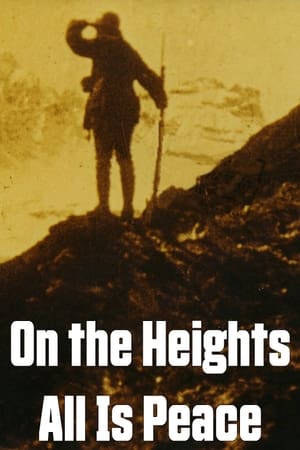
On the Heights All Is Peace
Found footage anti-war film comprising film documents of the Austro-Hungarian and Italian army on the Alpine front, and from first generation picture material by war-film pioneer Luca Comerio.
1998
Lo specchio di Diana
In 1926 the remains of two ships built by the Emperor Caligula were found at the bottom of Lake Nemi, near Rome. Mussolini had the lake drained and established a museum as a celebration of the imperial origins of Fascism, but the museum and ships were destroyed by fleeing Nazis in 1944. The film commemorates these events. - MoMA
1996
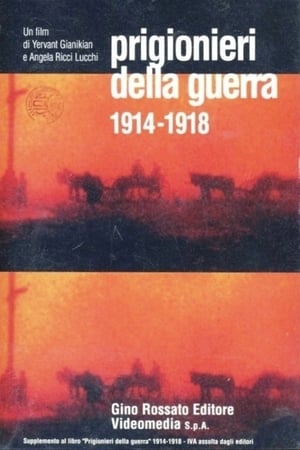
Prisoners of War
This haunting film comprises of footage shot during WWI from opposite sides of the conflict: Czarist Russia and the Austro-Hungarian empire. The filmmakers tinted the material with sensual colors from sepia to red, blue, and purple and slowed the footage to analyze the material. The total absence of commentary renders the material eloquent and disturbing. - MoMA
1995
The Devil Never Sleeps
The Devil Never Sleeps is a “whodunit” documentary about family secrets. Filmmaker Lourdes Portillo received a phone call informing her of the mysterious death of her wealthy Mexican uncle Oscar. Officially ruled a suicide, Portillo’s relatives claimed murder, offering several possible suspects including a business partner, a ranch hand, and Oscar’s young widow who stood to inherit everything. Traveling to Mexico, Portillo attempts to learn the truth about her powerful uncle. Using interviews, old snapshots and home movies, she finds a complicated web of family secrets, intrigue, rumor and betrayal that makes her enigmatic uncle’s murder seem ever more likely, yet ever more obscure. As the Mexican saying goes, “When evil is lurking, the devil never sleeps.”
1994
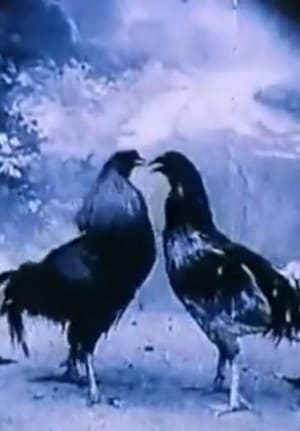
Criminal Animals
In this filmic comment on Fascist ideology - which uses footage from the recently discovered archives of Luca Comerio - invisible hands push captive animals to fight among themselves.
1994
Hearts of Darkness: A Filmmaker's Apocalypse
A chronicle of the production problems — including bad weather, actors' health, war near the filming locations, and more — which plagued the filming of Apocalypse Now, increasing costs and nearly destroying the life and career of Francis Ford Coppola.
1991
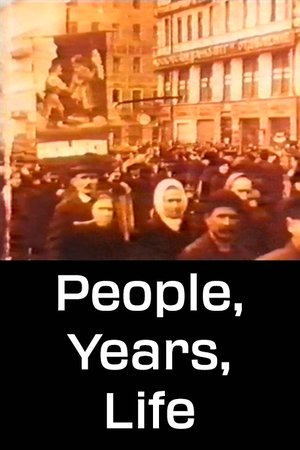
People, Years, Life
Using images shot in Russia and Armenia from World War I to the 1930s and retrieved from a Soviet film archive, Gianikian and Ricci Lucchi constructed a meditative film about the status of Armenians as a people without a state. Inspired by the diary of Gianikian’s father, People, Years, Life uses rare footage depicting the region’s major historic events: the end of Tsarist Russia, violence in the Caucasus during World War I, the 1918 Armenian exodus from Azerbaijan. Gianikian and Ricci Lucchi’s treatment of the material manipulates the speed of the images, adds color and music, and magnifies various parts of the image, so that the movement of bodies across the frame begins to carry the weight of exile, mourning, dispossession.
1990

And... We've Got Sabor
Legendary rumba musician Alberto Zayas serves as a guide for this vibrant journey through Cuban musical history and culture. The short features interviews, footage of impromptu street performances, and studio recordings.
1967
I'm Going to Santiago
This black-and-white film is a loving portrait of Santiago de Cuba and its people. It provides a view of Cuba as a picturesque country, the product of an earthy mix of black and criollo cultures. The film uses historical images which portray the end of the eighteenth century when Haitian slave owners fled with their slaves to Cuba after the Haitian Revolution.
1964

Kancha Sherpa: Last of the First from the 1953 Conquest of Mt Everest
Kancha Sherpa was one of 103 Sherpas that brought Sir Edmund Hillary and Tenzing Norgay to the top of Mt. Everest in 1953, as the first to reach the top. This achievement would have been impossible without the strength, courage and knowledge of the Sherpas, who have a strong connection to the mountains of the Himalayas. At the age of 80, Kancha is the Last of the First from the 1953 expedition to Mt. Everest. Kancha is looking into the future, with a heartfelt hope that his tradition, will reach far into the 21st century and beyond. He is concerned to see modern traditions melting away old traditions, like the snow on top of Everest.