Watch Binxet - Under the border (2017) Online Free
“Binxet – Under the border” is a journey between life and death, dignity and pain, struggle and freedom. It takes place along the 911 km of the turkish-Syrian border. On the one hand the ISIS, in the other Erdogan’s Turkey. In the middle the borders and one hope. This hope is called Rojava, only one point on the chart of a troubled region, a region of resistance and an example of grassroots democracy that speaks about gender equality, self-determination of peoples and peaceful coexistence.
Cast
Elio Germano
More Like This
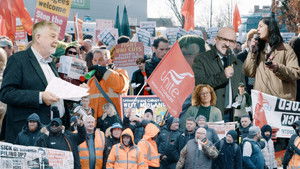
Don't Let The Bastards Grind You Down
"Don't Let The Bastards Grind You Down" is a documentary film about British social policy. The focus is on the political struggle against neoliberal austerity policies, which have their origins in the hated Thatcher government. The film features the former socialist MP Dave Nellist, who is now the national chair of the Trade Unionist & Socialist Coalition and Hannah Sell, the general secretary of the Socialist Party. The film features a local election campaign in the miners' town of Nuneaton, students campaigning against an increase in tuition fees and refuse workers from Birmingham striking against massive cuts to their wages.
2026
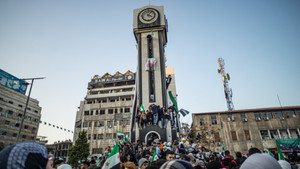
Homs - Syrie, la vie d’après
After twelve years in exile, Syrian journalist and filmmaker Daham Alasaad returns to Homs, devastated by the war in Syria. Once the city of his childhood, it is now a relic of an authoritarian regime, where different communities (Sunnis, Christians, Alawites) are trying to rebuild their lives together after terrible years of division and destruction. Thanks to Daham Alasaad's close relationship with the city's inhabitants, the director highlights some very moving characters, torn between grief, fear, the need for justice, and the desire for peace and reconciliation. By opening up naturally to the camera, they allow viewers to experience what Syrians of all backgrounds are going through today. "Homs-Syria, Life After" is a personal and political investigation into the ability of this symbolic city to rebuild hope on the ruins of a Syria ravaged by more than fifteen years of war and facing an uncertain future.
2025
The Boy of The Fish
"The Boy Of The Fish" follows Noon, a young boy living in a Syrian refugee camp, who finds solace and a sense of freedom in a whale-shaped doll he names "Bahr." Set against the challenging realities of camp life, Noon’s journey is both a story of resilience and a testament to the boundless imagination of childhood. Through vivid symbolism and a unique soundscape, the film explores themes of loss, hope, and the longing for freedom amidst confinement. Shot entirely on an iPhone due to restrictions in the conflict zone, the film combines raw authenticity with poetic depth to capture the emotional landscape of a young soul navigating adversity.
2024
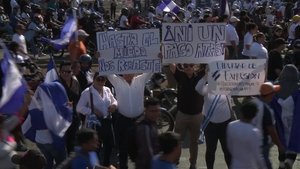
Ein Traum von Revolution
When the revolution in Nicaragua won its victory nearly 40 years ago, the world began to dream. A young generation was taking the reins in a country of grand utopias. From West Germany alone, 15,000 “brigadists” travelled to help rebuild the war-torn country: liberals, greens, unionists, social democrats, leftists and church representatives harvested coffee and cotton, built schools, kindergartens and hospital wards. No movement has mobilised so many people. What became of the hopes and dreams of the revolutionaries and their supporters?
2024
A Night of Knowing Nothing
L, a student in India witness to the government's violent response to university protests, writes letters to her estranged lover while he is away.
2022
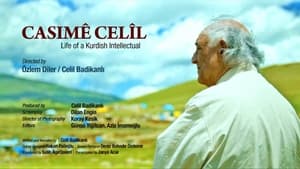
Jiyana Rewsenbireki Kurd: Casimê Celîl
Casimê Celîl was born into a Yezidi Kurdish family in 1908, in a village called Kızılkule, located in Digor, Kars. The village and family life, which he longed to remember throughout his life, ends with the massacre they endured in 1918. During his long road to Erivan, Armenia, he lost all his family members. Left all alone, Casim was placed into an orphanage and was forced to change his name. To remember who he was and where he came from, every morning he repeated the mantra “Navê min Casim e, Ez kurê Celîlim, Ez ji gundê Qizilquleyê Dîgorê me, Ez Kurdim, Kurdê Êzîdî me”, which translates to: “My name is Casim, I am the son of Celîl, I come from the village of Kızılkule in Digor, I am a Kurd, and I am Yezidi”. He clings to every piece of his culture he can find, reads, and saves whatever Kurdish literature or art he comes across. As the year’s pass, Casim finds himself with an impressive collection of Kurdish culture and history.
2021
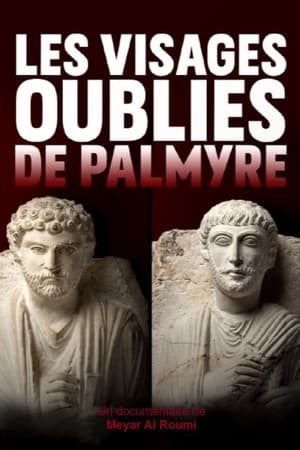
The 1001 Faces of Palmyra
Two thousand years ago, it was a flourishing city in the middle of what is now a Syrian desert. At the crossroads of trade routes, Palmyra attracted caravanners from Mesopotamia, India and China. In what remains of its ruins, rediscovered by Europeans in the 17th century, its numerous necropolises bear witness to a prosperous past. Carved in limestone in the first centuries of our era, the faces of the representatives - men, women and children - of its greatest families adorn the walls of its tombs. Since 2012, Danish archaeologist Rubina Raja has been leading a long-term project to find, document and retrace the family trees and daily life of these Palmyrenians.
2021
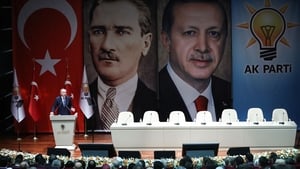
From Atatürk to Erdoğan: Building a Nation
Turkey's history has been shaped by two major political figures: Mustafa Kemal (1881-1934), known as Atatürk, the Father of the Turks, founder of the modern state, and the current president Recep Tayyıp Erdoğan, who apparently wants Turkey to regain the political and military pre-eminence it had as an empire under the Ottoman dynasty.
2019
The Voice of Innocence
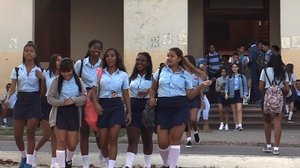
"The Voice of Innocence" is a documentary that shows how, starting in 1959, the Cuban Revolution put into practice a comprehensive and universal policy of safeguarding the rights of the child, even under the multiple difficulties resulting from the economic, commercial and financial blockade imposed by the United States more than six decades ago. Cuba is one of the main signatories of the Convention on the Rights of the Child, signed on 20 November 1989, when the country had already made extraordinary progress in protecting the rights of the child, in comparison to developed countries, such as the United States, which as of today hasn't yet ratified the Convention.
2019
History is Marching
History is Marching is a feature length documentary analysing the rise in tensions between major powers across the globe over the course of 2018. The film follows western history from 1945 to the present day, before looking at how capitalist society is today breaking down into the largest crisis in its history. Socialism or extinction?
2018
Dalya's Other Country
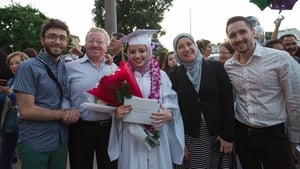
In 2012 Dalya and her mother Rudayna fled Aleppo for Los Angeles as war took over. Months before, Rudayna learns a secret that destroys her marriage, leaving her single at midlife. Arriving in LA, Dalya enrolls as the only Muslim at Holy Family Catholic High School. Can mother and daughter remake themselves while holding on to their Islamic traditions?
2017
My Enemy, My Brother
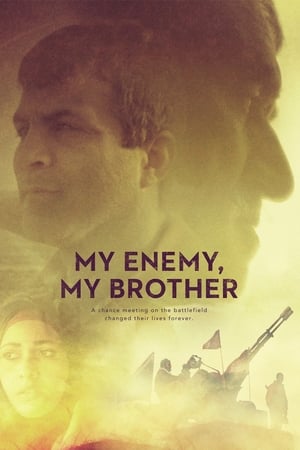
The eight-year Iran-Iraq War was one of the most brutal conflicts to devastate the region in the 20th century. Zahed was 13 years old when he enrolled in the Iranian army. Najah was 18 when he was conscripted into the Iraqi army, and he fought against Zahed in the Battle of Khorramshahr. Fast forward 25 years, a chance encounter in Vancouver between these two former enemies turns into a deep and mutually supportive friendship. Expanded from the 2015 short film by the same name.
2017
Palmyra: Rising from the Ashes
Documentary following a team of technicians in Italy as they reconstruct a number of historic Middle Eastern artifacts that were vandalized at the hands of Islamic State.
2017
2017 Oscar Nominated Short Films: Documentary
2017
Silvered Water
Shot by a reported “1,001 Syrians” according to the filmmakers, SILVERED WATER, SYRIA SELF-PORTRAIT impressionistically documents the destruction and atrocities of the civil war through a combination of eye-witness accounts shot on mobile phones and posted to the internet, and footage shot by Bedirxan during the siege of Homs. Bedirxan, an elementary school teacher in Homs, had contacted Mohammed online to ask him what he would film, if he was there. Mohammed, working in forced exile in Paris, is tormented by feelings of cowardice as he witnesses the horrors from afar, and the self-reflexive film also chronicles how he is haunted in his dreams by a Syrian boy once shot to death for snatching his camera on the street.
2014
Fahrenheit 9/11
Michael Moore's view on how the Bush administration allegedly used the tragic events on 9/11 to push forward its agenda for unjust wars in Afghanistan and Iraq.
2004
Leyla Zana, le cri au-delà de la voix étouffée
Leyla Zana, the first woman Kurdish MP to be elected to the Turkish Parliament in 1992, was impisoned in 1994 for 15 years for speaking in Kurdish in the Parliament. Kudret Gunes' personal look at the life of Zana takes her to her birth-place, friends and exiled husband.
2002
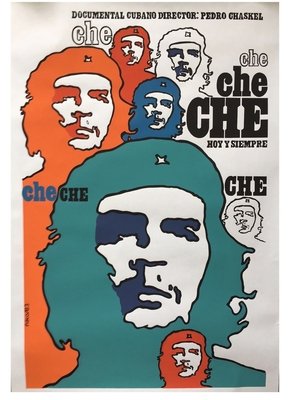
Che, Today and Always
A sound system plays Commander Ernesto Guevara's speech, delivered on October 20, 1962, during the Second Anniversary of the Young Communist League, along with a series of archival images of the revolutionary leader visiting factories and meeting with workers.
1983
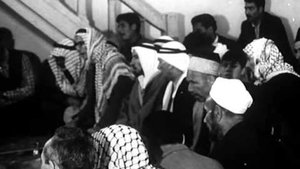
Everyday Life in a Syrian Village
The first documentary to present an unabashed critique of the impact of the Syrian government’s agricultural and land reforms, Everyday Life in a Syrian Village delivers a powerful jab at the state’s conceit of redressing social and economic inequities.
1974
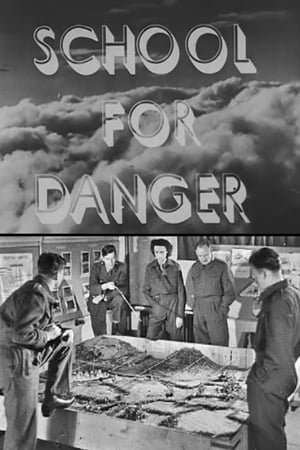
School for Danger
Britain's Special Operations Executive (SOE) provides trained agents, arms and other assistance to the European resistance groups fighting against Hitler. British agents, Captain Harry Rée DSO, OBE, Croix De Guerre, Médaille de la Résistance, aka "Felix", and Jacqueline Nearne, MBE, aka "Cat", recreate some of their adventures in France.
1947