Watch Berlin - Paris: Die Geschichte der Beate Klarsfeld (2011) Online Free
Loading Cinehub...
With her slap of the Federal Chancellor Kurt Georg Kiesinger in 1968, Beate Klarsfeld abruptly got known worldwide. The film highlights the significance of this act and its background. Beate Klarsfeld, born in Berlin in 1939 as Beate Künzel, is primarily known to people as "the woman with the slap" and as the Nazi hunter. In 1960 she went to Paris and met her future husband Serge Klarsfeld, whose father was deported to Auschwitz and murdered there. She was confronted with the darkest part of German history, about which she had learned nothing at school. Serge gave her books to read and made her actively deal with them. Since then, she has not let go of dealing with the crimes of the Nazi era. For them, it was always about "responsibility, not guilt".
Cast
Beate Klarsfeld, Serge Klarsfeld, Arno Klarsfeld, Günter Wallraff
More Like This
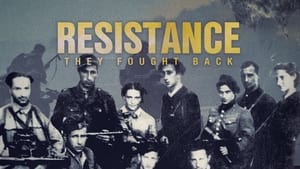
Resistance: They Fought Back
We’ve all heard of the Warsaw Ghetto Uprising, but most people have no idea how widespread and prevalent Jewish resistance to Nazi barbarism was. Instead, it’s widely believed “Jews went to their deaths like sheep to the slaughter.” Filmed in Poland, Lithuania, Latvia, Israel, and the U.S., Resistance – They Fought Back provides a much-needed corrective to this myth of Jewish passivity. There were uprisings in ghettos large and small, rebellions in death camps, and thousands of Jews fought Nazis in the forests. Everywhere in Eastern Europe, Jews waged campaigns of non-violent resistance against the Nazis.
2024
Ukraine: Holocaust Ground Zero
An exploration of the shocking impact of the Holocaust in Ukraine, where some of the most horrific Nazi massacres of World War II occurred. Featuring contributions from Holocaust survivors.
2023
Goering's Catalogue: A Collection of Art and Blood
For more than a decade, Reichsmarschall Hermann Goering, Adolf Hitler's right-hand man during the infamous Third Reich, assembled a collection of thousands of works of art that were meticulously catalogued.
2021
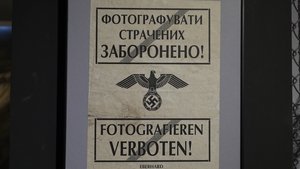
The Holocaust. Certified crime
The documentary tells the stories of people who were just children during the Second World War and the Nazi occupation of Ukraine. Its protagonists now live in Kyiv, Dnipro, and Odesa, where the filming took place. They survived the ghetto and also witnessed mass shootings that took place, according to researchers, in about five thousand locations across Ukraine. Each of the heroes lost loved ones. Parents, brothers, sisters, loved ones. Everyone had a single task during these terrible years - to survive. The entire mosaic of terrible memories collected in the film is part of a story of survival.
2021
We Weren't The Only Ones
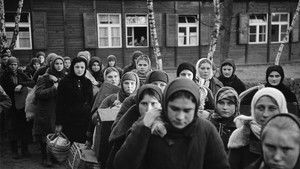
In this short film, poet and holocaust survivor John Guzlowski bears witness to his parents’ survival of Nazi slave labor camps. More than a personal remembrance, the poem carries his mother’s plea — “tell them we weren’t the only ones” — a call to acknowledge the countless lives scarred by war, displacement, and silence. Through Guzlowski’s measured reading, the film becomes both intimate and collective: a meditation on inherited trauma, the duty of memory, and the fragile line between history and forgetting.
2020
Les Enfants de Terezin et le Monstre à Moustache
2019
Eva: A-7063
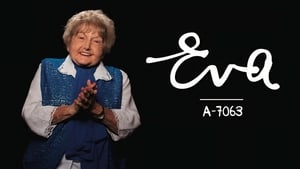
As a 10-year-old “Mengele Twin,” Eva Kor suffered some of the worst of the Holocaust. At 50, she launched the biggest manhunt in history. Now in her 80s, she circles the globe to promote the lesson her journey has taught: Healing through forgiveness.
2018
Les évadés de Drancy
2017
Hitler's Hollywood
Film journalist and critic Rüdiger Suchsland examines German cinema from 1933, when the Nazis came into power, until 1945, when the Third Reich collapsed. (A sequel to From Caligari to Hitler, 2015.)
2017
Anne Frank's Holocaust
Anne Frank's world famous diary came to an abrupt end shortly before she and her family were discovered hiding from the Nazis in a secret annex at the top of Otto Frank's office building, on August 4, 1944. While her diary tells the story of Anne's life, the story of her death reveals the atrocities encountered by millions of Jews during the Holocaust. In a solemn remembrance of the horrors that Anne Frank and these millions of others suffered during the dark days of World War II, National Geographic Channel (NGC) takes viewers inside the concentration camps in a two-hour special. In keeping with NGC's tradition of unparalleled storytelling, Anne Frank's Holocaust incorporates new findings and rarely seen photographs to reintroduce the story of the massacre of Jews in one of the most comprehensive documentaries on the subject to date.
2015
The Man Who Made Angels Fly
When the lights dim and the stage is revealed, Meschke channels life through the strings of his puppets, triggering the spiritual connection between the creator and his alter-egos: the charismatic Don Quixote, the loving Penelope, the inquisitive Baptiste, or the mysterious Antigone. THE MAN WHO MADE ANGELS FLY is a poetic story about a master of his craft that has inspired audiences to reflect upon common issues of suffering and the mortal coil. Visionary and un-biographic, imaginary tribute to the puppeteer.
2013
Besa: The Promise
A documentary exploring how Albanians, including many Muslims, helped and sheltered Jewish refugees during WWII at their own risk, and trying to help the son of an Albanian baker that housed a Jewish family for a year return some Hebrew books that the family had to leave behind.
2012

Dead Gay Men and Living Lesbians
As a result of the Holocaust and later, AIDS, the male homosexual community has sustained bitter losses and, according to Praunheim, lesbian women have now placed themselves at the head of the so-called queer movement. The female protagonists in the film represent two different generations; they also incorporate the past and present status of homosexuals in society.
2008
2 or 3 Things I Know About Him
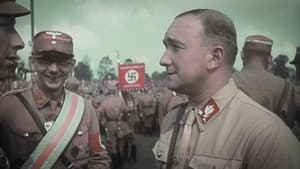
What would your family reminiscences about dad sound like if he had been an early supporter of Hitler’s, a leader of the notorious SA and the Third Reich’s minister in charge of Slovakia, including its Final Solution? Executed as a war criminal in 1947, Hanns Ludin left behind a grieving widow and six young children, the youngest of whom became a filmmaker. It's a fascinating, maddening, sometimes even humorous look at what the director calls "a typical German story." (Film Forum)
2005
Umsonst Gelebt: Walter Schwarze
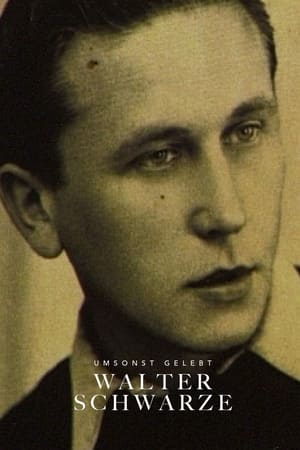
“This film is part of a series of films on gay men who survived the Nazi era. I met Walter Schwarze when he was already in his eighties. My camera recorded his first public account of his five-year incarceration as a homosexual at Sachsenhausen concentration camp. He was in his fifties when he met Ali in his hometown of Leipzig; the two men became partners and remained close until his demise. And yet, Walter told me, he felt he had lived in vain because he had not had the good fortune of today's gays, who are able to grow up in freedom. Walter Schwarze died of cancer on May 10, 1998.” Rosa von Praunheim
2005
The Power of Good: Nicholas Winton
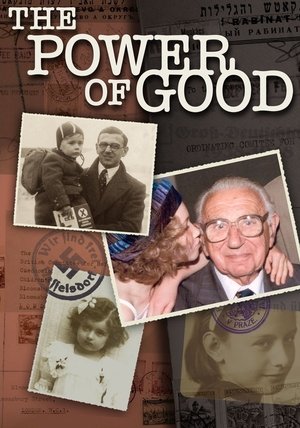
A gripping documentary about the courage and determination of a young English stockbroker who saved the lives of 669 children. Between March 13 and August 2, 1939, Nicholas Winton organized 8 transports to take children from Prague to new homes in Great Britain, and kept quiet about it until his wife discovered a scrapbook documenting his unique mission in 1988. Winton was a successful 29-year-old stockbroker in London who "had an intuition" about the fate of the Jews when he visited Prague in 1939. He quietly but decisively got down to the business of saving lives. We learn how only two countries, Sweden and Britain, answered his call to harbor the young refugees; how documents had to be forged and how once foster parents signed for the children on delivery, that was the last he saw of them.
2003

My Life Part 2
By means of objects, photos, tapes and films, director Angelika Levi, half-German, half-Jewish, examines the story of her family. The film deals with trauma and the way history is produced, filed away, turned into discourse and ordered on macro and micro levels.
2003
Hitler's Forgotten Victims
The story of black and mixed race people in Nazi Germany who were sterilised, experimented upon, tortured and exterminated in the Nazi concentration camps. It also explores the history of German racism and examines the treatment of Black prisoners-of-war. The film uses interviews with survivors and their families as well as archival material to document the Black German Holocaust experience.
1997

Wall of Silence
In the small town of Rechnitz a terrible crime against humanity was performed during the holocaust. Until now, no-one dares to talk about it.
1994
Łódź Ghetto
The Polish city of Łódź was under Nazi occupation for nearly the entirety of WWII. The segregation of the Jewish population into the ghetto, and the subsequent horrors are vividly chronicled via newsreels and photographs. The narration is taken almost entirely from journals and diaries of those who lived–and died–through the course of the occupation, with the number of different narrators diminishing as the film progresses, symbolic of the death of each narrator.
1989