Watch Bela Bartók (1964) Online Free
A portrait of the life and work of the great Hungarian composer Béla Bartók, exploring both his music and his passionate interest in his country's folklore.
Cast
Boris Ranevsky, Pauline Boty, Sandor Elès, Peter Brett, Rosalind Watkins, Huw Wheldon
More Like This
What We Can Know About Edmond and Basile
An exploration of Edmond Dédé and Basile Barès were 19th-century New Orleans composers of color. Dédé, born free, was an orchestral composer and violist, known for his opera Morgiane. Barès, born into slavery, was a pianist and composer of music for dance halls, unique for being the only known American composer with a copyright assigned to his work while enslaved.
2025
The path of sin
It tells the inspiring story of Juan Dávila. At the age of 32, he left his steady job as a municipal police officer to devote himself to show business. Thus began a ten-year journey performing in bars, squares, variety halls, and some theaters. A journey in which he started a theater company (Improclan) where he brought together people who, like him, were looking for their niche as comedians.
2025
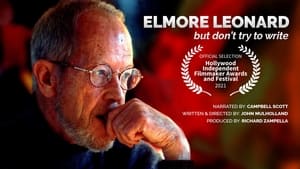
Elmore Leonard: "But Don't Try to Write"
Elmore Leonard, author of more than 40 novels, is renowned in the literary community. From his westerns and early novels of crime based in Detroit and South Florida, right through his complex and virtually plotless later work, Elmore Leonard dissected an America whose founding sins have continued to haunt it all the days. Leonard’s depiction of America is as real as Twain’s Hannibal, Faulkner’s Mississippi and Steinbeck’s Monterey. The new documentary ELMORE LEONARD: “But don’t try to write” explores the prolific author’s legacy and his influence on generations of writers. The documentary features exclusive images and previously unseen home movie footage, family photographs, and in-depth interviews with both literary experts and those who knew him well, including colleagues, family, and childhood friends.
2021
Casual Workers
An abstract perspective into two young South African workers in the heart of Johannesburg's industrial sector during Covid-19
2020
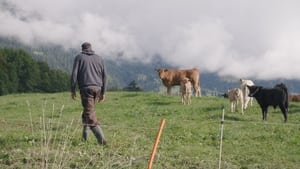
Volunteer
A film about the unprecedented Swiss grassroots movement of regular citizens who rise to aid thousands of refugees stranded at the European borders. In rich and safe Switzerland people from all backgrounds leave their regular life behind to support people in need. There is a Swiss farmer and his wife who keep cows in the Swiss Alps, a former commander of the Swiss Army, an elder rich lady residing at the lakeside, and a successful comedian and entertainer. These unexperienced volunteers take on an adventure that will change their lives forever.
2020
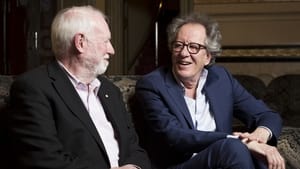
David Stratton: A Cinematic Life
A compelling personal journey with David Stratton, as he relates the fascinating development of our cinema history. David guides us from his boyhood cinema experience of Australia in England, where he saw the first images of this strange and exotic landscape via the medium of film, to his migration to Australia as a ‘ten pound pom’ in 1963 and onto his present day reflections on the iconic themes that run through our cinematic legacy. All of this reflects a passionate engagement in a uniquely Australian medium. Parallel and at the heart of the series is the story of an industry whose growing pains David has witnessed over a lifetime. Alongside David, the protagonists of this history are the giants of Australian cinema – both behind the camera and in front of it.
2017
June Brown at 90: A Walford Legend
Beloved BBC soap actress June Brown chats about her life and 67 year career.
2017
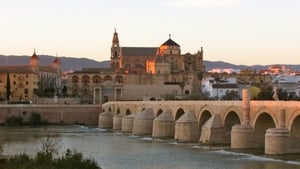
Pyhä
2017
Because I am
Based on a poem by a Zimbabwean LGBT activist written in response to the gay hate speech that is being perpetuated president Robert Mugabe. The film was shot in South East London UK with a cast of six women from several African countries playing multiple roles in this portrayal of being a lesbian in homophobic Zimbabwe. Five of the actors and the producer are refugees who fled their countries in fear of persecution for their sexuality.
2016
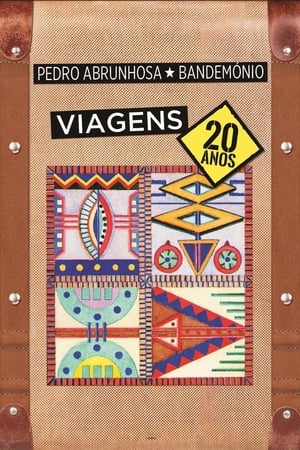
Viagens - 20 Years
A behind-the-scenes look at "Viagens", one of the greatest portuguese records of the 1990s, in the year of its 20th anniversary.
2014
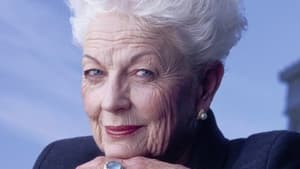
All About Ann: Governor Richards of the Lone Star State
All About Ann celebrates the achievements of larger-than-life Ann Richards, who became the first elected female governor of Texas. Her cool demeanor, acid wit, and passion for social inclusivity made her one of the most powerful and progressive governors in U.S. history, a liberal democrat intent on building “the new Texas.” But, when the 1994 election begins, Richards is faced with her toughest challenge yet, as an increasingly conservative majority turn towards a new, pro-business candidate: George W. Bush.
2014
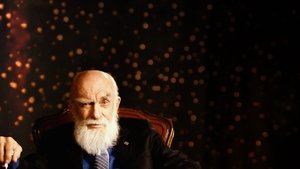
An Honest Liar
An Honest Liar tells the incredible story of the world-famous magician, escape artist, and world-renowned enemy of deception, James 'The Amazing' Randi. The film brings to life Randi's intricate investigations that publicly exposed psychics, faith healers, and con-artists with quasi-religious fervor. A master deceiver who came out of the closet at the age of 81, Randi created fictional characters, fake psychics, and even turned his partner of 25 years, Jose Alvarez, into a sham guru named Carlos.
2014
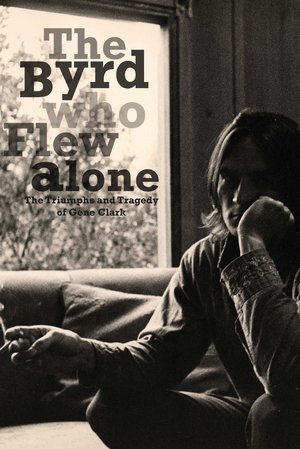
The Byrd Who Flew Alone: The Triumphs and Tragedy of Gene Clark
A documentary on the life and work of Gene Clark, co-founder of The Byrds, whose subsequent career was a rollercoaster of pioneering music and personal disaster.
2013
Les États-Unis d'Afrique
2011
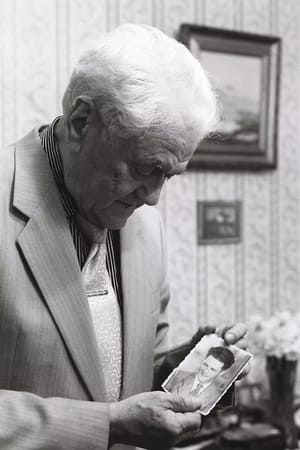
A bissele Glik
2009
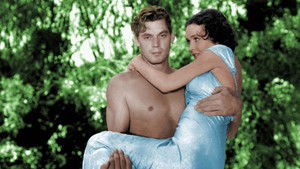
The One, the Only, the Real Tarzan
The glorious and tragic story of American athlete and actor Johnny Weissmuller (1904-84), Olympic swimmer, water polo player and the only true Tarzan, an archetypal character and myth of cinema, that of the original Hollywood blockbusters (1932-48).
2004
Chairman Mao - The Last Emperor
60-minute biography of Mao Zedong.
1993
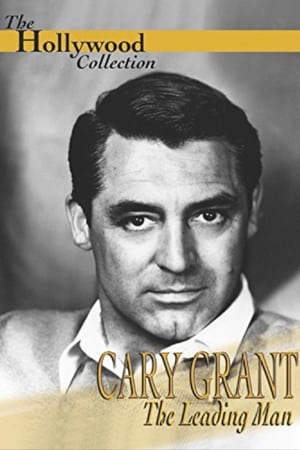
Cary Grant: A Celebration of a Leading Man
A retrospective of the life and career of actor Cary Grant, including clips from his films and interviews with his friends and co-workers.
1988

In memoriam Hajnóczy Péter
The footage was shot in the writer's room a few days after his death. Everything in the room was untouched. The poet György Petri reads from one of Péter Hajnóczy's works, Miss Embolia. A sacred image of the Eastern European "beaten generation".
1985
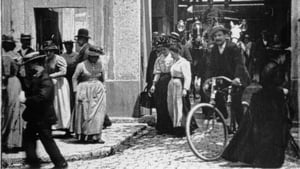
Workers Leaving the Lumière Factory
Working men and women leave through the main gate of the Lumière factory in Lyon, France. Filmed on 22 March 1895, it is often referred to as the first real motion picture ever made, although Louis Le Prince's 1888 Roundhay Garden Scene pre-dated it by seven years. Three separate versions of this film exist, which differ from one another in numerous ways. The first version features a carriage drawn by one horse, while in the second version the carriage is drawn by two horses, and there is no carriage at all in the third version. The clothing style is also different between the three versions, demonstrating the different seasons in which each was filmed. This film was made in the 35 mm format with an aspect ratio of 1.33:1, and at a speed of 16 frames per second. At that rate, the 17 meters of film length provided a duration of 46 seconds, holding a total of 800 frames.
1895