Watch BBC Earth - New Guinea (2012) Online Free
Lost Land of the Volcano is a three-part nature documentary series produced by the BBC Natural History Unit which follows a scientific expedition to the island of New Guinea. The expedition team, which includes specialist zoologists, explorers and the BBC crew, travels to the extinct volcano of Mount Bosavi in central Papua New Guinea to document the biodiversity of this little-visited area and search for new species. At the time of filming, logging was taking place about 20 miles (32 km) south from the volcano, and one of expedition's aims was to find evidence to support the case to protect the area. Some members of the expedition team travelled to the island of New Britain several hundred kilometres to the east to chart an unexplored cave system and observe an active volcano. The series was broadcast in September 2009 on BBC One in the United Kingdom in a three-part run. In the United States, it was broadcast the same month in seven parts on consecutive nights.
More Like This
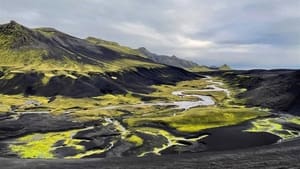
Great natural monuments - Iceland
The fascinating landscape formations of Iceland in the North Atlantic bear witness to the beauty and primal power of nature. They were created through the interaction of powerful volcanic, geological and biological processes that have been changing the face of the earth for billions of years. This is what the Earth might have looked like four billion years ago. Iceland is the realm of ice and fire. Nowhere else is there such a high density of volcanoes. The landscapes, which are continually reshaped by eruptions, make the island a natural laboratory full of clues about the formation and development of the earth. The documentary follows a group of scientists through the most active areas of Iceland, along a mountain range that has emerged from the ocean. On the slopes of the volcanoes, in the fog of the fumaroles and on streams and rivers, the three researchers explore how the first forms of life populated the earth's surface and in what evolutionary steps they took over the earth.
2023
Voyages au centre de la Terre : Dans les pas de Jules Verne
2023
Supervolcan Yellowstone : Menace sur la planète ?
2022

El Niño del Volcán
Joel, an 11-year-old boy, will guide us through the forest of the Popocatépetl volcano and with his childlike wisdom leaves us lessons on a natural life.
2022
Heimaland
For centuries the inhabitants of the Icelandic village Vík í Mýrdal maintained a mystique relationship with the nearby volcano 'Katla'. Today the tide has turned; the volcano is used to lure tourists and create economic prosperity. In the villagers' search for wealth, they gradually become strangers in their own habitat.
2022
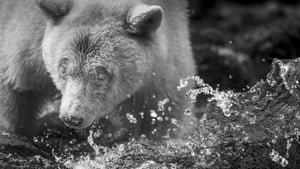
Elementa
A black-and-white visual meditation of wilderness and the elements. Wildlife filmmaker Richard Sidey returns to the triptych format for a cinematic experience like no other.
2020
Geo-Disaster
A chunk of dark matter shoots right through earth, causing various worldwide disasters. A family in Los Angeles struggles to survive the ordeal.
2017
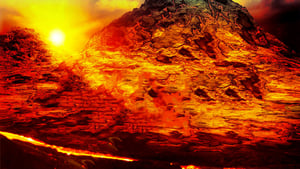
Lava Land - Glowing Hawaii
Hawaii, with its tropical rainforests and diverse coral reef is a spectacular natural paradise for travellers, surfers and all fans of breathtaking sandy beaches and lush green mountains. But life on the American island chain also has a dangerous side: permanently active volcanoes, lava caves, and even burning lava pours into the sea! Here you can see black smoke rise up, spray the red-hot magma into the sky and feel how the earth trembles. Located on the Pacific plate is unusual for volcanoes, Hawaii is thus researchers a fascinating destination. At Kilauea, the most active volcano on earth, the inhabitants have to live in constant danger found over the centuries cope. Lava Land - Glowing Hawaii takes you into the world of researchers and residents on the Big Iceland, the largest island of Hawaii.
2013
Lon Marum
A TV-hour length documentary film depicting the relationship between language, culture, place, music, tradition, and magic on an active volcano, in the Pacific nation of Vanuatu, on the island of Ambrym.
2012

Mount St. Helens: 30 Years of Change
A look at the people, history, and recovery of the mountain since the eruption in 1980.
2011
Lava Storm
Lori and John Wilson, employees of an emergency response center, must find a way to survive the initial lava storms, to save John's father and their two teenage children. Even more importantly, they must find a way to slow the path of the lava storms, to give humankind the time to find a solution to this natural disaster, in order to save humanity and our Earth.
2008
Encounters at the End of the World
Acclaimed filmmaker Werner Herzog travels to Antarctica, where he finds a desolate, beautiful landscape, largely untouched by human hands, and a group of truly unique people who risk their lives to study it. Centered at McMurdo Station, the United States' largest Antarctic research center, Herzog explores the minds of the scientists willing to abandon civilization and endure volatile conditions to learn more about the continent's wildlife and awe-inspiring natural wonders.
2007
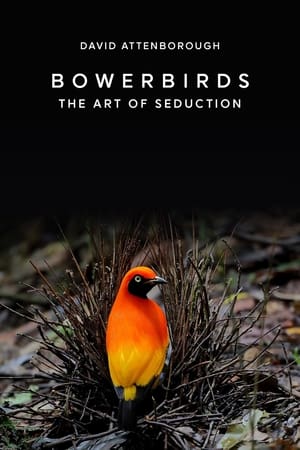
Bowerbirds: The Art of Seduction
The male bowerbirds of Australia and New Guinea display an incredible artistic talent -- and all in the name of love! Collecting 'jewels' they set them in specially-built showcases and some even paint the walls with mashed berries. If all this isn't enough to woo potential mates, they also perform a most bizarre stiff-winged dance. But displaying darker emotions associated with sex, such as envy and jealousy, males will sometimes destroy a rival's construction and steal his jewels.
2000
Ring of Fire
Ring of Fire is about the immense natural force of the great circle of volcanoes and seismic activity that rings the Pacific Ocean and the varied people and cultures who coexist with them. Spectacular volcanic eruptions are featured, including Mount St. Helens, Navidad in Chile, Sakurajima in Japan, and Mount Merapi in Indonesia.
1991
Man without Pigs
John Waiko is the first Papua New Guinea man to graduate with a PhD and be appointed a professor. He returns to the Binandere clan and his small village of Tabara in the Northern Province of PNG. Once there, he has to organise a celebration for his achievements with his family’s help. Since he has been away for most of his life, he has no recognised wealth in the village (the pigs used for gift giving), nor a network of supporters or knowledge of the preparation and rituals for having such a celebration. He wants the event to happen quickly but that’s not the way it works in Tabara. Man without pigs focuses on the antagonism aroused by the clash between traditional customs and Western values in this remote PNG community.
1990
St. Helens
Centers on the events leading up to the cataclysmic 1980 eruption of Mount St. Helens in Washington, with the story beginning on the day volcanic activity started on March 20, 1980, and ending on the day of the eruption, May 18, 1980.
1982
Ileksen: Politics in Papua New Guinea
A companion to Yumi yet, O’Rourke and Kildea’s Ileksen (derived from the English 'election’) documents Papua New Guinea’s first general election in 1977. The film records a broad cross-section of candidates who, without an extended media network at their disposal, rely on relentless campaigning, ingenuity and personal charisma to attract votes. Emphasising the divide between coastal people and highlanders, Ileksen looks at the election campaign, election day and the political manouvering that goes with the formation of a government.
1978
Et Vint La Liberté
A historical epic that chronicles the Guineans’ long struggle against French colonialism and for their country’s independence.
1969
Exploration du volcan Niragongo
Short Belgian documentary on volcanos.
1959
Les Eaux souterraines
Short Belgian documentary on volcanos.
1955