Watch Baggages (2017) Online Free
This documentary focuses on immigrant teens between the ages of 12 and 17 who share the story of their migration and their adaption to life in Canada through theatre. Young but wise, these children describe their experiences with emotion and authenticity.
Cast
Emad Jorat, Shannon Charles, Kimia Safaeivahid, Arina Ianioglo, Shinwhoo Park, Arthur Barcellos Pedroso, Phan Ngoc Han Nguyen, Erfan Tohidinia, Mélissa Lefebvre
More Like This

Swimming with Wings
A short animated documentary exploring the immigration experience through the eyes of children learning how to swim with clothes on in the Netherlands.
2025

Sometime, Somewhere
Sometime, Somewhere sheds light on the challenges faced by Latino communities in Charlottesville, Virginia against the backdrop of immigration driven by factors like climate change, poverty, and drug-related violence.
2024
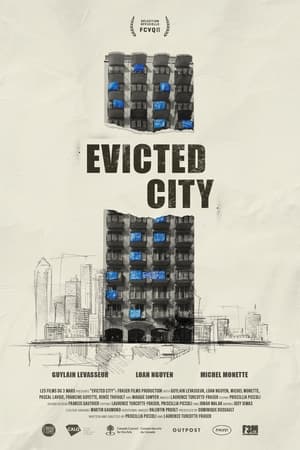
Evicted City
Montreal — one of the few remaining affordable cities in North America — is now in the midst of an unprecedented housing crisis. An intimate portrait of socio-political resistance, this multilayered film explores the human impact of real estate speculation on the cities of tomorrow.
2023

Okinawa/Santos
During World War II, many Japanese immigrants in Santos, Brazil, were forced to move to another place. Matsubayashi draws attention to the fact that 60% of the immigrants were from Okinawa. Based on testimonies from interviewees, this film reveals the hidden historical relationship between Okinawa and Brazil.
2020

Mama Rosa
Rosa is from Croatia and lives in Switzerland, with her husband who depends on her care. She takes care of everything. Her children have grown up and want to leave home. Rosa stays behind alone.
2019
Les Hiboux, ça change des vies!
2018
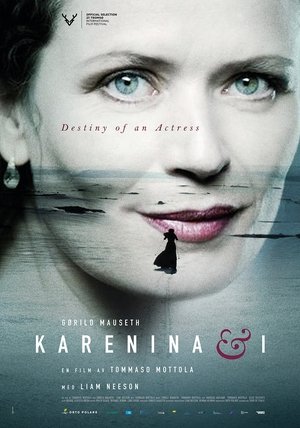
Karenina & I
The actor Gøril Mauseth goes on a 11.000 kilometer travel with the Trans-Siberian to play Anna Karenina in a new language in Leo Tolstoj's Russia, discovering the language, and the reasons Tolstoj wrote what he wrote, changing her forever.
2017
The Perfect Selfie
Teenager Olivia Oras has 20,000 Instagram followers. The documentary follows a year of her life.
2017

Boiling Point
Boiling Point (original title Kiehumispiste) describes the different reactions the Finnish people had to the large immigration amounts in 2015-2016.
2017
Not My Job
The documentary follows the life of Farroukh, a young Tajik immigrant who lives in Moscow outskirts with his family and does odd jobs in dreams of becoming an actor.
2015
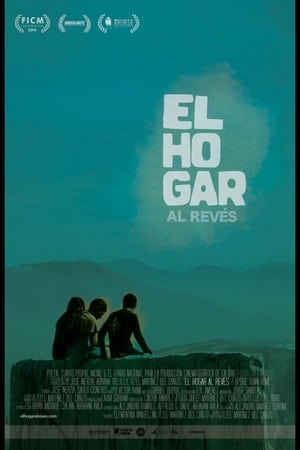
Upside Down Home
In an unfair country women work day and night far from home while their children learn to survive between loneliness and emptiness. They grow to become teenagers, locked down in one of many low income neighborhoods made up of identical small houses, outlined by overcrowding and scarcity. Their mothers, mostly workers in transnational factories, go in and out in buses that take them to a work place where they carry out twelve hour shifts two hours away from home, while their children muddle through their upbringing in tiny houses of 40 square meters. In spite of everything, they look for a way to move ahead and chase their illusions. This is a story full of youthful aspirations set in a context of difficulties and shortages.
2014
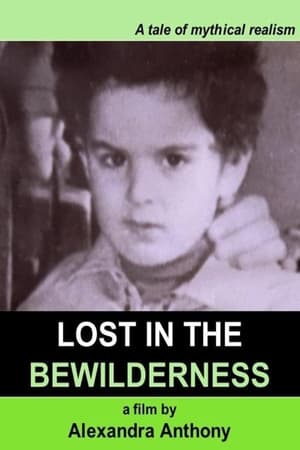
Lost in the Bewilderness
Lost in the Bewilderness is a feature-length documentary about the filmmaker’s cousin Lucas, kidnapped at age five from his native Greece, and found on the eve of his 16th birthday in the US. This story of international parental abduction, filmed for over twenty years, chronicles Lucas’s journey of growth and self-discovery, and culminates with Lucas becoming a father himself. Lost in the Bewilderness is not only a detective story but also a lyrical meditation on childhood, lost and found, and an exploration of how the themes of ancient Greek myth and tragedy, with the family at their center, are still very much alive in the modern world.
2014
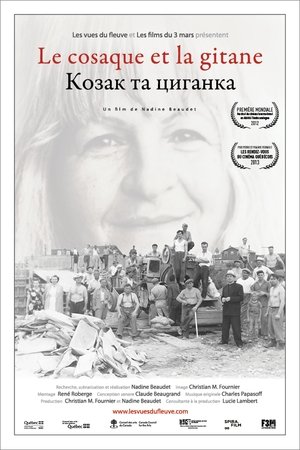
The Cossack and the Gypsy
The Cossack and the Gypsy takes us to the heart of intimate worlds of Lev Chayka and Régine Gabrysz, illustrating their memories, interior views composed of the stories about their childhood and devotion to their country of origin (Ukraine and Soviet Union). The wars and dictatorship of the past in the Eastern Europe is set in contrast with the Far North of Quebec in a forgotten boom town. Vera and Jack, the last miner, Régine and Lev are among the last first immigrants. Their Slavic voices and accents still lull the Abitibi sonorous landscapes, but for how long...
2013
La dérive douce d’un enfant de Petit-Goâve
2009
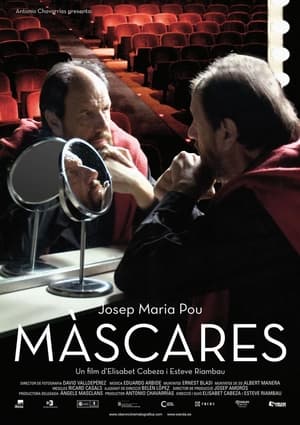
Màscares
2009
Brazillians Like Me
The encounter with a growing, and mostly undocumented, brazilian community allows us to bear witness to its energy, its vivacity, and its diversity. This film attempts to work for a larger acceptance of foreigners in their land of exile.
2008

My Life Inside
Rosa is a Mexican woman who, at the age of 17, migrated illegally to Austin, Texas. Some years later, she was jailed under suspicion of murder and then taken to trial. This film demonstrates how the judicial process, the verdict, the separation from her family, and the helplessness of being imprisoned in a foreign country make Rosa’s story an example of the hard life of Mexican migrants in the United States.
2007

Music Palace
Previously a central part of communal life, the movie palaces of New York’s Chinatown are now extinct. This documentary short takes us inside the title theater located on the Bowery, as it’s about to close its doors, with its caretakers ruefully looking back at the life that once was. Eric Lin’s poignant first film serves as a glimpse into the usually private—and, according to the Music Palace’s projectionist, “lonely”—operations of a theater, and mourns the loss of a once-vital movie-going locale.
2005
Visions of Europe
Twenty-five films from twenty-five European countries by twenty-five European directors.
2004
90 Miles
Having grown up within the Cuban Revolution, in 1980, Juan Carlos Zaldívar was a 13-year-old "pioneer" jeering in the streets at the thousands of "Marielitos" leaving the island by boat for the United States. Within weeks, he was a Marielito himself, headed with the rest of his family for a new life in Miami. Now a U.S.-based filmmaker, Zaldívar recounts the strange twist of fate that took him across one of the world's most treacherous stretches of water in 90 Miles, a new documentary having its broadcast premiere on PBS's acclaimed P.O.V. series in the summer of 2003. As related by Zaldívar in the intensely personal and evocative 90 Miles, arrival in South Florida is only the beginning of the family's struggles to comprehend the full meaning of their passage into exile. What follows is an intimate and uneasy accounting of the historical forces that have split the Cuban national family in two, and which shape the passage of values from one generation to the next.
2001