Watch Béton Boréal Online Free
More Like This

Le temps des femmes ?
Has the time of women finally come? Have their everyday lives truly changed over the past sixty years? Guided by Agnès Jaoui, women—famous and unknown—share their stories across generations. From childhood to retirement, the documentary traces shared experiences shaped by prejudice, but also by hope, strength, and humor. Blending personal archives, historic moments, and social media footage, the film places women at the center of their own story. Welcome to the Time of Women.
2025
A Castle in Spain
Everyday a father works hard to preserve the fragmentary present. He creates a world of images, a memory room where he meets his daughter. But it is difficult, the pictures are torn and forgotten and the fragmentary landscapes are constantly changing.
2025
A Return to Memory
When Canada entered World War II, the National Film Board suddenly had an urgent new mission—and hundreds of women stepped forward, helping to create Canadian cinema as we now know it.
2024
The Ballad of Ginger Goodwin
Documentary on BC labor activist Ginger Goodwin, his career as a striker, anti-war efforts, and assassination. Explores locations around Cumberland and the West Kootenays in present day.
2024
Gentleman Bandit
Documentary on the Canadian career of train robber Billy Miner, who became a folk hero in British Columbia. Locations near Kamloops and Mission are explored in present day.
2024
O Rizo
2023
Ingrain
An ode to the canopy, Ingrain is an attempt to capture one family's recollections of their home through their fading connections with the trees surrounding it.
2023
Minha Porto Alegre '50
2022
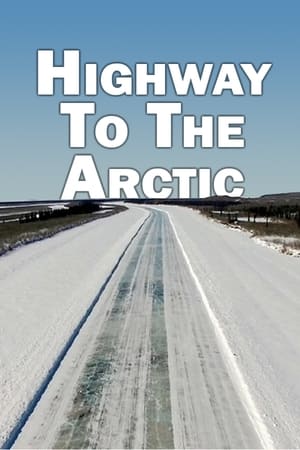
Highway to the Arctic
Every winter for decades, the Northwest Territories, in the Canadian Far North, changes its face. While the landscape is covered with snow and lakes of a thick layer of ice, blocking land transport, ice roads are converted to frozen expanses as far as the eye can see.
2017

Cóndor
2016
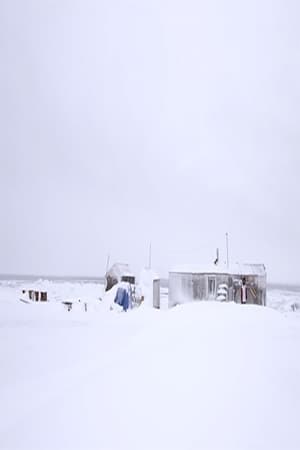
Nowhere Land
Documentary about filmmaker Bonnie Ammaaq's memories of life on Baffin Island, where her family moved for eleven years during her childhood from the hamlet of Igloolik to return to the traditional Inuit way of life.
2015

The day he decided to leave
My grandfather Tuiu decides for the second time to leave his house and start a life elsewhere, he lives with the street hardships, and the fact of leaving is linked to the depredation of that place.
2015
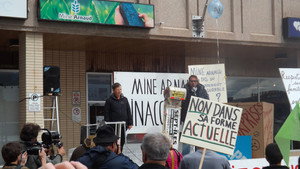
Déception durable
2014

Bowling for Columbine
This is not a film about gun control. It is a film about the fearful heart and soul of the United States, and the 280 million Americans lucky enough to have the right to a constitutionally protected Uzi. From a look at the Columbine High School security camera tapes to the home of Oscar-winning NRA President Charlton Heston, from a young man who makes homemade napalm with The Anarchist's Cookbook to the murder of a six-year-old girl by another six-year-old. Bowling for Columbine is a journey through the US, through our past, hoping to discover why our pursuit of happiness is so riddled with violence.
2002
The Tall Ships in Canada
Captures the highlights of the weekend in July of 2000 when 80 of the world's tall ships arrived in Halifax Harbour before the start of the race back across the Atlantic Ocean for a trans-Atlantic race.
2000

Just Watch Me: Trudeau and the 70's Generation
Canadian director Catherine Annau's debut work is a documentary about the legacy of Pierre Trudeau, the long-running Prime Minister of Canada, who governed during the 1970s. The film focuses particularly on Trudeau's goal of creating a thoroughly bilingual nation. Annau interviews eight people in their mid-30s on both sides of the linguistic divide. One tells of her life growing up in a community of hard-core Quebec separatists, while another, a yuppie from Toronto, recalls believing as a child that people in Montreal got drunk and had sex all day long. Annau has all of the interviewees discuss how Trudeau's policies affected their lives and their perceptions of the other side, in this issue that strikes to the heart of Canada's national identity.
1999
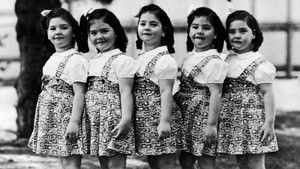
The Dionne Quintuplets
In 1934, Elzire Dionne delivered five identical girls. The Dionne Quintuplets follows Cecile, Emilie, Marie, Yvonne and Annette through twenty-one years of strange upbringing. When the girls were just infants, the premier of Ontario issued a court order removing them from parental care. Cut off from the world and their family, over-publicized, viewed twice daily in a special viewing compound, they grew up as prize exhibits. Director Donald Brittain uses old newsreel footage, home-movie sequences and interviews to depict a historic event that became a tragic exploitation of a family.
1978

A Day in the National Parks
An impressionistic view of Canada's national parks. The camera creates a composite landscape of ideal beauty where nature is wild and varied. It travels from the east coast to the west, from seashore to mountains, from lakes to forests. A film without words.
1978
Home Front
This short documentary is part of the Canada Carries On series of morale-boosting wartime propaganda films. In Home Front, the various WWII-era social contributions of women are highlighted. From medicine to industrial labour to hospitality, education and domesticity, the service these women provided to their country is lauded.
1940

The Royal Visit
This feature documentary offers a complete record of the 1939 Royal Tour of Canada by King George VI and Queen Elizabeth. The film opens as the royal couple makes a stop in Québec city, where Premier Duplessis greets them. They then visit Montréal and meet mayor Camilien Houde. A visit to Ottawa brings them to Parliament, where Prime Minister MacKenzie King is present. The visit continues throughout Ontario, the prairies, and western Canada. The Royal couple also makes a brief stop in Washington and meets President Franklin Roosevelt. They then stop in on the Maritime provinces before boarding a Royal yacht for the journey back to England.
1939