Watch Attenborough and the Giant Egg (2011) Online Free
David Attenborough returns to the island of Madagascar on a very personal quest. In 1960 he visited the island to film one of his first ever wildlife series, Zoo Quest. Whilst he was there, he acquired a giant egg. It was the egg of an extinct bird known as the 'elephant bird' - the largest bird that ever lived. It has been one of his most treasured possessions ever since. Fifty years older, he now returns to the island to find out more about this amazing creature and to see how the island has changed. Could the elephant bird's fate provide lessons that may help protect Madagascar's remaining wildlife? Using Zoo Quest archive and specially shot location footage, this film follows David as he revisits scenes from his youth and meets people at the front line of wildlife protection. On his return, scientists at Oxford University are able to reveal for the first time how old David's egg actually is - and what that might tell us about the legendary elephant bird.
Cast
David Attenborough
More Like This

Guyane, vivre avec le jaguar
2024
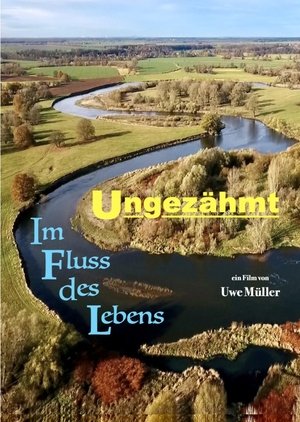
Ungezähmt - Im Fluss des Lebens
We get to know a few inhabitants of central European rivers.
2024
Idjanga, la forêt aux gorilles
2022
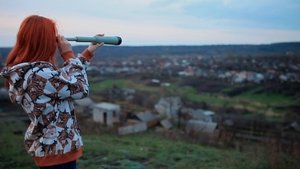
School Number 3
In the familiar surroundings of their everyday lives, they talk about things that matter to them, about experiences that move them, about first love and loss, hopes and fears. 13 adolescents from a school in Donbass which was destroyed during the war in Ukraine, and subsequently rebuilt, share themselves in front of the camera. 13 lives inhabiting an intermediary space, both emotionally and socially.
2017
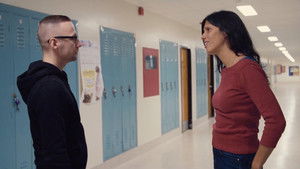
A Better Man
Following a series of intimate conversations between a former couple who lived through two years of domestic abuse, A Better Man infuses new energy and possibility into the movement to end violence against women.
2017
Silvered Water
Shot by a reported “1,001 Syrians” according to the filmmakers, SILVERED WATER, SYRIA SELF-PORTRAIT impressionistically documents the destruction and atrocities of the civil war through a combination of eye-witness accounts shot on mobile phones and posted to the internet, and footage shot by Bedirxan during the siege of Homs. Bedirxan, an elementary school teacher in Homs, had contacted Mohammed online to ask him what he would film, if he was there. Mohammed, working in forced exile in Paris, is tormented by feelings of cowardice as he witnesses the horrors from afar, and the self-reflexive film also chronicles how he is haunted in his dreams by a Syrian boy once shot to death for snatching his camera on the street.
2014
Vera Klement: Blunt Edge
As her 80th birthday is approaching, Vera Klement, an oil painter in Chicago, adamantly starts yet another new figure painting: a portrait of an artist under oppression, an homage to Russian composer, Dmitri Shostakovitch.
2010

Orca Killing School
2009
Grand Canyon Adventure: River at Risk
A documentary about a 15-day river-rafting trip on the Colorado River aimed at highlighting water conservation issues.
2008
Snow Leopard: Beyond the Myth
BBC The Natural World. In 2004, a team from the Planet Earth series captured the first ever film of a wild snow leopard in the mountains of Pakistan. For Nisar Malik, who led the expedition, these images sparked a passion that compelled him to return. With cameraman Mark Smith, he spent two years documenting the snow leopard's daily life, finally lifting the veil on the most elusive of all cats.
2008

The 11th Hour
A look at the state of the global environment including visionary and practical solutions for restoring the planet's ecosystems. Featuring ongoing dialogues of experts from all over the world, including former Soviet Prime Minister Mikhail Gorbachev, renowned scientist Stephen Hawking, former head of the CIA R. James Woolse
2007
Crimes of Honour
Throughout the Islamic world, each year hundreds of women are shot, stabbed, strangled or burned to death by male relatives because they are thought to have “dishonoured” their families. They may have lost their virginity, refused an arranged marriage or left an abusive husband. Even if a woman is raped or merely the victim of gossip, she must pay the price. Crimes of Honour documents the terrible reality of femicide – the belief that a girl’s body is the property of the family, and any suggestion of sexual impropriety must be cleansed with her blood. We meet women in hiding from their families, a brother who describes his reasons for killing the sister he loved, and a handful of women who have committed themselves to the protection of young women in danger of losing their lives.
1999
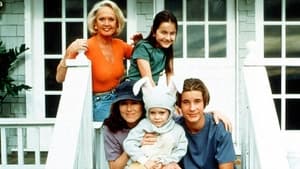
Replacing Dad
Linda and George live in a small town. He is the school principal. They are about to celebrate their 16th anniversary. She catches him with her daughter's young teacher, and has to deal with the kids, the town and her love to him.
1999
The Enchanted Island Madagascar: The Living Edens
Travel to the mysterious island that time forgot -- the island of Madagascar. Nestled in the tranquil waters of the Indian Ocean off the coast of Africa, Madagascar is an enchanting paradise where for eons nature has been left undisturbed. As you explore this pristine refuge, you'll discover a variety of dazzling plants and animals unique to Madagascar, because it evolved in isolation from the rest of the world. You'll soar over forested mountains, expansive plateaus and lush green rain-forests, encountering delightful leaping lemurs, colorful chameleons, exotic lizards, graceful ibis and breathtakingly beautiful butterflies -- did you know that there are over 3,200 species of butterflies on the island of Madagascar and, of those, over 2,900 can be seen only here? Witness close-up this primeval world's deepest secrets and closely guarded marvels and feel the power of this impressive island as never before.
1998
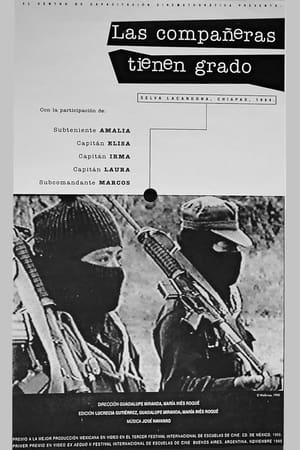
Zapatista Women
April 1994 in the Lacandona Jungle, Chiapas, México. The Zapatista women talk about the living conditions of Mexican indigenous populations and the life of peasant women. They explain the reasons for their struggle and their uprising.
1995
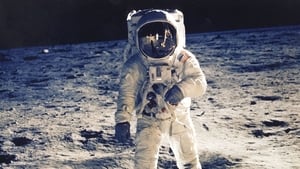
Destiny in Space
Travel alongside the astronauts as they deploy and repair the Hubble Space Telescope, soar above Venus and Mars, and find proof of new planets and the possibility of other life forming around distant stars.
1994
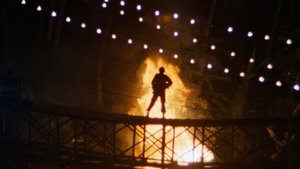
Hearts of Darkness: A Filmmaker's Apocalypse
A chronicle of the production problems — including bad weather, actors' health, war near the filming locations, and more — which plagued the filming of Apocalypse Now, increasing costs and nearly destroying the life and career of Francis Ford Coppola.
1991

A Song for Tibet
Filmed in the Indian Himalayas and in Canada, A Song for Tibet tells the dramatic story of the efforts by Tibetans in exile, including the Dalai Lama, to save their homeland and preserve their heritage against overwhelming odds. Since the invasion of their territory by China in the late 1950s, Tibetans have been struggling for cultural and political survival.
1991
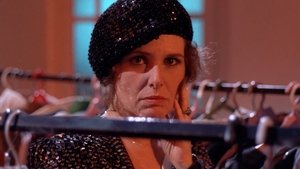
How Good to See You Alive
Four years after a military coup overthrew the Brazilian government in 1964, all civil rights were suspended and torture became a systematic practice. Using a mix of fiction and documentary this extraordinary film is a searing record of personal memory, political repression and the will to survive. Interviews with eight women who were political prisoners during the military dictatorship are framed by the fantasies and imaginings of an anonymous character, portrayed by actress Irene Ravache.
1989
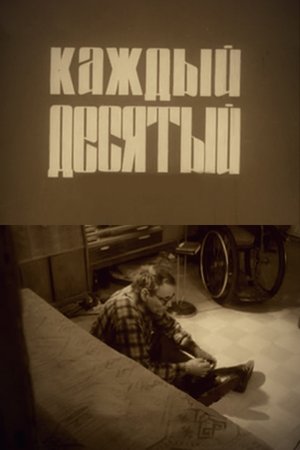
Every Tenth
A short documentary on the plight of people with disabilities in the Soviet Union.
1988