Watch Armin und die blaue Tonne (1998) Online Free
Go with Armin and the blue garbage can through Munich and discover what happens to the garbage: Let us show you how 365 cans fit into just 16 water bottles. See how new paper is made from an old newspaper. Watch how waste from the organic waste garbage can is turned back into potting soil.
Cast
Armin Maiwald
More Like This
Você Acredita em Lobisomens?
2026
Terang Terkarang
Kang Entis who is a former fisherman in Palabuhan Ratu, struggles to defend his life when the sea damage due to garbage and development eliminates his livelihood.
2026

Can i Die on Camera?
2024

1972: Munich's Black September
Explore the tragic truth about the massacre at the 1972 Olympic Games in Germany. Through interviews with key people such as the families of slain Olympians, German investigators and an anonymous perpetrator.
2022

Dumpster Diving
2021
Slowly Forgetting Your Faces
Two men, the hint of a sofa corner and a pile of letters. Using minimalist means, the film tells the story of two brothers caught between exile in a foreign country and resistance in the underground. It takes us back to the time when the revolution seized power in Iran and tells of life between the fronts. Daniel Asadi Faezi sketches the story of his father and his brothers - based on correspondence that has lain in the cellar for 30 years.
2021

Servus Uli – A Life for FC Bayern
"Servus", he said after 49 years as a leading personality at FC Bayern München. Whether as player, manager or president, he played a major role in making FC Bayern the most successful German football club ever. Now, after countless athletical and personal ups and downs, Uli Hoeneß is retiring in late 2019.
2019
Landauer: Gefeiert, verbannt, vergessen
Documentary about Kurt Landauer, the long-time Jewish president of FC Bayern München, who led the club to its first German championship, was persecuted and forced out of office by the Nazis, and rebuilt the club after the war.
2014

Hitler, My Neighbor
From 1929 to 1939 Edgar Feuchtwanger lived across the street from Adolf Hitler in Munich Germany From his bedroom the young Jewish boy often viewed the Fuumlhrer just across the avenue A schoolboy in Munich at the time Edgar witnessed the rise of Nazism firsthand sharing in the fear and dread felt by all German Jews witnessing the unstoppable ascent of a madman and the start of World War II
2013
Mia san Dageng: Punk In München!
2008
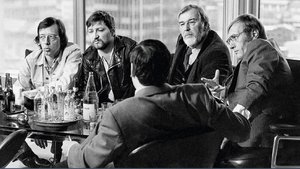
Counter Shot: Departure of the Filmmakers
Documentary about filmmakers of the New German Cinema who were members of the legendary Filmverlag für Autoren (Film Publishing House for Authors). Among them are Werner Herzog, Rainer Werner Fassbinder, and Wim Wenders.
2008
The Story of Stuff
For most of the world, consumption has been the unquestioned duty of every individual. Then garbage activist Annie Leonard brought her two-hour lecture to Free Range who helped her turn it into a 20-minute animated revolution. Shown in thousands of classrooms, endlessly blasted by Fox News, viewed more than 10 million times, The Store of Stuff finally opens the door to a serious cultural dialog about the costs of consumption.
2007
Draussen bleiben
2007
Der Fussballtempel - Eine Arena Für München
It does not happen every day that a gigantic stadium is built on a greenfield: In October of 2001, the citizens of Munich voted with a clear yes for a new soccer stadium in the north of the city. 66,000 soccer fans of FC Bayern and 1860 Munich will find a new common home in the futuristic looking structure. But before that stand four years of work on a construction site of superlatives. The director Wolfgang Ettlich and his cameraman Hans-Albrecht Lusznat followed the construction of the new Munich soccer arena since the first groundbreaking. They have recorded several phases of the construction and did thereby get to know the microcosm of a large construction site from the inside: The logistics, with which hundreds of construction workers have to be coordinated, and the steady growth of the stadium all the way to the perfectly conceptualized illuminated structure, with VIP-boxes, mass restaurants, and Europe’s largest parking garage.
2004

Geliebter Müll!
Documentary about the messie Günther Hilmer, in whose house the garbage is piled up to the ceiling. For him, trash is more of a passion than a vice, but his particular penchant for garbage has negative consequences for his social life.
2001

The Gleaners and I
Varda focuses her eye on gleaners: those who scour already-reaped fields for the odd potato or turnip. Her investigation leads from forgotten corners of the French countryside to off-hours at the green markets of Paris, following those who insist on finding a use for that which society has cast off, whether out of necessity or activism.
2000
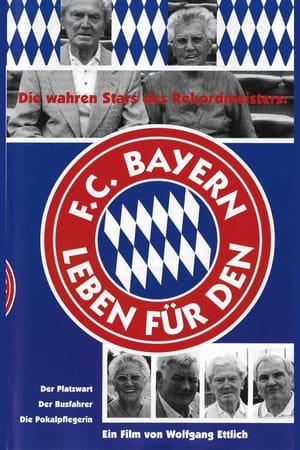
Leben für den FC Bayern
They do not earn millions, yet they are happy nonetheless: Maria Meissner (87), Josef “Sepp” Schmid (74), and Rudi Egerer (65) have spent most of their lives working for FC Bayern. Maria still cleanses the trophies nowadays, Sepp still washes and prepares the jerseys of the players in the basement, and Rudi is still the bus driver. They are simple people who may have access to the glamorous world of the big stars, but who never wanted to adapt to the ‘modern times’ unconditionally. They have remained side characters and experience their club from a special angle: Being witnesses of the development from a people’s sport to star cult and commercialisation.
1999
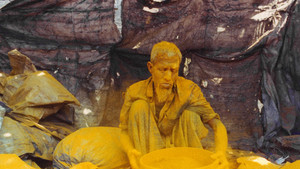
Megacities
Megacities is a documentary about the slums of five different metropolitan cities.
1998
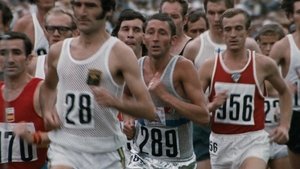
Visions of Eight
Eight acclaimed filmmakers bring their unique and differing perspectives to the 1972 Summer Olympic Games held in Munich. The segments include Lelouch's take on Olympic losers and their struggle to remain dignified even in the face of bitter disappointment and defeat; Zetterling's dramatic exploration of the world of weightlifting; and Pfleghar's piece on young Russian gymnast Ludmilla Tourischev's majestic performance on the uneven bars.
1973