Watch Andy Warhol: A Documentary Film (2006) Online Free
Ric Burns unearths rarely seen footage and offers keen observations on the life and artistic influence of Andy Warhol. [Made for and aired on PBS's American Masters series.]
Cast
Andy Warhol, Laurie Anderson, Irving Blum, Jeff Koons, Dave Hickey, Pat Hackett, Dennis Hopper, Paul Morrissey, Bob Dylan, Donna De Salvo, Wayne Koestenbaum, Bob Collacello
More Like This
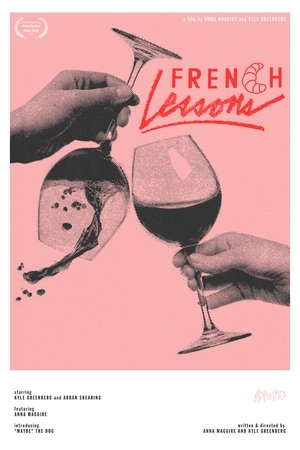
French Lessons
Bienvenue en…. Los Angeles! Film executive Kyle and filmmaker Arran rendez-vous for a tête à tête in this crème de la crème of Cinéma Verité.
2025

Out of Plain Sight
From the Los Angeles Times and Pulitzer Prize-finalist Rosanna Xia, OUT OF PLAIN SIGHT is a cinematic exposé of an environmental disaster lurking just off the coast of Southern California. Not far from Catalina Island, aboard one of the most-advanced research ships in the world, David Valentine discovered a corroded barrel on the seafloor that gave him chills. The full environmental horror sharpens into greater clarity once he calls Xia, who pieces together a shocking revelation: In the years after World War II, as many as half a million barrels of toxic waste had been quietly dumped into the ocean – and the consequences continue to haunt the world today.
2024

The Ringleader: The Case of the Bling Ring
In a candid, first-time interview with Rachel Lee, the so-called teenage mastermind behind a string of high-profile celebrity robberies in 2008 and 2009, the film examines the motivations of Lee and a group of her friends who broke into celebrity homes in Hollywood to ransack and steal, exploring the possible reasons behind her actions including mental health issues and addictions, as well as the climate of celebrity excess that fueled the teens, recontextualizing the events behind the sensational headlines.
2023
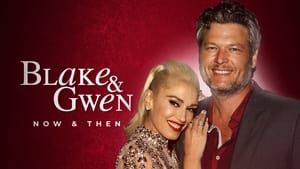
Blake and Gwen: Now and Then
Follow the offstage, unlikely romance of the king of country, Blake Shelton, and pop princess, Gwen Stefani. Both stars braved their share of challenges on the way to writing their own love song.
2021

The Blade Runner Phenomenon
Ridley Scott's cult film Blade Runner, based on a novel by Philip K. Dick and released in 1982, is one of the most influential science fiction films ever made. Its depiction of Los Angeles in the year 2019 is oppressively prophetic: climate catastrophe, increasing public surveillance, powerful monopolistic corporations, highly evolved artificial intelligence; a fantastic vision of the future world that has become a frightening reality.
2021

Portrait of a Goan Collector
For over 30 years a man termed as a mad man, comes to light as his passionate work of collecting artifacts gathers momentum and gains the title of a museum. The film trails through the struggles of Victor Hugo Gomes, a Collector from India-Goa, and how he perceives to leave behind his collection.
2019
East LA Interchange
East L.A. Interchange follows the evolution of working-class, immigrant Boyle Heights, the oldest neighborhood in East Los Angeles from multiethnic to predominately Latino and a cradle of Mexican-American culture in the U.S. The documentary tells the story of how one neighborhood managed to survive the construction of the largest and busiest freeway interchange in the nation and explores the shifting face of community in the United States today arguing why it should matter to us all.
2015
Mon Clown
Documentary from French TV channel Canal+ about Marion Cotillard's road to the Oscar for her performance as French singer Édith Piaf in the 2007 film 'La Vie en Rose', also featuring behind-the-scenes footage from the film.
2008
Rize
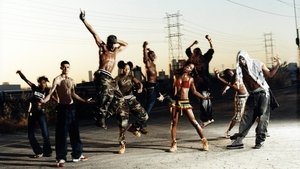
A documentary film that highlights two street derived dance styles, Clowning and Krumping, that came out of the low income neighborhoods of L.A.. Director David LaChapelle interviews each dance crew about how their unique dances evolved. A new and positive activity away from the drugs, guns, and gangs that ruled their neighborhood. A raw film about a growing sub-culture movements in America.
2005
Los Angeles Plays Itself
From its distinctive neighborhoods to its architectural homes, Los Angeles has been the backdrop to countless movies. In this dazzling work, Andersen takes viewers on a whirlwind tour through the metropolis' real and cinematic history, investigating the myriad stories and legends that have come to define it, and meticulously, judiciously revealing the real city that lives beneath.
2004
The Long Ryders: Rockin' at the Roxy
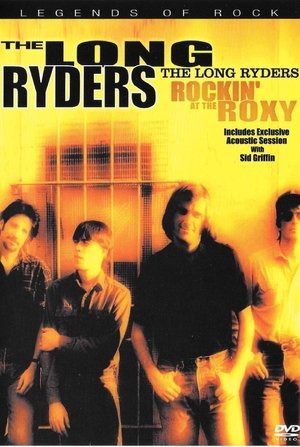
The Long Ryders, with bands such as The Bangles and The Three O' Clock, were key players in the Paisley Underground, a musical movement from the mid-1980s, combining the chiming folk rock of the 1960s with a psychedelic bent and a bit of punk attitude. The Long Ryders developed a cult following, becoming college radio favorite. This presentation finds frontman Sid Griffin and his band performing at the Roxy in Los Angeles in February of 1986.
2002
Wattstax
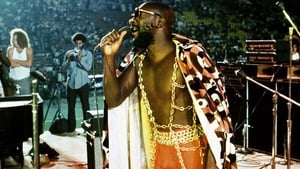
A documentary film about the Afro-American Woodstock concert held in Los Angeles seven years after the Watts riots. Director Mel Stuart mixes footage from the concert with footage of the living conditions in the current-day Watts neighborhood.
1973
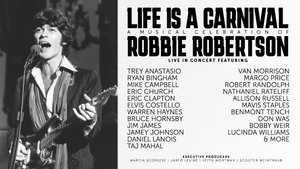
Life Is a Carnival: A Musical Celebration of Robbie Robertson
Life Is a Carnival: A Musical Celebration of Robbie Robertson is a 2024 tribute concert held at the Kia Forum in Los Angeles, featuring Eric Clapton, Elvis Costello, Van Morrison, Mavis Staples, Trey Anastasio, and more. Directed by Martin Scorsese, the filmed version captures an all-star celebration of Robertson’s enduring musical legacy.
AquaBurn
AquaBurn is an award-winning documentary film by director Bill Breithaupt showcasing "The Floating World" theme of the 2002 Burning Man Festival. AquaBurn features many of the incredible Burning Man art installations, the imagination and originality that went into their creation, and the artists who conceived them. Unlike conventional documentaries on the Burning Man Festival, AquaBurn captures the true feeling and excitement of the event itself, transporting the viewer to a hot, dusty wonderland without ever leaving home.
2003
101 Rent Boys
Paid 50 dollars for their time, 101 male prostitutes -- spanning all ages, ethnicities, and personal backgrounds -- are questioned by the filmmakers about their lives.
2000
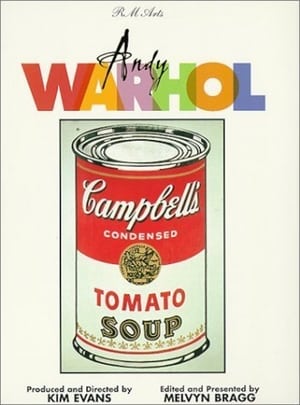
Andy Warhol
The first major profile of the American Pop Art cult leader after his death in 1987 covers the whole of his life and work through interviews, clips from his films, and conversations with his family and superstar friends. Andy Warhol, the son of poor Czech immigrants, grew up in the industrial slums of Pittsburgh while dreaming of Hollywood stars. He went on to become a star himself.
1987

Black Flag: TV Party Target Video
TV Party Music Video - (Live @ Target SF 1981) Rise Above - Thirsty & Miserable -Depression - American Waste - Fan greeting in Bologna, Italy 1979 - Revenge (San Francisco 8-20-80) - Jealous Again - Chuck (mock) interviews Dez & Henry - Rise Above (repeat)
1983

Bongo Wolf’s Revenge
An oddball picture about legendary kooky and colorful Los Angeles fringe eccentric cult figure Bongo Wolf. Through the course of the film, Bongo visits his friends in Hollywood, gives a lecture on vampires and prehistoric man, visits the Count Dracula society, plays his bongo drums...
1970
Mondo Hollywood
A documentary analyzing the social, political and cultural climate of Hollywood in the mid-1960s.
1967
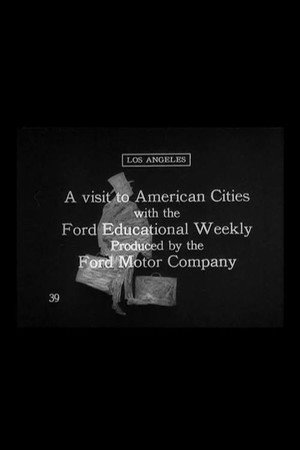
A Visit to Los Angeles
To popularize the idea of automobile travel, Ford Motor Company produced Ford Educational Weekly, a film magazine distributed free to theaters. One 1916 series featured "Visits to American Cities." In this episode, Los Angeles is featured at the very beginning of the boom created by oil, movies and aircraft. On the occasion of its centennial in 1953, Ford donated its film to the National Archives and Records Service; this copy derives from a fine grain master printed from the Archive's preservation negative. Music by Frederick Hodges.
1916