Watch Ambush - Tool of Terror (1976) Online Free
Discusses strategies for police officers to anticipate and respond to ambush situations. It highlights the importance of planning, training, and teamwork in counter-ambush tactics. The text emphasizes the need for officers to remain vigilant, vary their routines, and utilize effective communication to minimize risks during potential threats.
More Like This
Dancing in the Dark
A series of interviews with students living in London reveals the dangers present in the capital's nightlife.
2025

Enxame
2024

The Nightingale Sings
The movie explores the origin of the Ukrainian language and persecution of those who defended its authenticity. Using examples of other countries, creators of the film prove that a nation cannot exist without a language.
2019

A & E: When Patients Attack
Hospital staff are reporting more violence and anti-social behaviour than ever before. In 2015, 8 staff were assaulted every hour – a new record high. At The Queen Elizabeth Hospital in Birmingham – one of the UK’s biggest hospitals – they think they have the answer. Here a private security force of 46 uniformed guards, and a sophisticated CCTV system, keep staff and patients safe. A colourful mixture of characters ranging from ex-soldiers, to bouncers, to former elite sportsmen, it’s the security team’s job to keep the hospital running smoothly. With more than 2 million visitors they have to deal with all aspects of crime and anti-social behaviour. All against a back drop of life changing and life saving procedures.
2015

Motorrad fahren - Gut und sicher
2010
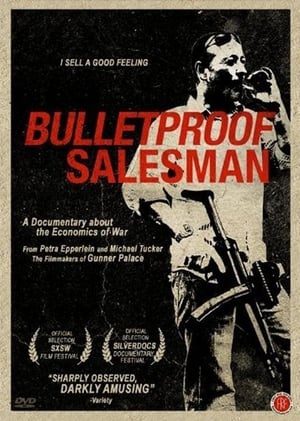
Bulletproof Salesman
Fidelis Cloer is a self-confessed war profiteer who found The Perfect War when the US invaded Iraq. It wasn't about selling a dozen cars, or even a hundred, it was a thousand-car war where security would become the ultimate product.
2008
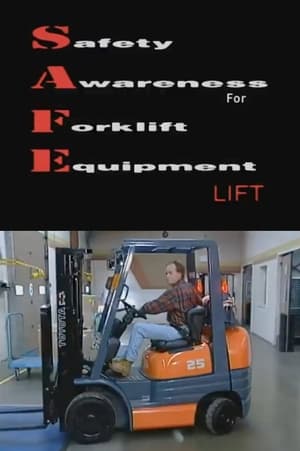
Safety Awareness for Forklift Equipment
An overview on safety precautions that protect forklift operators on the job.
1990
Surviving Edged Weapons
In an intense action-filled 85 minutes, you will learn to defend yourself against the mounting threat of “knife culture” offenders.
1988
Shake Hands with Danger
This short cautionary training film examines dangers associated with earthmoving equipment operation, showing many simulated accidents on construction sites.
1980
Emergency First Aid Series: Burns
Discusses the seriousness of burns, categorizing them into three degrees based on depth and severity. First-degree burns affect only the surface layer of skin, while second-degree burns penetrate deeper and are more painful. Third-degree burns are the most severe, damaging skin, muscles, and nerves. First aid varies by burn severity, emphasizing the importance of cooling the burn, avoiding ointments, and seeking medical help for serious cases. Chemical burns require immediate washing with water, and specific procedures for eye exposure are outlined. Quick medical attention is crucial to prevent complications such as infection and shock.
1980

Emergency First Aid Series: Accidental Poisoning
Discusses the dangers of accidental poisoning, particularly in children, due to household substances like cleaners and medications. It emphasizes the importance of identifying the product involved in the poisoning, recognizing symptoms, and taking immediate action. Key steps include diluting the poison with milk or water, calling for medical assistance, and bringing the poison container to the hospital. The document also highlights the risks of drug misuse and inhalation of toxic fumes, urging quick responses to emergencies.
1980

Alcohol, the Brain and Behavior
Discusses the effects of alcohol on the brain and behavior, particularly in relation to driving. It explains how alcohol impairs judgment, perception, coordination, and vital functions by affecting different brain regions. Factors influencing blood alcohol concentration (BAC) include the amount consumed, body size, sex, and the rate of consumption. The video also debunks myths about sobering up and emphasizes the importance of allowing time for alcohol to metabolize before driving. Even at BAC levels considered legally impaired, individuals may not recognize their diminished capabilities.
1979

Open files
A more experimental aproach to labor protection films. In the line of Săucan's style, the soundtrack is as important as the image, the threatening music, full of shrillness, composed by Ion Dumitrescu potentiating the visual construction that mixes - in a montage reminiscent of the Soviet avant-garde school of the 1920s - all kinds of shooting techniques and frame combinations.
1975
Safe In Recreation
The film emphasizes the importance of safety during recreational activities, both at home and in nature. It shares various scenarios involving children using power tools, chemicals, and playground equipment, highlighting risks such as improper use of electric cords, unsafe play habits, and the dangers of firearms. The film also provides safety tips for outdoor activities like hiking and camping, stressing the need for caution around potentially hazardous elements like poisonous plants and proper gun handling. The overarching message is to always prioritize safety to prevent accidents while enjoying recreation.
1974
Your Chance to Live: Flood
Dramatizes the plight of a young adventure seeker whose canoe is capsized by a wall of water during a flood. Shows community flood preparations, pointing out that a flood's predictability usually allows ample warning time to save lives. Designed to stimulate discussion on civil preparedness for floods
1973
Your Chance to Live: Heat Wave
The film highlights the dangers of extreme heat and the importance of staying hydrated and cool. It portrays a conversation between two friends, one of whom insists on playing basketball despite the oppressive heat. The narrative emphasizes that heat-related illnesses can be avoided by recognizing the body's signals and taking necessary precautions, such as drinking water and staying indoors. The film concludes with a report of record-breaking temperatures, underscoring the seriousness of heat exposure.
1973
Your Chance to Live: Winter Storm
Intercuts scenes from Jack London's To build a fire with modern urban and rural winter scenes to point out the dangers of winter storms and low temperatures. Designed to stimulate discussion on civil preparedness for winter storms.
1972
Mob and Riot Control
This 1964 training film, “Mob and Riot Control,” was produced by Charles Cahill and Associates, Inc and presented by Federal Laboratories, Inc. illustrating police tactics and techniques for controlling civil disturbances. The film opens with unruly mobs shouting and overturning a car.
1964
Boosting is a Business
Demonstration of shoplifting methods. With the Cooperation and Assistance of Berkeley, California Police Department and Berkeley Police Reserve; Addison H. Fording, Chief of Police; J.F. Hink & Son Department Store, L.W. Hink, President. Technical Assistance: Wm. P. Beall, Lieutenant; E.A. Skells, Sergeant, Berkeley Police DepartmentGeorge Jelten, Director of Visual Merchandising, J.F. Hink and Son. Director of Photography: John L. Siegle. Sound: Walter D. Porep. Narration: John E. Pedersen.
1960
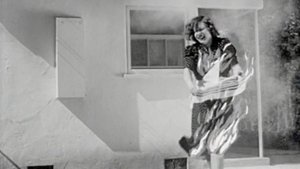
More Dangerous Than Dynamite
A short film warning the unaware housewife of the dangers of “dry cleaning” with gasoline at home.
1941