Watch Amère Victoire (2016) Online Free
The young French environmentalist and Member of the European Parliament Yannick Jadot wonders how the wounded nuclear beast might still have a bright future ahead after Fukushima. A few weeks after this terrible accident, and while there is no time to lose, Yannick Jadot negotiates at the European Parliament for better security for the most nuclearized continent on the planet, whereas the majority political parties try to rationalize this extraordinary event. At the same time, the young deputy is an advisor to Eva Joly, the candidate for the presidential primary in the Ecologist party. They try to make visible and audible the necessity to abandon the atom during the campaign for the French presidential elections. But very soon he finds himself caught up in the spiral of events, strategy, polls and fake alliances.
Cast
Yannick Jadot, Eva Joly, José Bové
More Like This

Venezia Diorama
Through a series of animated art boards depicting a decaying Venice, the film unfolds like a set of postcards, capturing the mythical city's final moments of fragility. Blending archival footage with contemporary observations, and anchored by the story of the 1902 collapse of St Mark's Campanile, Venezia Diorama invites us to reflect on a city slowly eroding, yet suspended in time.
2026
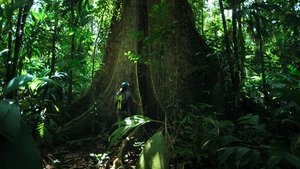
The Forest
The story of a brilliant ecologist with a plan to save the world by restoring the planet's forests. His original work was hijacked by corporations and politicians with disastrous effect. Now he's using science to fight back.
2024

Variations on How to Farm a City
Sprout. In the vacant lots against the hammering of buildings always under construction, between walls of granite, cement and sheet metal with rust, moss and cats; on the hillside between the train and the river, next to the traffic on the highway, facing the subway, vegetable gardens sprout. In this city, the choreography of ancient gestures of cultivating the land is repeated day after day, without fail. Sowing, digging, harvesting, watering, eating, talking, resting and returning the next day. The longest day of the year brings S. João and nobody goes to bed, but when the sun rises, the discreet gestures of resistance will restart.
2024
La disparition des lucioles
By exploring the roads of a rural France in transformation, the artists investigate the profound shifts currently shaping it. From the Maurienne valley to the Vosges forest, passing through Pays de la Loire, Normandy, and Ardèche, this documentary charts a fresh map of the French countryside.
2024
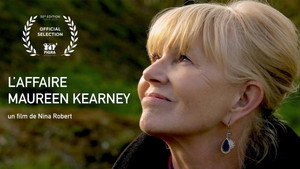
L'Affaire Maureen Kearney
On December 17, 2012, Maureen Kearney was found at home, tied to a chair with the letter "A" carved into her abdomen and a knife handle forced into her vagina. Was this rape linked to her work as a union representative at Areva? At the time, she was locked in a battle with management to block technology transfers between France and China; she found herself caught in the eye of a political storm involving the French state, set against the backdrop of a rivalry between two French industrial giants: Areva and EDF. This documentary serves as a counter-investigation into the Maureen Kearney affair—a complex political and legal saga that has shaken the nuclear industry from 2012 to the present day.
2023
A Vida ao Redor do Cemitério
2022
Bigger Than Us
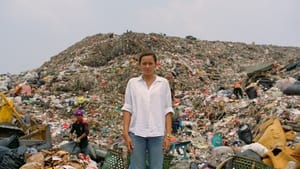
For six years, Melati, 18, has been fighting the plastic pollution that is ravaging her country, Indonesia. Like her, a generation is rising up to fix the world. Everywhere, teenagers and young adults are fighting for human rights, the climate, freedom of expression, social justice, access to education or food. Dignity. Alone against all odds, sometimes risking their lives and safety, they protect, denounce and care for others. The earth. And they change everything. Melati goes to meet them across the globe. At a time when everything seems to be or has been falling apart, these young people show us how to live. And what it means to be in the world today.
2021
Hidden Eden
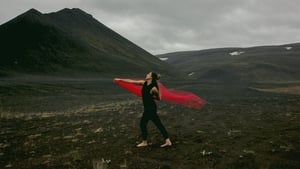
Exploring the concept of the Ecology of Emotions, this musical film portrays an inner journey through the secret garden of creativity put into frame by the nature of Iceland. Hidden Eden is a metaphor for our inner secret garden of creativity. This project bloomed during an art residency in Iceland, sparked by conversations around our shared philosophies on voice and emotional connection. The nature of Iceland inspired us to make the connection on how the landscape reflects the emotional states of creativity and how it helps manage the homeostasis of our inner emotional landscapes. This exchange between emotion and the landscape opens a space for healing. Creativity provides us with the tools to access a garden of our authentic being, nourishing and balancing us. Allowing ourselves to explore the spectrum of our emotions through the lens of our relationship with the Earth invites others to do the same. The creative process can affect our well being and is a key to human evolution.
2021
Global Warming
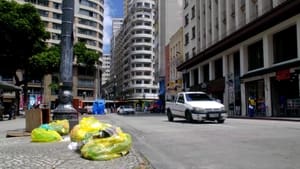
How far does your participation in global warming go? What is the real X-ray of the ongoing climate changes, and how can we—if at all—reverse the path we are all on? You’ll find these answers in “Global Warming”, a work featuring sixteen Brazilian experts discussing, detailing, and contextualizing climate change and its effects worldwide, especially in Brazil.
2020
Can We Cool the Planet?
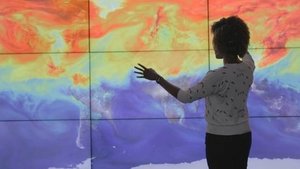
Capturing CO2 to recycle it, brightening clouds to better intercept sunlight, massive reforestation: here's an overview of scientific solutions to combat global warming that offer a glimmer of hope.
2020
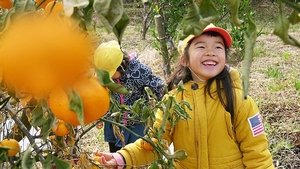
Haru Wo Tsugeru Machi
A documentary about the people of Hirono, a city located 20 km away from the Fukushima Daiichi Nuclear Power Station. Immediately after the Great East Japan Earthquake, the whole town was forced to evacuate. In 2019, 80% of the population at the time of the earthquake is back in town.
2020
Ryuichi Sakamoto: CODA
Oscar-winning composer Ryuichi Sakamoto weaves man-made and natural sounds together in his works. His anti-nuclear activism grew after the 2011 Fukushima disaster, and his career only paused after a 2014 cancer diagnosis.
2017
L'Éveil de la Permaculture
2017
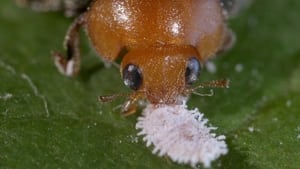
Les nouveaux guerriers des champs
For years, chemical pesticides were considered an efficient method of killing off agricultural pests. However, in the long term, they not only harm the supposed attackers, but also people and the environment. Biological pest control offers an alternative, because who could fight pests more efficiently than their own natural enemies?
2016
Reflection
Eerie images of landscapes after the Fukushima nuclear disaster shot on black and white 8mm.
2014
The Horses of Fukushima
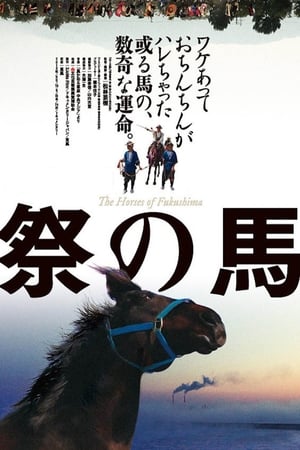
Fukushima's Minami-soma has a ten-centuries-long tradition of holding the Soma Nomaoi ("chasing wild horses") festival to celebrate the horse's great contribution to human society. Following the meltdown of the Fukushima Daiichi Nuclear Power Plant in the wake of the March 11, 2011 earthquake and tsunami, local people were forced to flee the area. Rancher Shinichiro Tanaka returned to find his horses dead or starving, and refused to obey the government's orders to kill them. While many racehorses are slaughtered for horsemeat, his horses had been subjected to radiation and were inedible. Yoju Matsubayashi, whose "Fukushima: Memories of the Lost Landscape" is one of the most impressive documentaries made immediately after the disaster, spent the summer of 2011 helping Tanaka take care of his horses. In documenting their rehabilitation, he has produced a profound meditation on these animals who live as testaments to the tragic bargain human society made with nuclear power.
2013
The Shaman's Apprentice
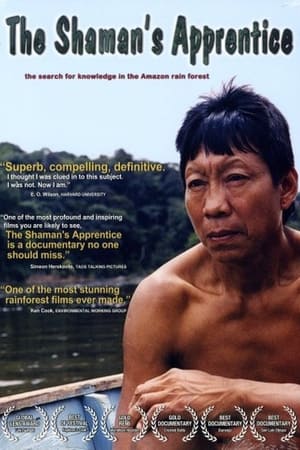
Scientist Mark Plotkin races against time to save the ancient healing knowledge of Indian tribes from extinction.
2001
The Call of the Mountain
On 1500 metres above sea level, on the slope of the mountain Hallingskarvet, stands "Tvergastein', the cabin of Norwegian philosopher Arne Naess. In his life he has spent nearly 12 years in this hut, where he wrote several books and essays on philosophy and ecology. In this film, Naess tells about the concept of 'deep ecology', which was first introduced by him in 1973. One of the basic tenets of deep ecology is that nature has a value in itself, apart from its possible use value to humans. Next to being a famous mountaineer, Naess has been a longtime activist in the environmental movement. He gives an inspiring account of his participation in blockades to prevent the Alta river in northern Norway (the area of the Sami, an indigenous people) from being dammed.
1997
Ribnitz-Damgarten
Ribnitz-Damgarten, the jewel at the coast of the Baltic Sea, is located directly at the Saaler Bodden, between Stralsund and Rostock. The town and its surrounding area are made for vacationing. This documentary from 1989 also shows the other side, like, for example, how the increasing population density and the industrial production influence the ecological balance of the region. A community for the protection of the Bodden landscape is actively making an effort for conservation. At the institute for deep-sea fishery, research about the fish population is conducted, and agriculture as well is looking for solutions to preserve an intact environment.
1989
Zelené priehrady
A document on the importance of forests to the national economy. It represents forests not only as a rich storehouse of wood, but also as an important factor for continuous water supply, as they regulate the water cycle and prevent both droughts and floods.
1950