Watch Alltid Fick Man Höra Jävla Zigenare (2003) Online Free
Ever since the first Roma people arrived in Sweden five hundred years ago, they have been discriminated against and persecuted. The lack of knowledge, invisibility and denial of the historical abuses that Roma have been exposed to is one of the many contributing causes of continued marginalization and vulnerability of Roma today. Here, the Roma tell of the abuses and persecutions they experienced during the 20th century. How it felt like as a child being constantly expelled from the camp, not infrequently in the middle of the night, with violence and under gunfire. Soraya Post from the traveling group tells how her mother, as a pregnant 23-year-old, was forced to abort her child in the seventh month. The reason: She was a "gypsy".
More Like This

Figlio di Giano
2025

America's War Against Women
In America women can go to jail for their husbands’ crimes, men are allowed to marry ten-year-olds, and abortions in some states are illegal, even in cases of rape. Documentary filmmaker Brice Lambert journeys through the American South and meets women who are at the receiving end of the attack on women’s rights since Donald Trump’s return to power.
2025

De caballos y guitarras
A musical, and also a reflection on watching, on trying to escape an anthropocentric gaze and also on watching itself in cinema. Featuring mares and horses: Triana, Víctor K, Bambi Sailor, San Special Solano, Buck Red Skin, Onkaia, Cool Boy, the donkey Agostino, the mule Guapa. And also Alfredo Lagos, Raül Refree, María Marín, Pepe Habichuela, Virgina García del Pino, María García Ruiz, Pilar Monsell, María Pérez Sanz.
2024

Béziers, The Other Side
Structured in two parts, the film uses the municipal newspaper, Le Journal de Béziers (later renamed Le Journal du Biterrois), to examine the city's management by Robert Ménard, elected mayor in 2014 with the support of the National Rally. By meeting with residents and activists, the film reveals the "behind the scenes" of this southern French city. It shows how this newspaper shapes a political and ideological line for a fundamentalist Catholic France, rejecting Muslims, while simultaneously seeking to control and monitor all its inhabitants. A vision of the far right in power…
2024

A Doll Like Me
The Amsterdam doll shop Colorful Goodies sells Barbies, boy dolls, and cuddly dolls that every child can recognize; from dolls with different skin colors and professions, to dolls with disabilities. This documentary follows three families of color who take home a doll. What does such a doll mean for your self-image if you struggle with it because you are of color, or because you have to learn to live with albinism? Is our dominant white society as tolerant as we think?
2023
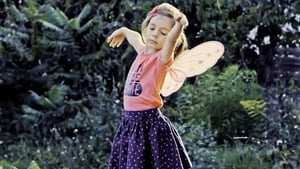
Little Girl
7-year-old Sasha has always known that she is a girl. Sasha’s family has recently accepted her gender identity, embracing their daughter for who she truly is while working to confront outdated norms and find affirmation in a small community of rural France.
2020
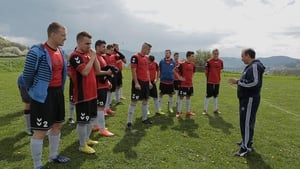
FC Roma
A team of Romany football players try to overcome prejudice in this Czech documentary.
2016
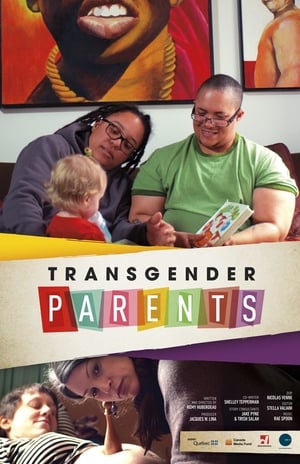
Transgender Parents
Transgender Parents takes the conversation about parenting and transsexuality to the next level: Some parents transitioned in the presence of their kids and some who transitioned prior to founding families - being out as trans and as parents, in ways that weren't possible 20 years ago. Transgender Parents centers the importance of access to building and continuing parent-child relationship in the presence of a gender transition. It is a tender look at the art of parenting, testimony to some of the hardest relational work in this life.
2014
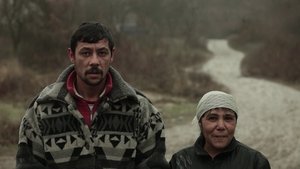
Loli Kali Shuba
Prominent Ukrainian/Italian documentary film director Oleksandr Balahura (most known for link) visits Roma neighborhoods and social events in Zakarpattia (Western Ukraine) and re-visits his earlier work, "Widow-Street", shot on same locations in 1991. He also screens "Widow-Street" to its characters, whom he meets again in 2013.
2013

Vojta Lavička: Ups and Downs
Longitudinal documentary film was shot for past 16 years and the main protagonist is Roman musician and activist Vojta Lavička. Vojta is a master in violin play, who focuses not only on music but also deals with problems of his origin Roman nationality. Vojta is very active in media - he worked in the national radio and television, he worked in the NGO that organize street work for Roman ghettos around the Czech republic, Vojta worked also as a social worker. All together we can watch him struggling with the main topic of his life - his national minority and problems that are caused by living next to Czech majority. Aside this topic films discovers Vojta's private life and his fight for being a good musician and a good man.
2013

Illegal Love
In 2008 French filmmaker Julie Gali traveled to the US to film the election of Barack Obama. In spite of this victory for civil rights, it soon became apparent that the rights of another minority were under threat. In California the passing of Proposition 8 marked the only time in U.S. history that a civil right was actually taken away after it had been granted. Upon seeing this, Ms. Gali decided to immerse herself in the growing grassroots struggle of the gay community, which culminated in the October 11, 2009 March for Equality in Washington DC.
2011

Django Reinhardt, trois doigts de génie
2010
Tongóbriga (El espíritu de un lugar)

Romazsaruk
Hafu
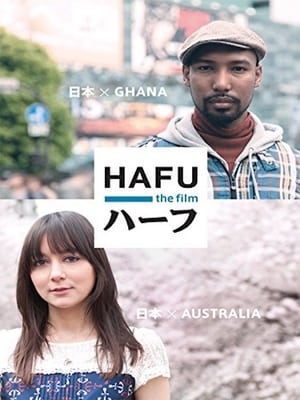
A journey into the intricacies of mixed-race Japanese and their multicultural experiences in modern day Japan. For some hafus, Japan is the only home they know, for some living in Japan is an entirely new experience, and the others are caught somewhere between two different worlds.
2013
Concrete Pharaohs
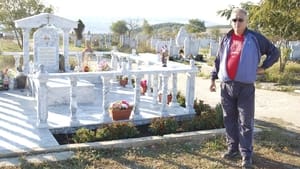
Welcome to the picturesque world of the Kaldarash Roma – a closed community of no more than 1 million people all over the world. 'Concrete Pharaohs' take us on a journey into the lifestyle and traditions of the most hidden and intriguing Roma communities. A charismatic Gypsy baron will walk us through his stories and his new house. We will learn the hot trends in Roma tombstone design. We will go down into the underground homes of African granite, furnished with beds, wardrobes, stereos and a charged cell phone – a direct line to the other world. A celebration of life and afterlife in all of their manifestations.
2010
Pretty Dyana
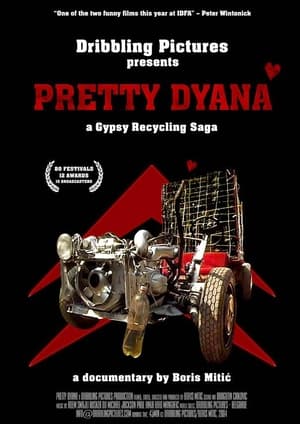
An intimate look at Gypsy refugees in a Belgrade suburb who make a living by transforming Citroen´s classic 2cv and Dyana cars into Mad Max-like recycling vehicles, which they use to collect card-board, bottles and scrap metal. These modern horses are much more efficent than the cart-pushing competition, but even more important, they also mean freedom, hope and style for their crafty owners. Even the car batteries are used as power generators in order to get some light, watch TV and recharge mobiles ! Almost an alchemist´s dream come true ! But police doesn´t always find these strange vehicles funny... Pretty Dyana is a very funny documentary, but sad in a way... " If Mitic had focused only on the terrible misery these people live in, the film would have been unbearable. Instead, you never know whether you should cry after you laugh, or the other way around " Sara Hultmanm, Goteborg Film Festival
2003

Home Feeling: Struggle for a Community
This feature documentary takes us to the heart of the Jane-Finch "Corridor" in the early 1980s. Covering six square blocks in Toronto's North York, the area readily evokes images of vandalism, high-density subsidized housing, racial tension, despair and crime. By focusing on the lives of several of the residents, many of them black or members of other visible minorities, the film provides a powerful view of a community that, contrary to its popular image, is working towards a more positive future.
1983
The Feelings Are the Same
Interview-based documentary about the conditions for gays and lesbians in Danish society.
1972

Nous, les Gitans
Alberto Spadolini, filmmaker and choreographer, dances to traditional Andalusian music. He pays tribute to the gypsy culture.
1951