Watch Alex Honnold: The Soloist VR (2022) Online Free
Immersive documentary in two parts, filmed in high-resolution 360° 3D, which follows Alex Honnold's journey through Yosemite National Park, home to the famous El Capitan – immortalized in the film “Free Solo”, then at Red Rocks , in Nevada, west of Las Vegas. Then it's off to Europe where he teams up with Swiss climber Nicolas Hojac in some of the most difficult solo free climbs in the Dolomites. In episode 2, the two climbers tackle the Directe americaine on the Aiguille du Dru in Chamonix and the Kuffner ridge on Mont Maudit, the second highest peak of the Mont Blanc massif, in free solo.
Cast
Alex Honnold, Nicolas Hojac, Heather Rochfort
More Like This
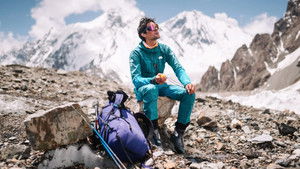
K2 Chasing Shadows
K2 Chasing Shadows chronicles Benjamin Védrines' record-breaking 2024 ascent of K2 (8,611m) in 10 hours, 59 minutes, and 59 seconds, without supplemental oxygen: a story that unfolds as much in the mind as on the mountain. In human exploration, each boundary pushed awakens a new thirst. Each feat paves the way for a deeper quest. It is this tension between extreme performance and inner aspiration that drives K2 Chasing Shadows. For Benjamin Védrines, it is a journey of humility, resilience, and a search for meaning amidst the raw beauty of the Pakistani Karakoram. The film exposes the physical demands of a formidable summit, while also exploring fear, loss, and the perilous nature of dreams that demand total commitment. Between unforeseen obstacles, forced retreats and new attempts, Védrines faces the most trying and exhilarating aspects of mountaineering, constantly questioning where true accomplishment lies.
2025
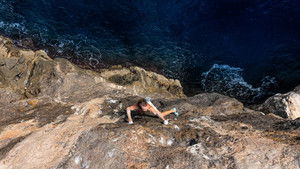
Black Pearl
Chris Sharma's latest masterpiece in Mallorca, Black Pearl, could be his hardest deep water solo yet, joining his earlier routes Es Pontas, Alasha, and Big Fish in the pantheon of iconic "psicobloc" lines. Follow his journey to bring the project to life, along with side trips to rad new crags, and mega sessions with Matty Hong and Jernej Kruder vying for the second ascent of the spectacular Big Fish.
2025

Mountain Ride
After years of mass tourism in the Alps, a rethinking is slowly taking place. Whether researchers, artists or philosophers, many are trying to approach the essence of the mountains in new ways.
2024
Uncharted Lines
Every climbing reward comes at the cost of a potential risk, but when you are a climbing pioneer, driven by the unknown and unexpected, you are willing to risk whatever it takes for the chance to find the perfect first ascent line. This is a story of exploration and discovery, a journey of friendship and solitude, a quest to fuel an obsessive passion. Starring Paul Robinson, Jimmy Webb, Daniel Woods, Chris Sharma and Niky Ceria.
2017

Objectif Mont Blanc, sur les traces d'un géant
A climatologist, a physicist, and a volcanologist set out to conquer the highest peak in the Alps. Through exceptional images, the film recounts their odyssey and reveals the immense wealth of this natural laboratory. Straddling France, Italy, and Switzerland, the Mont Blanc massif was formed 240 million years ago. Four times the size of Paris, it covers 400 km2. Its summit, the highest in Western Europe, rises to 4,810 meters. Three scientists begin its ascent: Martine Rebetez, a Swiss climatologist; Étienne Klein, a philosopher and physicist at the French Atomic Energy Commission; and Jacques-Marie Bardintzeff, a geologist and volcanologist. Advancing in two roped teams, they are accompanied by Jean-Franck Charlet and François-Régis Thévenet, mountain guides, as well as physiologist Hugo Nespoulet.
2014
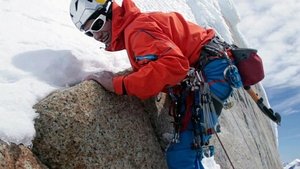
Cerro Torre: A Snowball's Chance in Hell
Movie about David Lama climbing the Patagonian mountain Cerro Torre for the first time free, a mountain that has been dubbed the most difficult to climb in the world.
2013
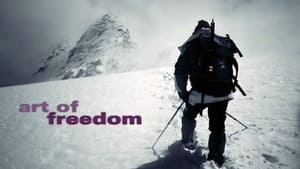
Art of Freedom
The documentary film Art of Freedom answers the most poignant questions on the phenomenon of Polish expeditions to the Himalayas. Poles have reigned the highest mountaintops of the world for more than 20 years. They not only set down new trails, but new rules of behavior. They set themselves apart with an original style of climbing, endurance, conscientiousness about the overall well-being of the team - and solidarity.
2011
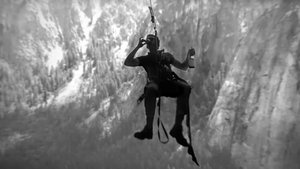
Warren Harding - Recollections of the First Ascent of El Capitan in Yosemity Valley
On November 12, 1958, nearly a year and a half after planting his first piton, Warren Harding climbed to the summit of El Capitan, the legendary face of Yosemite, which he became the first to climb via the equally legendary Nose route. An extraordinary undertaking closer to a heavy Himalayan expedition than to rock climbing. Climbing mainly on weekends in the fall and spring with companions whose level of skill was of little importance to him, Warren Harding spent a total of 47 days (spread over 17 months) on the face. 675 pitons (including 125 expansion pitons) and several thousand hammer blows were necessary to build his legend, despite the displeasure of the "Christians of the valley," as he somewhat sardonically nicknamed Royal Robbins and his cronies, who swear by style.
2011
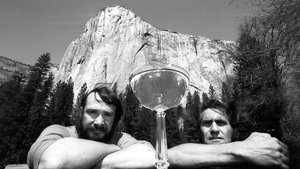
Warren Harding - Recollections of the Wall of the Early Morning Light
In 1970, Warren Harding and Dean Caldwell set out to climb Early Morning Light, better known as Dawn Wall, in Yosemite National Park. Arguably the most controversial climb in the park's history, due to multiple storms and a rescue attempt by the Yosemite Service. The climb thrust the event into the media spotlight, creating a controversy within the local climbing community. In this short documentary, Warren Harding himself recounts the climb.
2011

Storm Over Everest
As darkness fell on May 10, 1996, a fast moving storm of unimaginable ferocity trapped three climbing teams high on the slopes of Mount Everest. The climbers, exhausted from their summit climb, were soon lost in darkness, in a fierce blizzard, far from the safety of High Camp at 26,000 feet. World-renowned climber and filmmaker David Breashears, who aided the rescue efforts back in 1996, now returns to Everest to tell the fuller story of what really happened on that legendary climb. Through remarkably intimate interviews with the climbers and Sherpas many who have never spoken before on American television Breashears sheds new light on the worst climbing tragedy in Mount Everest s history.
2008

To the Limit
At the Limit is a documentary about extreme climbing. In this sports documentary, Pepe Danquart shows brothers Thomas and Alexander Huber climbing in Patagonia and on the granite rock "El Capitan" in Yosemite Valley (USA). A key part of the film is their attempt at a speed ascent of the 1,000-meter-high route "The Nose," in which the two athletes aim to break the then speed record of 2:48:30 hours, set by Hans Florine and Yuji Hirayama in September 2002.
2007

First Ascent
The classic film that inspired the National Geographic Series. Join a global quest with world-class climbers in pursuit of the ultimate goal: the first ascent. Featuring Dean Potter, Timmy O'Neill, Sonnie Trotter, and the amazing Didier Berthod on his quest for the first ascent of the Cobra Crack.
2006
National Geographic - Everest, Una Sfida Lunga 50 Anni
In 1953, Sir Edmund Hillary & Tenzing Norgay made history as the first people to reach the top of Everest. Now, 50 years later, three sons of Everest's most celebrated climbers return to the mountain to challenge it again. Join their journey as they brave the elements and face death to climb 29,000 feet of wind-blasted rock and ice. And, relive the dramatic history of Everest from great triumphs to deadly tragedies, enduring rivalries and the unsung role of the Sherpa people—as National Geographic exposes the untold stories that lurk in the mountain's epic shadow and takes you on the ultimate Everest experience.
2003

Roc'n Wall 97
1997
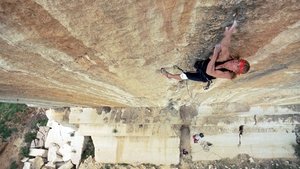
Plan-Séquence
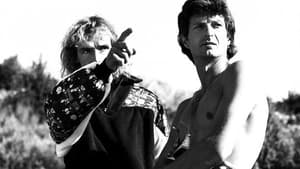
In a vertiginous sequence, Claude Lelouch's camera follows Patrick Edlinger climbing with his bare hands one of the routes of the spectacular Cimaï cliff. The action takes place in the Consensus voice (7c+/8a+) at the Cimaï quarry. In a place large enough where Claude Lelouch had been able to take out his crane to make a vertical trip. Later, in 2013, the foot of the Consensus route will experience landslides, the climbing sector has since been prohibited by municipal decree, huge blocks threatening to fall.
1992
Passion Extrême
1989
Opera Vertical
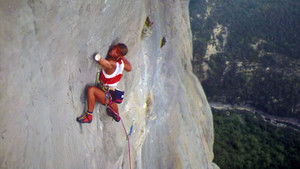
Vertical Opera is a documentary film directed by Jean-Paul Janssen, with climbers Patrick Edlinger and Jean-Paul Lemercier in the Gorges du Verdon. The film opens with a training sequence of Patrick Edlinger then he links the routes with Jean-Paul Lemercier "L'Ange en décongelation" (7a), in which he falls voluntarily to demonstrate the usefulness of the rope, then "Le Septième Saut" (7b+). Finally, the final scene, an anthology, consists of a close-up of Edlinger who climbs free solo and barefoot the route "Débiloff", still in the Verdon, above hundreds of meters of void, all to lyrical music. It is "Wie Furchtsam Wankten Meine Schritte", the aria for alto voice from Johann Sebastian Bach's cantata BWV 33, music not unrelated to the subject of the documentary: "How faltering and fearful my steps were".
1984
Stars at Noon
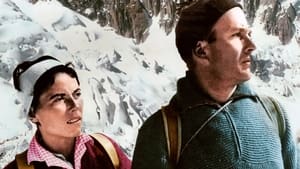
Les Etoiles de Midi is an engaging docudrama about some of the more spectacular exploits of French mountain climbers over the last several decades. In one re-enacted story, there is a wartime escape through the mountains, and in another, a daring rescue of a pair of climbers who had been missing. The actors themselves are adept at the sport of climbing, and they give the scenes an immediacy and real daring that brings the stories alive. A combination of their acrobatics and skill and the outstanding episodes in the history of French climbing creates a winning 78 minutes.
1959
In the Shadow of Karakorum
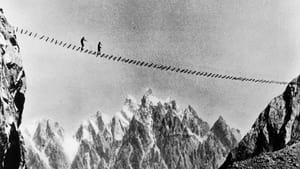
In 1954, a German-Austrian expedition led by Mathias Rebitsch set off for the difficult-to-access Karakoram Mountains, geographically north of the Himalayas. They come across the Hunza, a people who live in the valley of the same name and believe they are descended from the soldiers of Alexander the Great. The documentary conveys impressions of the poor life of the Hunza people, the harvest, a court hearing, festivals and the children's everyday school life. Finally, the expedition sets off again and sets up its main camp on the moraine ridge of a glacier, where they measure the glacier and the earth's magnetic field. Finally, some men from the research community set off for a sub-peak of Batura.
1955
